Redefining "Advanced" in Hip Hop Dance
For experienced practitioners, "advanced" hip hop dance transcends exposure to multiple styles—it demands technical precision, deep historical literacy, and the ability to manipulate movement at the intersection of musicality, improvisation, and choreographic intent. This guide examines four dominant contemporary styles not as introductory overviews, but as complex systems requiring dedicated biomechanical training, cultural understanding, and strategic practice approaches.
Whether you're preparing for international battle circuits, developing pedagogy, or expanding your movement vocabulary, the following analysis prioritizes actionable depth over general description.
Foundational Framework: Three Unifying Principles
Before examining individual styles, advanced dancers must master three cross-cutting competencies that separate proficient execution from mastery:
1. Isolation Mechanics
True isolation requires segmenting movement across primary zones (head, chest, hips) and micro-zones (wrist rotations, scapular protraction, ankle flexion). Advanced practice involves layered isolation—maintaining independent rhythms in multiple body regions simultaneously. For example, executing chest pops on quarter-notes while running wrist tuts through sixteenth-note triplets.
2. Musicality Structures
Beyond basic counting, advanced musicality encompasses:
- Polyrhythmic layering: Dancing multiple time signatures concurrently
- Texture mapping: Assigning specific movement qualities (staccato, legato, vibratory) to instrumental layers
- Negative space exploitation: Using silence and sonic decay as choreographic elements
3. Freestyle vs. Set Architecture
Advanced dancers must fluidly transition between improvisational vocabulary (responsive, moment-to-moment generation) and choreographic retention (precise replication under pressure). Battle settings demand both; training regimens should alternate between open exploration and rigorous set repetition.
Deep Dive: Four Contemporary Styles
Waacking: Velocity, Lines, and Queer Black/Latino Lineage
Historical Correction and Cultural Context
Waacking emerged from 1970s gay Black and Latino communities in Los Angeles, specifically the West Coast club scene—not generic "disco era" aesthetics. Pioneers including Tyrone Proctor, Jeffrey Daniel, and Soul Train dancers developed the style as expressive resistance and identity celebration. The documentary Check Your Body at the Door (2011) and more recent Waaaaaa! chronicles preserve this lineage.
Technical Mechanics
Waacking operates on linear extension principles:
- Arm pathing: Creating geometric shapes through shoulder-driven arcs, emphasizing elbow and wrist alignment
- Overhead lines: Vertical plane dominance distinguishing waacking from voguing's floor-oriented poses
- Speed modulation: Executing single arm patterns across 2-counts, then compressing to half-counts without quality degradation
Advanced Training Protocol
| Drill | Objective | Progression |
|---|---|---|
| Mirror lines | Symmetrical arm pathing | Increase tempo 20 BPM weekly |
| Blind waacking | Spatial awareness without visual feedback | Perform with eyes closed, then 360° turns |
| Character integration | Emotional narrative through gesture | Assign specific "characters" to 8-count phrases |
Common Pitfalls
- Shoulder fixation: Over-reliance on arm movement without thoracic spine rotation
- Tempo ceiling: Practicing only at maximum speed, sacrificing line clarity
- Cultural disconnection: Executing technique without understanding waacking's expressive, storytelling function
Contemporary Innovators: Princess Lockerooo (stylistic fusion), Yoshie (Japan's technical precision), Samo (Europe's theatrical expansion)
Tutting: Geometric Precision and Digital-Physical Convergence
Corrected Attribution and Evolution
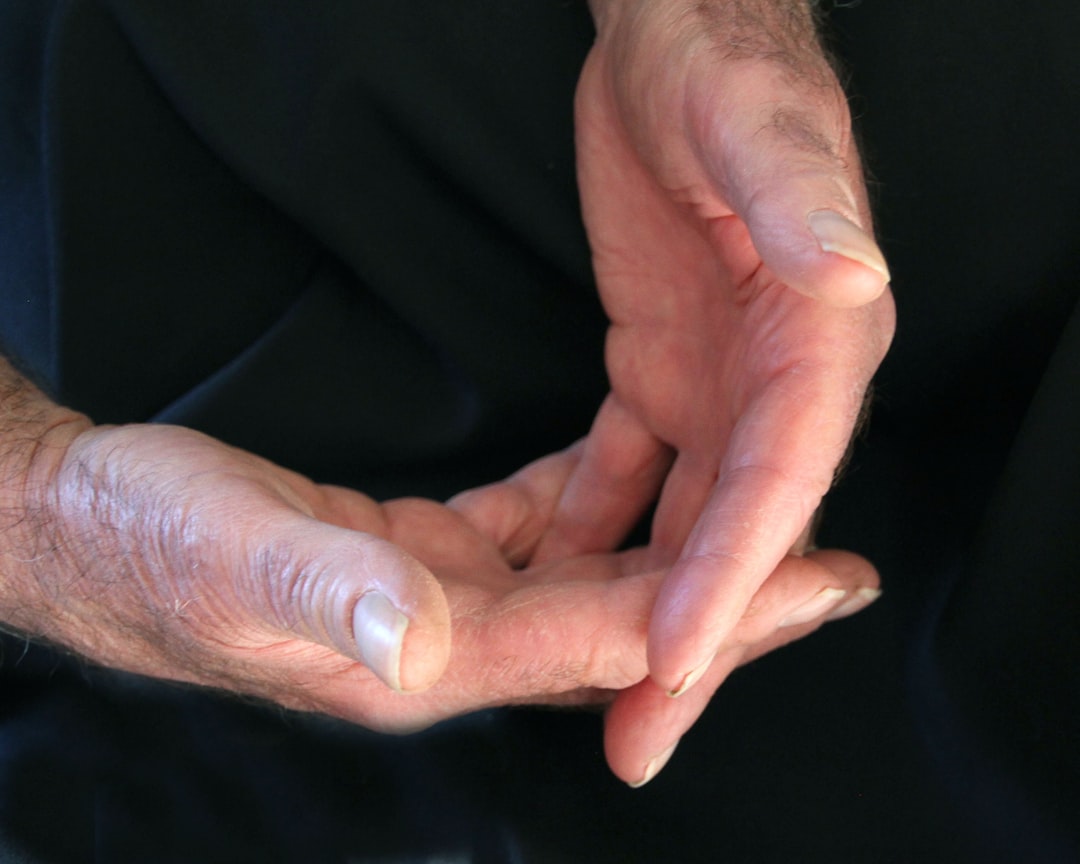
Tutting's visual language derives from Egyptian hieroglyphic poses and 1970s funk locking, with foundational development by Mr. Wiggles (Rock Steady Crew) and Daniel 'Cloud' Campos. The style's viral expansion owes much to Japanese collectives Momo and Finger Circus, who introduced tutting boxes (three-dimensional hand positioning) and digital manipulation concepts—treating hands as interactive interface elements.
Technical Mechanics
Advanced tutting requires understanding geometric planes:
- Primary planes: Sagittal (side view), frontal (front view), transverse (top view)
- Tutting boxes: Creating implied cubic space through finger perpendicularity and palm orientation
- Digital concepts: "Clicking," "dragging," and "scrolling" gestures borrowed from touchscreen interaction
Musical Application Tutting excels at rhythmic subdivision visualization. Advanced practitioners map:
- 8th-note tutting: Single shape per beat
- 16th-note flurries: