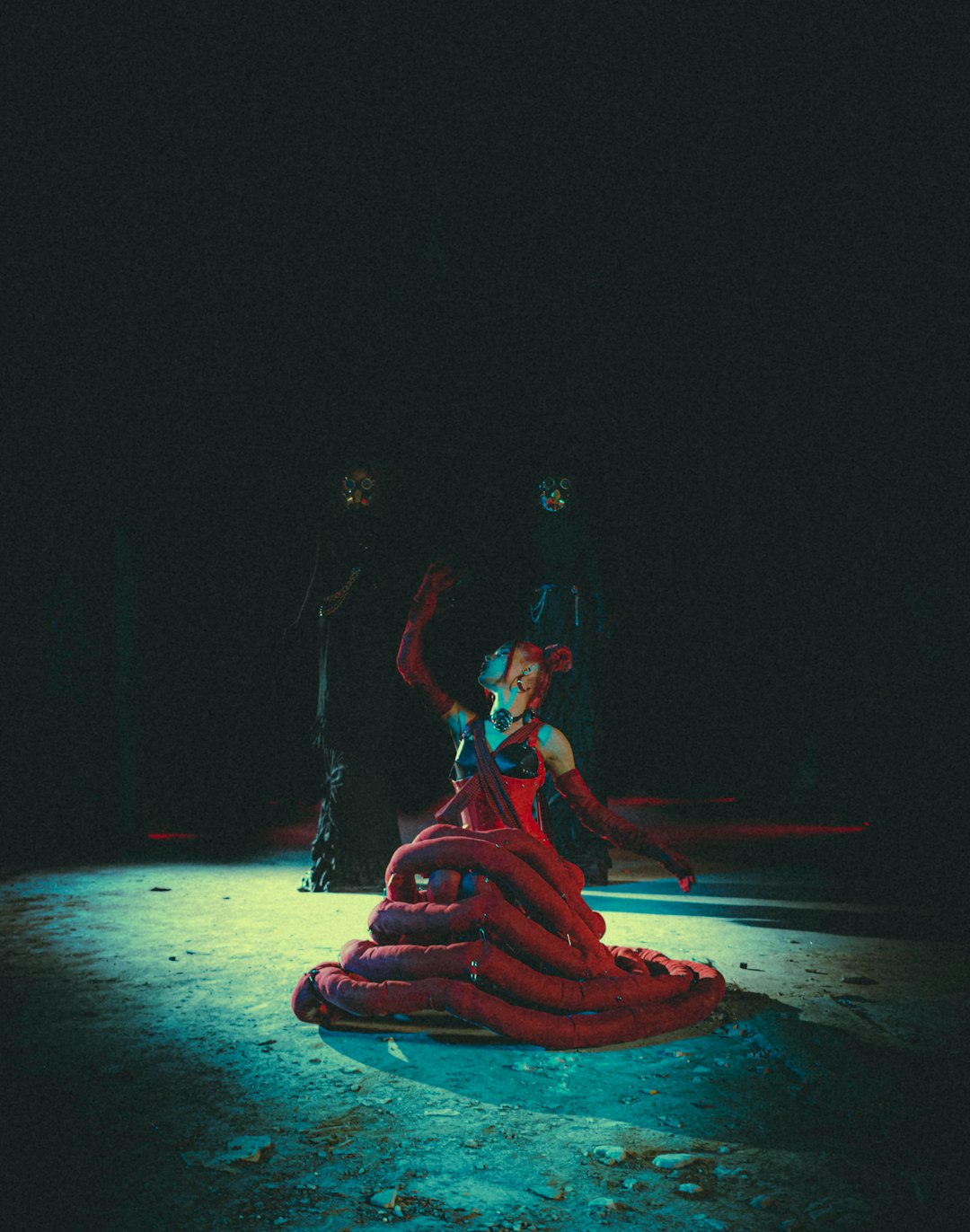
Beyond Steps: Cultivating the Creative Mindset for New Contemporary Dancers
Moving past technique into the art of becoming.
So, you’ve mastered the fall and recovery. Your spirals are clean, your release technique is fluid. You can count complex polyrhythms. Yet, something feels missing. The studio mirror reflects a capable dancer, but not yet a compelling artist. The bridge between those two states isn’t built with more steps—it’s constructed with mindset.
Contemporary dance, at its vital core, is a language of inquiry. It’s less about what the body can do and more about what it seeks to express. For dancers emerging into this ever-evolving form, the greatest shift isn’t physical; it’s psychological. It’s trading the “how-to” manual for a blank journal and a curious, courageous pen.
The Foundation: From Student to Artist-Thinker
The training floor teaches obedience: to the count, to the form, to the choreographer’s vision. This is essential. But the contemporary stage demands agency. Cultivating a creative mindset begins with internalizing one powerful truth: you are not just an interpreter; you are a source material. Your experiences, your questions, your idiosyncratic rhythms are not distractions—they are your unique compositional tools.
Mindset Checkpoint:
Instead of asking "Did I get that sequence right?" try asking: "What emotion lives in the collapse of that movement? What story does the transition tell?" Reframe correction as discovery.
1. Embrace the "Beginner's Mind" (Even When You're Not a Beginner)
Shoshin, a Zen concept, means approaching a subject with an open, eager, and empty mind, devoid of preconceptions. Apply this to your daily practice.
- Forget "Right" & "Wrong": In creative tasks, replace these with "Effective" and "Ineffective for my intention." Does a flexed foot better serve the feeling of resistance you’re exploring? Then it’s effective.
- Find the Question in the Phrase: Every set combination is an answer to a choreographic question. What was the question? "What does weighted flight look like?" "How can tension and melt coexist?" Unearth the question, and you understand the material on a deeper level.
2. Cultivate Your Creative Ecosystem
Your artistry doesn’t live in a vacuum. Feed it.
- Consume Widely, Not Just Dancily: Watch films, visit galleries, read poetry, listen to ambient soundscapes or street noise. How does the pacing of a film edit make you feel? How would you move like a brushstroke? Art cross-pollinates.
- Keep a Movement Journal: Not a log of what you did, but a record of what you felt and saw. A frustrating rehearsal, a conversation overheard on the bus, the way light fell through a window—these are all seeds for improvisation.
- Build a "Sensation Bank": Physically explore textures (gritty, slick, viscous), densities (fog, water, stone), and forces (magnetism, repulsion, gravity). Store these physical sensations. They become your palette.
3. Practice Imperfection Relentlessly
Technical training seeks to eliminate "mistakes." Creative practice often stumbles upon its gold within them. Dedicate time—even just 15 minutes at the end of class—to structured play.
- Set a Constraint: "I can only move in spirals." "I must stay in contact with this wall." "My initiation point is always my sternum." Constraints don’t limit; they focus creativity, forcing invention within boundaries.
- Follow the "Wrong" Impulse: If a phrase feels like it should go right, force it left. If it wants to be big, make it microscopic. Deconstruct the familiar to find the novel.
Collaboration as Conversation
Contemporary dance is increasingly a dialogic art form. Working with choreographers, other dancers, musicians, and visual artists requires a mindset of active, physical listening. It’s not waiting for your turn to move; it’s responding in real-time, offering your movement as a contribution to a shared idea. Your value is in your responsive intelligence, not just your executable skill.
The Sustainable Artist: Process Over Product
The pressure to produce "good" material can paralyze the creative mind. Anchor yourself in the love of process. Some days, the process is exhilarating; some days, it’s a quiet, plodding search. Both are valid. The creative mindset is not a constant state of inspiration; it’s the commitment to show up to the empty space, regardless.
Your journey in contemporary dance will be marked by the steps you learn, yes. But its depth, its resonance, and its ultimate fulfillment will be carved by the mind you cultivate: one that is curious, brave, generous, and relentlessly engaged in the beautiful, messy work of making meaning through motion.








