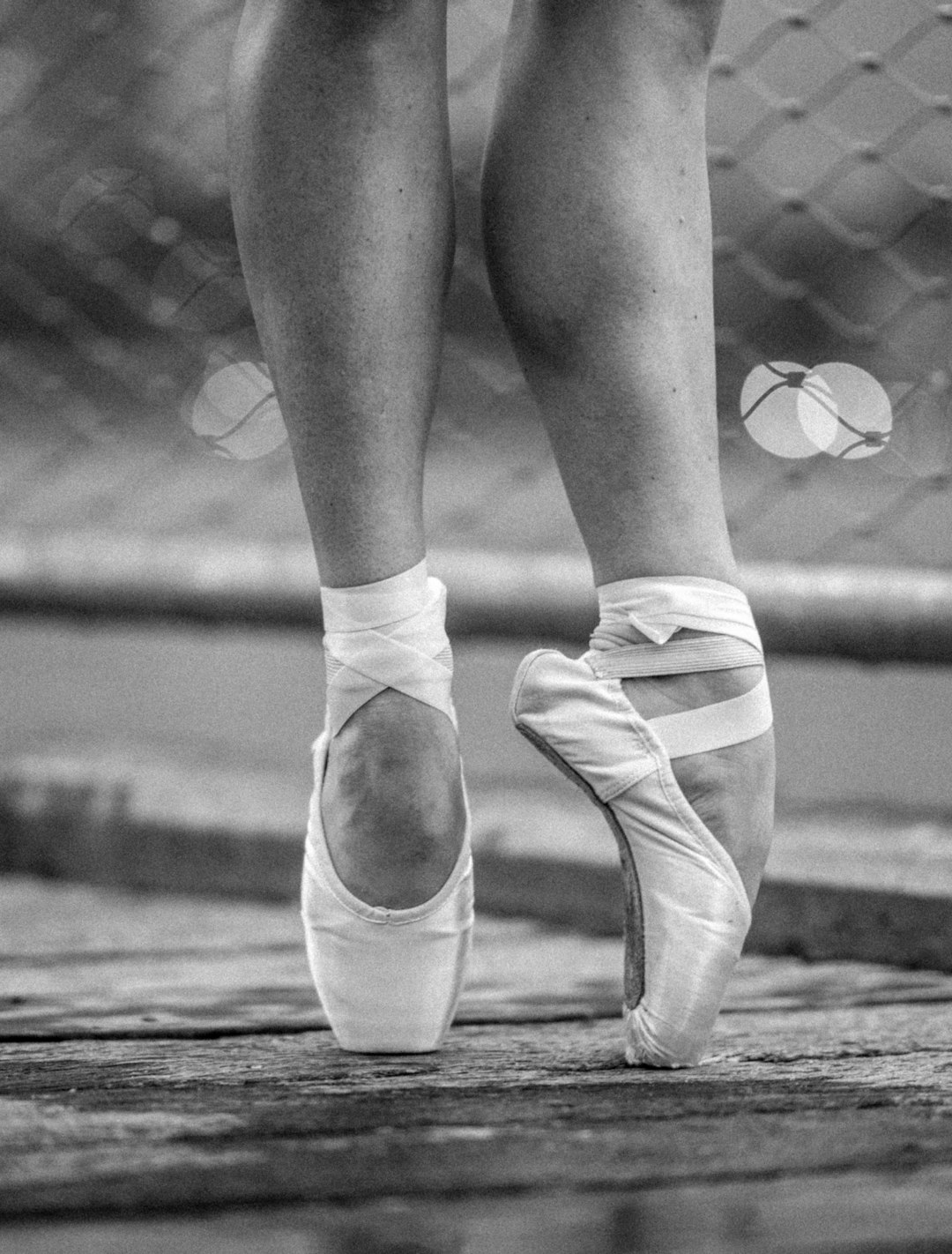
How do you know when you've truly outgrown intermediate ballet? It's not the moment you nail your first single pirouette or finally hold a steady arabesque on pointe. True advancement begins when technique becomes second nature—when your body understands placement before your mind commands it, when turnout originates from deep hip rotation rather than forced foot position, and when you can articulate why a movement works, not merely execute it.
This guide is designed for dancers who have spent 8–10 years in serious training and are ready to undertake the rigorous physical and mental discipline that advanced ballet demands. We'll move beyond generic advice to examine the specific mechanics, prerequisites, and stylistic distinctions that separate promising students from accomplished artists.
Are You Ready? Prerequisites for Advanced Training
Before attempting the techniques outlined below, honest self-assessment is essential. Advanced ballet training carries significant injury risk without proper preparation.
Training History Benchmarks
| Minimum Requirement | Why It Matters |
|---|---|
| 8–10 years of consistent classical training | Neuromuscular patterns for complex coordination require long-term development |
| 3–4 years of pointe work (female dancers) | Ankle strength and alignment stability for advanced repertoire |
| Clean single pirouettes en dehors and en dedans | Foundation for all multiple-turn sequences |
| Working knowledge of petit and grand allegro | Explosive power and aerial awareness for advanced vocabulary |
Physical Readiness Checklist
- Injury history: Current or recent stress fractures, labral tears, or chronic tendonitis require medical clearance
- Strength ratios: Hip stabilizers and core must overpower turnout muscles to prevent compensatory gripping
- Ankle stability: Single-leg relevé endurance test—minimum 16 consecutive elevations on each leg without loss of alignment
- Cross-training foundation: Regular Pilates, gyrotonics, or targeted strength conditioning
"I see too many young dancers rushing into fouetté turns before their supporting leg can sustain the load. The result is usually a twisted knee or fallen arch—not a career." — Elena Vostrotina, former Principal Dancer, Bayerisches Staatsballett; Master Teacher, Vaganova Academy
The Architecture of Advanced Technique
Advanced ballet technique builds upon fundamentals through progressive layering. Below, we examine three benchmark skills with their mechanical breakdowns, common failure points, and systematic progressions.
Multiple Pirouettes: From Single to Double and Beyond
The difference between one clean turn and two is rarely rotational speed—it's preparation efficiency and axis maintenance.
Mechanical Essentials
| Element | Function | Common Error |
|---|---|---|
| Demi-plié depth | Stores elastic energy for launch | Shallow plié reduces power; excessive depth destabilizes |
| Retiré position | Working leg's turnout maintains rotational symmetry | Knee dropping forward throws off vertical axis |
| Spotting | Visual fixation prevents dizziness and maintains orientation | Delayed or imprecise head movement |
| Arm coordination | Port de bras controls momentum and balance | Arms opening too wide or arriving late |
Progression Sequence
- Single pirouette with suspended finish: Hold retiré position for 2 counts post-turn
- Single with quarter-turn addition: Complete turn, close, immediately execute quarter-turn
- Double preparation with single execution: Use double's deeper plié and stronger arm push, execute single
- Full double: Focus on continuous energy through turn, not "two singles stuck together"
Correction for Dropped Shoulder: Practice with fingertips lightly touching wall at retiré height—any shoulder depression becomes immediately apparent.
Fouetté Turns: The 32-Count Benchmark
Made legendary by Odile's coda in Swan Lake, the fouetté rond de jambe en tournant sequence demands precise coordination between legs, seamless weight transfer, and extraordinary cardiovascular capacity.
Technical Breakdown
Each fouetté consists of four distinct phases executed in continuous flow:
- Opening whip: Working leg extends to à la seconde (90° minimum) with controlled demi-plié on supporting leg
- The snap: Rapid rond de jambe en l'air closes to retiré passé as supporting leg relevés
- Suspended turn: Brief rotation on full pointe or demi-pointe with retiré held
- Preparation: Immediate demi-plié as working leg reopens, cycle repeats
Progressive Conditioning
| Stage | Exercise | Target | |-------|----------








