In a warehouse in Brooklyn, a dancer hangs suspended from industrial rigging, her body projected with real-time biometric data pulsing across her skin. Below, a former ballerina with Parkinson's disease conducts the rhythm section through gesture alone. This is contemporary dance in 2024—an art form that has long since abandoned its origins as "ballet's rebellious cousin" to become perhaps the most voraciously hybrid, socially engaged, and technologically adventurous discipline in the performing arts.
From Rejection to Absorption
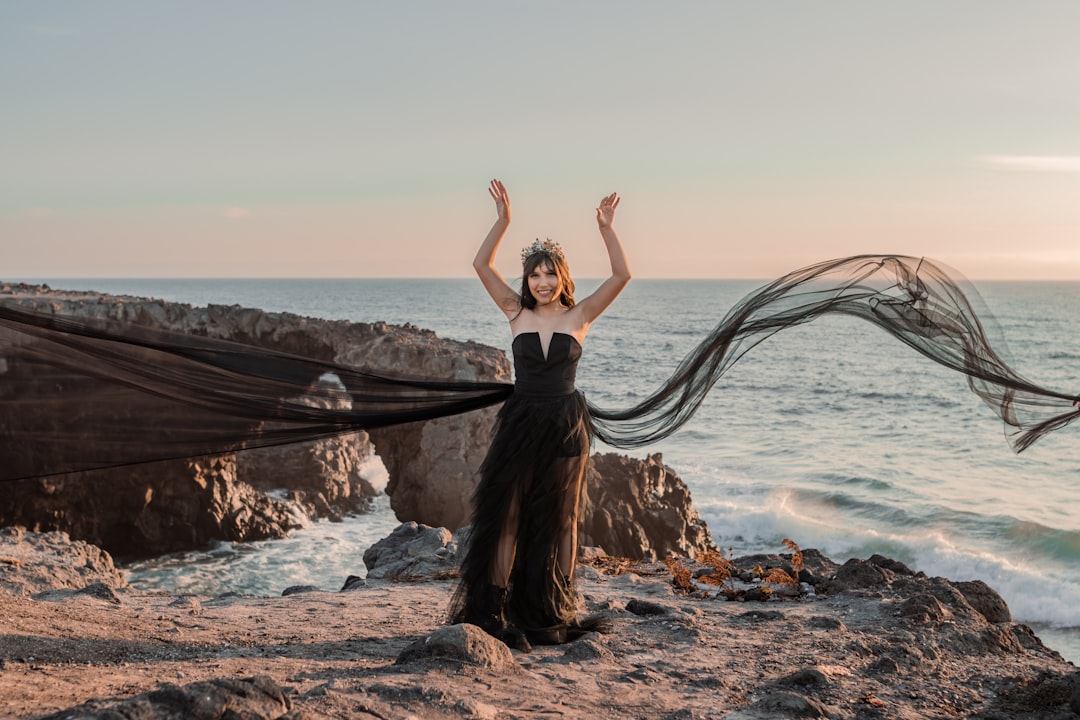
The rupture began in the early 1900s, when Isadora Duncan shed her shoes and corset to dance barefoot in flowing tunics, declaring that "the dancer of the future" would embody natural movement over courtly spectacle. Loïe Fuller manipulated electric light and fabric to transform herself into organic phenomena—butterflies, flames, flowers. These pioneers cracked open a space that later generations would expand dramatically.
By mid-century, Merce Cunningham had severed dance from musical accompaniment entirely, while Alvin Ailey rooted modern technique in the spirituals and blues of African American experience. The postmodernists of the 1960s—Yvonne Rainer, Trisha Brown, Steve Paxton—pushed further, performing in street clothes, on rooftops, with ordinary walking as legitimate choreography.
Today's contemporary dance absorbs without hierarchy: West African griot traditions, Brazilian capoeira, Japanese Butoh's sculptural stillness, voguing's competitive precision, and increasingly, motion-capture technology and artificial intelligence.
The Body as Laboratory
William Forsythe, former director of Frankfurt Ballet, spent decades developing "improvisation technologies"—systems for generating movement that treat the dancer's skeleton as a self-organizing architecture rather than an instrument for executing steps. His methods now influence not only choreographers but roboticists studying human locomotion.
Canadian artist Crystal Pite has pioneered what critics call "narrative robotics," deploying armies of puppet-dancers manipulated by visible performers to explore collective trauma and social control. Her 2017 work Betroffenheit, a collaboration with actor Jonathon Young, used tap, spoken word, and Expressionist horror imagery to process grief—winning Olivier and Tony awards while refusing categorization as either dance or theater.
These practitioners don't merely reject ballet's verticality and turnout; they build alternative physical intelligences from the ground up. Somatic practices like Body-Mind Centering treat anatomical systems—fluids, organs, embryological patterns—as choreographic resources. Contact improvisation, developed by Paxton in 1972, treats the physics of shared weight as compositional material.
Who Gets to Dance?
Contemporary dance's most significant boundary-breaking may be demographic. The Mark Morris Dance Group's Dance for Parkinson's program, launched in 2001, now operates in 300 communities across 25 countries, demonstrating that neurodegenerative disease need not end creative physical expression. Integrated companies like Candoco Dance Company in London and AXIS Dance in Oakland place disabled and non-disabled performers on equal footing, with wheelchair users executing partnering sequences that reimagine what duet form can be.
Digital platforms have further democratized access. During the 2020 pandemic, choreographer Wayne McGregor streamed creation sessions from his London studio, inviting global viewers to influence works-in-progress through real-time feedback. The National Dance Company Wales now maintains a permanent virtual presence, with motion-captured performances viewable through VR headsets.
Contagion Beyond the Stage
Contemporary dance's influence now circulates through unexpected channels. Fashion designer Iris van Herpen's sculptural garments emerge from collaborations with choreographers exploring material dynamics. Architect Elizabeth Diller cites Pina Bausch's Tanztheater as foundational to her firm's public space designs. The "affective computing" industry studies dancerly intuition to improve emotional recognition in AI systems.
This interdisciplinary reach fulfills the early modernists' unrealized ambition: dance not as separate entertainment but as a fundamental mode of knowing and organizing experience.
The Stakes
The art form's future challenges are substantial. Commercial platforms like TikTok accelerate movement trends while flattening context; choreography becomes content, infinitely replicable and immediately forgotten. Climate concerns press against international touring models that have sustained major companies. And the field continues grappling with its own hierarchies—who funds, who programs, whose bodies are centered.
Yet contemporary dance's core methodology—rigorous attention to bodies in space and time, tested through practice rather than prescription—offers resources beyond its own boundaries. In an era of algorithmic mediation and virtual abstraction, the discipline insists on the specific intelligence of physical presence, negotiated between breathing, sweating, thinking people.
The warehouse in Brooklyn is not an escape from the world. It is a laboratory for how we might continue to move through it together.