You've mastered the fundamental isolations, can execute a clean hip drop, and no longer panic when the music starts. Welcome to the intermediate plateau—a common stage where many belly dancers feel stuck between competence and true artistry. This guide moves past generic advice to deliver concrete techniques, cultural context, and strategic practice methods that will transform your dancing from capable to captivating.
Refine Your Foundations: Layering and Transitions
Intermediate dancers don't abandon the basics—they complicate them beautifully. Instead of drilling isolated movements, focus on these three refinement areas:
Layering isolations. Practice maintaining a continuous shimmy while executing upper body movements. Start with simple chest circles, then progress to more complex arm paths and head slides. The goal is independent control: your hips maintain consistent speed and amplitude while your torso executes unrelated patterns.
Traveling with intention. Beginners mark time; intermediates cover space. Practice your basic hip accents—drops, lifts, and twists—while moving in straight lines, circles, and figure-eights. Maintain hip height consistency and avoid the common "bouncing" that reveals insecure footwork.
Level changes. Introduce gentle pliés and rises to basic movements. A hip circle performed at three distinct heights creates visual drama and prepares you for eventual floorwork.
Navigate the Style Landscape: Egyptian, Turkish, and Tribal
"Experiment with styles" becomes meaningful when you understand what distinguishes them. Here's how to approach each:
Egyptian Raqs Sharqi emphasizes internal, controlled movement. Hips stay relatively level; expression comes from subtle muscular articulation and emotional interpretation. Study: Soheir Zaki's 1970s nightclub performances. Observe how she responds to orchestral swells with minimal yet precise hip work.
Turkish Oriental favors external, athletic presentation. Expect faster tempos, higher hip lifts, and more expansive arm gestures. Study: Tulay Karaca's finger cymbal work. Notice her rapid zil patterns that remain audible even during vigorous traveling steps.
American Tribal Style (ATS) prioritizes group improvisation and earthy, grounded movement. The vocabulary emphasizes torso-driven isolations and collaborative cueing systems. Study: FatChanceBellyDance's early formations. Watch how dancers maintain unison without choreographed sequences.
Practice method: Dedicate four weeks to one style. Learn three signature movements, study one historical performance weekly, and improvise exclusively to that style's typical music (orchestral Egyptian, Turkish Roman, or electronic tribal fusion).
Learn from the Masters: What to Actually Watch
Passive viewing wastes your time. Approach legendary performances with analytical intent:
| Dancer | Essential Performance | What to Study |
|---|---|---|
| Nagwa Fouad | "Habena" (1983) | Musical structure mapping—note how she builds energy across the maqam's emotional arc |
| Dina | "Enta Omri" (live Cairo, 1997) | Risk-taking and spontaneity; her "mistakes" become signature moments |
| Rachel Brice | "Serpentine" (2005) | Isolation clarity at speed; practice pausing to identify which muscle groups activate |
Workshop strategy: When attending classes with master teachers, arrive with one specific question. "How do you maintain shimmy control during turns?" yields more value than hoping general instruction addresses your needs.
Develop Musicality: Beyond Counting Beats
Intermediate dancers must hear what beginners miss. Build these listening skills:
Recognize maqamat. The Arabic melodic mode system determines emotional coloring. Rast (C-D-E½-F-G-A-B½-C) sounds balanced and majestic; Hijaz (C-Db-E-F-G-Ab-Bb-C) carries tension and mystery. Match your movement quality accordingly—smooth and presenting for Rast, sharp and withdrawn for Hijaz.
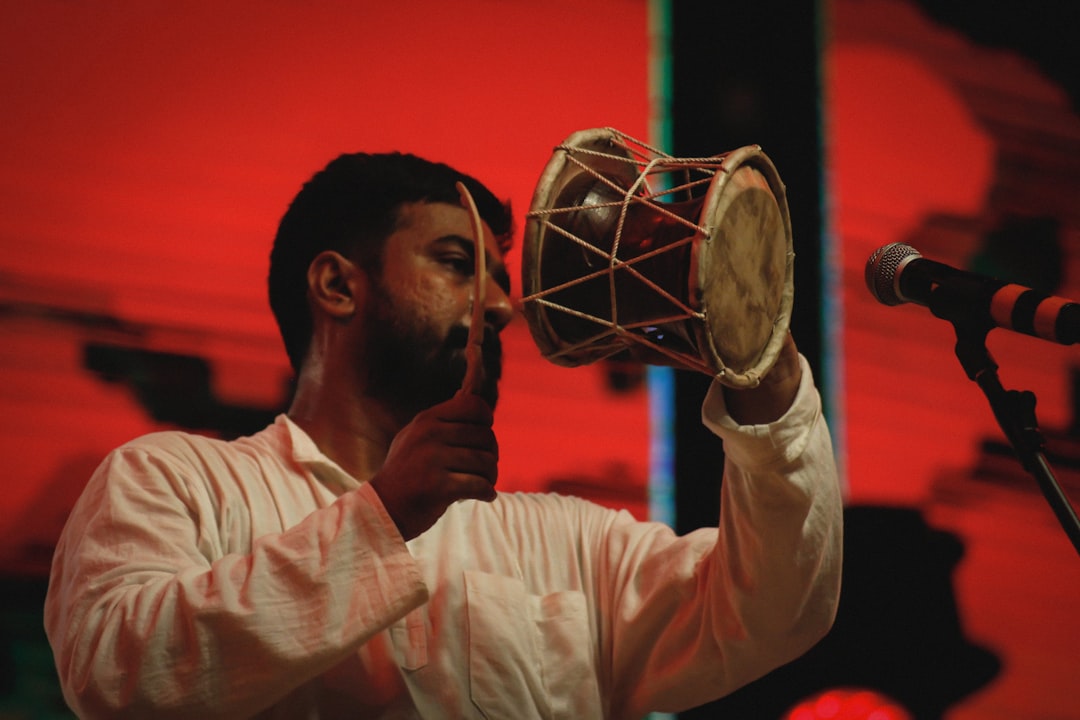
Instrumental responsiveness. The darbuka (goblet drum) invites percussive hip work; the qanun (zither) suggests flowing arm patterns; the ney (flute) calls for breath-initiated torso movements. Practice dancing to solo instrument recordings to isolate these relationships.
Dynamic architecture. Map your energy across a five-minute piece: establish presence in the first minute, build through rhythmic complexity, peak with a drum solo or taxim (improvised melodic section), and resolve with graceful exit material.
Three Intermediate Techniques to Master
Here are specific "tricks" that distinguish experienced dancers:
The Taxim Transition. When the rhythm drops out for improvised melodic exploration, resist freezing or fidgeting. Use slow, continuous movements—figure-eight hips, undulating arms, controlled turns—to maintain audience engagement while your body rests from rhythmic demands. Practice with Samai'i Thaqil recordings.
**Zil Integration