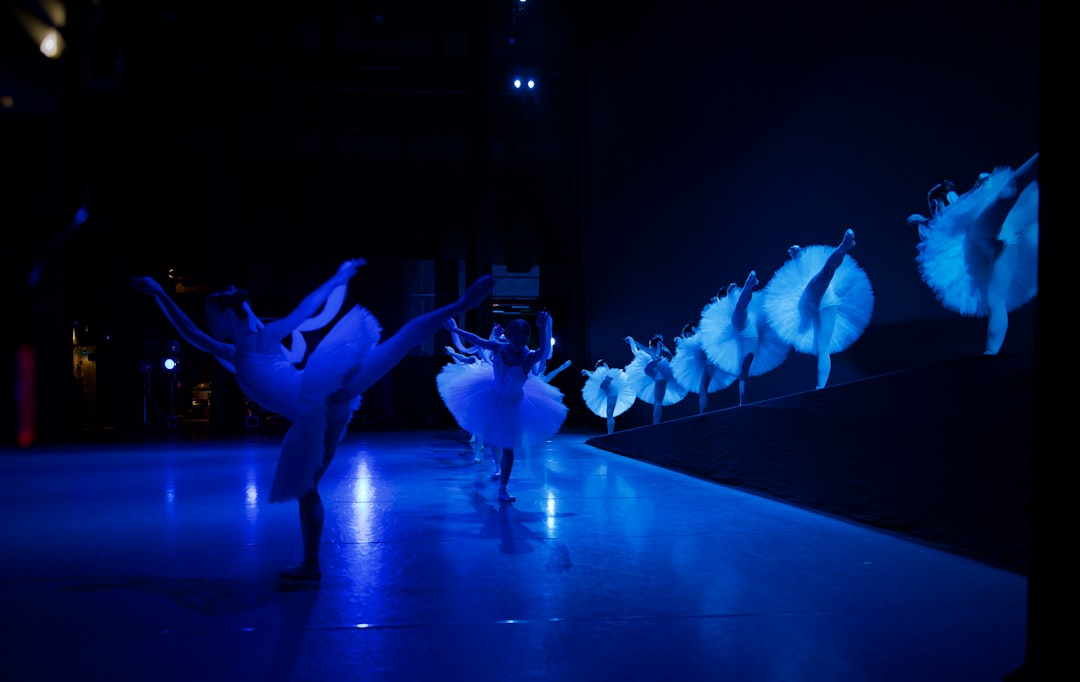
You know all the steps. You can execute a swing-out without counting under your breath. You've survived your first social dance without freezing in terror. Yet something's still missing. When you watch advanced dancers, they seem to float through the music while you're still chasing it—always a half-beat behind, always working harder than the music demands.
Welcome to the intermediate plateau. It's not a skills gap; it's a musicality gap. Here's how to bridge it.
The Real Problem: You're Dancing On the Music, Not In It
Most intermediate dancers treat music like a metronome—an external force to match. Advanced dancers treat it like a conversation. The difference isn't talent; it's listening.
Start here: put on a medium-tempo swing track (140–160 BPM). Step in place, counting "1, 2, 3-and-4, 5, 6"—landing your triple step on the 3-and-4, not near it. If you hear your steps as percussion with the band, not under it, you've found the pocket. If you can't hear the difference yet, that's your first project.
Mastering 6-Count and 8-Count Patterns (Yes, Both)
Intermediate dancers often over-rely on one pattern. Lindy hoppers favor 8-count swing-outs; East Coast dancers live in 6-count territory. The plateau breaks when you can switch between them without thinking.
The 6-count foundation: rock step, triple step, triple step. Clean, compact, essential for faster tempos.
The 8-count expansion: rock step, triple step, step, step, triple step. This is where swing-outs, Charleston, and complex turns live.
Practice drill: Dance an entire song alternating every four bars—four 6-count basics, then one swing-out (8-count). The mental switch strengthens your internal clock and prepares you for follow-led variations.
Swinging the Beat: The Triplet Feel That Changes Everything
Here's a secret most beginners never learn: swing isn't played straight. The "swing" in swing dance comes from a triplet feel—long-short, long-short—where the middle beat of each triplet is implied, not stated.
Straight: DA-DA-DA-DA (even, mechanical) Swing: DA-da-DA-da-DA-da-DA-da (rolling, propulsive)
Most intermediate dancers step evenly. Advanced dancers step swung. Try this: clap straight eighth notes, then clap "1-and-a, 2-and-a" with the "and" shortened. That's the feel. Now step it. Your triple steps should roll, not march.
Diagnose Your Timing Failures
Specific problems have specific solutions:
| Symptom | Likely Cause | Fix |
|---|---|---|
| Always rushing the start | Anticipating the "1" | Count full 8s aloud before stepping |
| Dropping the 4 in 8-count patterns | Weak connection between 3-and-4 and 5 | Practice the "step, step" as a deliberate pause, not a gap |
| Running out of music at phrase endings | Not hearing 32-bar structure | Count phrases: "1-2-3-4, 2-2-3-4..." up to 8 |
| Heavy, plodding footwork | Dancing on the beat instead of in it | Practice behind the beat intentionally, then catch up |
Drills That Actually Transfer
The Step-Touch Variation
Step to the side, touch, then add a delayed rhythm: step on "1," hold "2," touch on "3-and." This builds the controlled lag that creates swing style.
The Half-Tempo Metronome Method
Set a metronome to half your target tempo (70 BPM for 140 BPM music). Step your patterns, but fill the gaps with body movement—swivels, shoulder pops, weight shifts. When you return to full tempo, you'll carry that musicality with you.
The Clap-First Protocol
Before any stepping, clap the rhythm you intend to dance. If you can't clap it cleanly, you can't dance it cleanly. This exposes the gap between what you think you're hearing and what you're actually hearing.
Solo Practice vs. Partnered Practice: Different Skills, Different Sessions
Solo practice builds your internal clock. Use mirrors, record yourself, and prioritize clean execution over flash. Thirty focused minutes beats two hours of unfocused social dancing.
Partnered practice tests your adaptability. Your partner's timing will drift; your job is to maintain your groove while negotiating ours. Practice with dancers better than you, worse than you, and wildly different in style.