You've mastered the basic steps of your first folk dances—perhaps a Bulgarian horo, an American contra, or a Hungarian csárdás—and can make it through an evening without getting lost. But something's missing. Your styling feels generic. You hesitate during transitions. The best dancers seem to inhabit the music differently, moving with an ease and authority that eludes you.
Welcome to the intermediate plateau: where technical competence meets the long road toward artistry. This stage demands more than repetition of what you already know. It requires deliberate practice, cultural curiosity, and a shift from memorizing sequences to embodying tradition.
From Memorization to Musicianship
Intermediate dancers often execute steps correctly while remaining disconnected from the music that drives them. Folk dance is inseparable from its musical tradition—whether that's the asymmetric meters of Balkan dance, the driving reels of Irish set dancing, or the modal ornamentation of Middle Eastern line dances.
Learn the musical architecture. In many traditions—Scottish country dance, Hungarian táncház, English country dance—sequences align with predictable "A" and "B" musical phrases. Map your steps to these structures. Can you identify when the melody returns to the tonic? When a new phrase begins? This awareness transforms mechanical counting into musical conversation.
Practice with variable timing. A metronome builds foundational precision, but live folk music breathes. It accelerates into choruses, settles into verses, responds to dancer energy. Once you can maintain steady tempo, practice with recordings that speed and slow, or better yet, dance with live musicians. Develop responsiveness rather than mechanical precision.
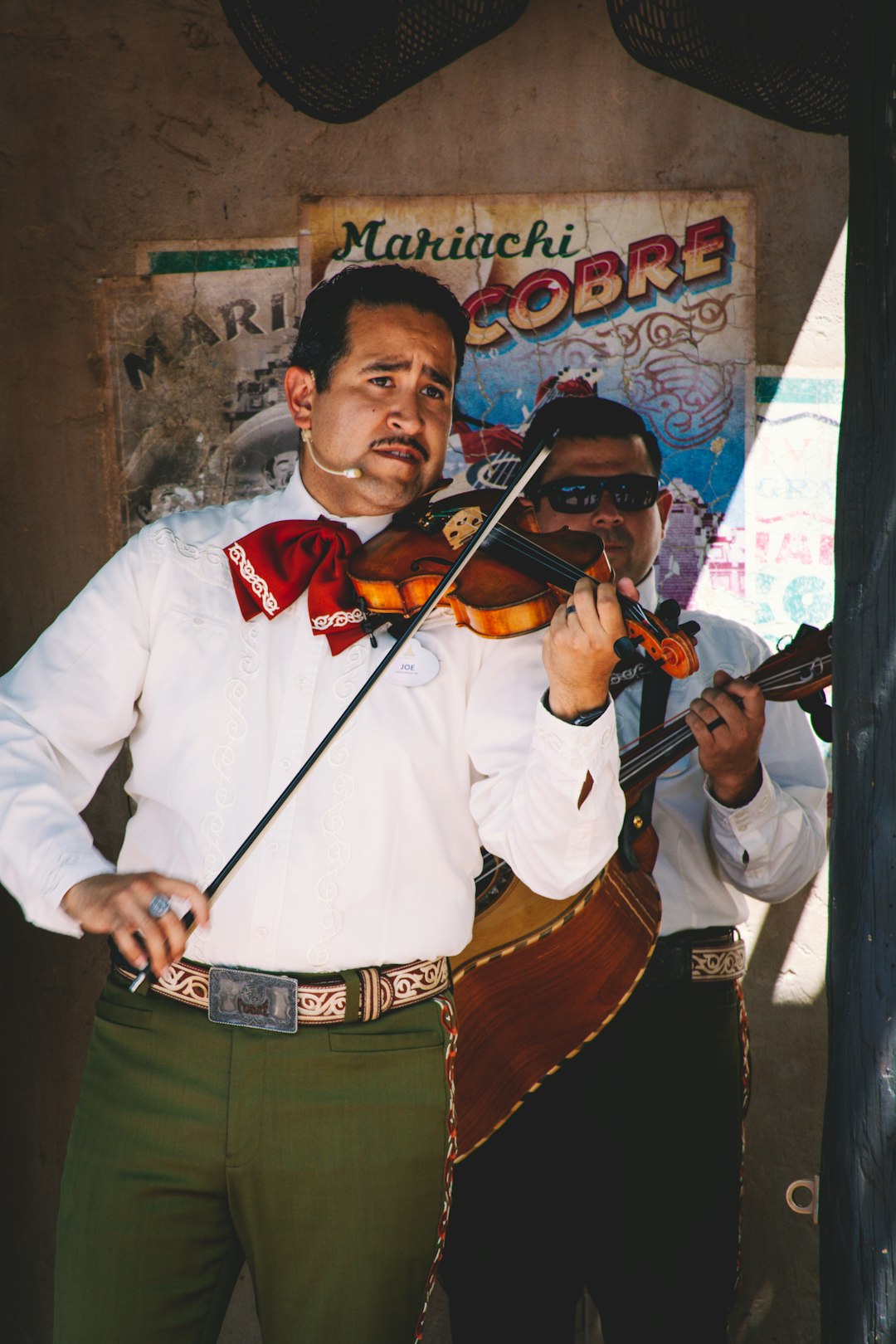
Attend music sessions. Sit with the players. Learn to distinguish a bouzouki from a tambura, a fiddle's rhythmic role from its melodic one. The dancers who truly lead on the floor understand what the clarinet signals when it ornaments a phrase, or how a accordion's chord change telegraphs a transition.
From Execution to Embodiment
Breaking down dances into smaller pieces remains essential, but intermediate practice requires specificity about what to isolate.
Master the transitions. In repeated-figure dances—contra, square, many Eastern European forms—the steps themselves become automatic. Intermediate dancers falter where sequences connect: the final two beats of a hey before the next figure begins, the recovery from a swing into proper formation. Practice these boundary moments deliberately. Dance the last eight beats of one figure straight into the first eight of the next until the seam disappears.
Record yourself monthly. Compare recordings six months apart. Intermediate dancers often discover they're executing steps correctly but sacrificing posture, arm position, or connection with partners—elements invisible during practice. Watch specifically for: tension in shoulders (common when concentrating), wandering gaze (indicates uncertainty), and disconnection from neighbors (you're dancing next to people rather than with them).
Develop regional styling. Generic "folk dance" posture serves no tradition well. Research your chosen style: the lifted carriage and precise foot placement of Romanian dance, the grounded weight and rhythmic complexity of Appalachian clogging, the flowing arms and continuous motion of Greek island dances. Seek video of master dancers from specific villages or lineages, not generalized performances. Mimic one element—hand position, head angle, the quality of a step—until it becomes natural before adding another.
From Participant to Community Member
Folk dance is inherently communal and culturally rooted. Technical practice in isolation only advances you so far.
Seek direct transmission. Many traditions emphasize "ear learning" and stylistic transmission through observation and imitation rather than formal instruction. Attend workshops with master dancers brought from source communities. Notice what they demonstrate without verbal explanation—the angle of a shoulder, the relationship to floor and gravity, the social signaling between partners. These subtleties rarely appear in written notation.
Learn the social logic. Intermediate dancers should understand not just how to execute figures but why they're structured as they are. In contra dance, who progresses and who returns reveals the form's democratic social architecture. In Balkan line dances, the leader's role and its rotation express communal values. In set dances, the spatial relationships between couples encode historical narratives. This understanding transforms competent execution into meaningful participation.
Begin giving back. The intermediate stage is the ideal time to assist beginners, call simple dances, or help organize community events. Teaching forces clarity about what you actually know versus what you habitually approximate. It also connects you to the transmission chain that keeps traditions alive.
Embracing the Long Road
The gap between competent intermediate and genuinely advanced folk dancing is wider than it first appears. Advanced dancers possess not just technical refinement but stylistic authority—the sense that they belong to a tradition rather than visiting it. They can improvise within convention, adapt to unfamiliar regional variants, and transmit knowledge to others.
This authority develops slowly, through sustained relationship with specific traditions, their music, their communities of practice. There are