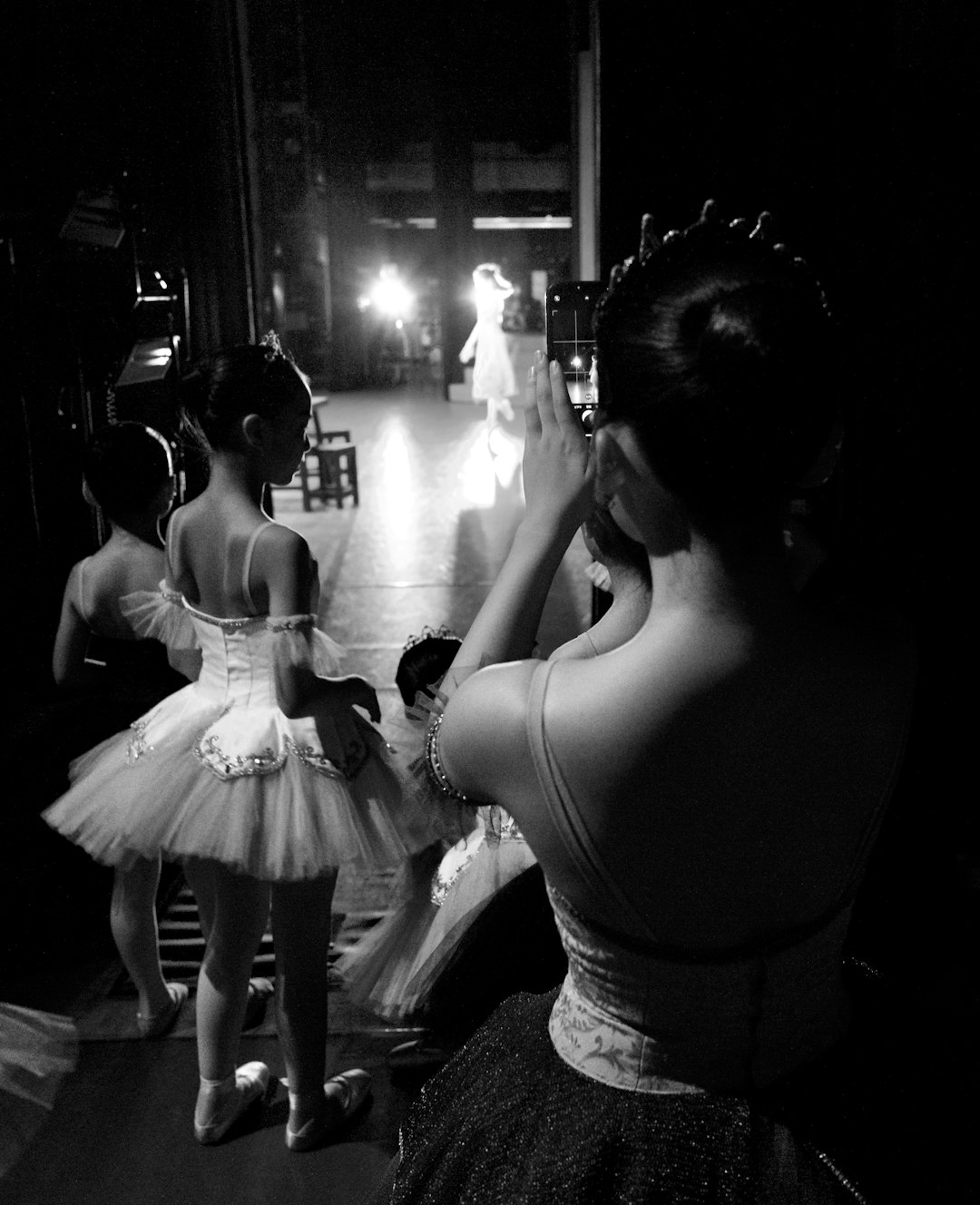
The swing dance floor has a hidden language. Watch closely at any serious social dance or competition, and you'll notice something: the most compelling dancers aren't doing more moves—they're doing more with less. They're having conversations with their bodies, with the music, and with each other that transcend the eight-count patterns everyone learns in their first month.
If you've spent years collecting moves but still feel like something's missing, you're not alone. Most intermediate dancers plateau here, mistaking complexity for mastery. The path forward isn't about learning harder steps. It's about developing the sensitivity and intention that separate technicians from artists.
The Advanced Mindset: From Execution to Listening
Advanced dancing begins with a fundamental shift in attention. Beginners focus on what comes next; advanced dancers focus on what is happening now.
This means treating every dance as improvisation rather than performance. It means becoming comfortable with failure—missing a lead, losing the phrase, misreading a signal—and treating these moments as data rather than disasters. The best dancers you've watched? They've had thousands of awkward dances. They've learned to recover so smoothly you never noticed the mistake.
Deliberate practice also separates social dancing from skill development. Social dancing builds repertoire and confidence, but it rarely challenges your edge. Advanced dancers supplement floor time with focused work: drilling specific techniques in front of mirrors, filming themselves for analysis, or working with trusted partners on single concepts for entire sessions.
Musicality Beyond Counting: Dancing the Band, Not the Beat
If you're still counting "one-two-three-and-four," you're dancing over the music rather than inside it. Advanced musicality operates on multiple simultaneous layers.
Phrasing and structure: Swing music follows predictable patterns—typically 32-bar forms with four 8-bar sections. Advanced dancers feel these larger structures, using them to build and release tension. They know when a song will break down, when the brass will punch through, when the vocalist will land a phrase. They save their most explosive energy for these moments rather than spending it uniformly.
Instrumental specificity: Try dancing exclusively to the bass line for an entire song. Then the horns. Then the ride cymbal. Each instrument suggests different textures—smooth and grounded for bass, sharp and rhythmic for brass, floating and syncopated for the cymbal. Advanced dancers can switch between these voices mid-phrase, creating contrast and narrative.
Tempo adaptation: The modern swing scene spans 120 BPM blues to 300+ BPM frenetic energy. Advanced dancers develop distinct technical approaches for each range: pulse-driven movement at slow tempos, efficient footwork and momentum conservation at high speeds, and the rare ability to maintain relaxed styling when the band pushes the tempo.
The Physics of Partnership: Connection Dynamics
"Connection" in swing dance has specific, trainable components that most dancers never name.
Stretch and compression: These aren't metaphors—they're measurable forces. Stretch creates potential energy between partners, like drawing a bow. Compression stores energy through shared mass. Advanced dancers modulate these forces precisely, creating elastic conversations where each movement answers the previous one. They can lead a direction change through stretch alone, without explicit arm signals.
Counterbalance and shared axis: Moves like the swingout, the circle, and various dips depend on partners managing combined center of gravity. Advanced dancers develop intuition for how far they can lean, how quickly they can rotate around a shared point, and how to recover when balance shifts unexpectedly. This requires core engagement, ankle strength, and the willingness to trust your partner's structural integrity.
Momentum management: Beginners fight momentum; advanced dancers ride it. They understand that every rotation, every traveling step, carries kinetic energy that can be redirected, amplified, or dissipated. This is what makes advanced dancing look effortless—the dancers aren't working harder, they're working with physics rather than against it.
Styling With Intention: Historical Roots and Personal Voice
"Style" without research is just affectation. The most compelling stylists ground their choices in historical authenticity, then filter through personal expression.
Each major swing style carries distinct movement signatures. Savoy-style Lindy Hop emphasizes athleticism, close connection, and playful improvisation. Hollywood style favors smooth lines, dramatic shapes, and theatrical presentation. Balboa prioritizes subtle footwork and close embrace efficiency for crowded floors. Collegiate Shag offers lightning-fast footwork and upright posture. West Coast Swing—though technically distinct—shares rhythmic DNA and emphasizes smooth, elastic connection.
Advanced dancers study original footage: Norma Miller's explosive energy, Frankie Manning's playful innovation, Dean Collins's precision, Jewel McGowan's swivel technique. They don't copy these dancers wholesale. They analyze why choices were made—the physical constraints of the era's clothing, the social contexts of ballrooms and clubs, the influence of earlier dance forms.
Then they make deliberate choices. Perhaps you emphasize 1930s elegance in your footwork but incorporate modern athleticism