By Samira Voss | Published May 11, 2024
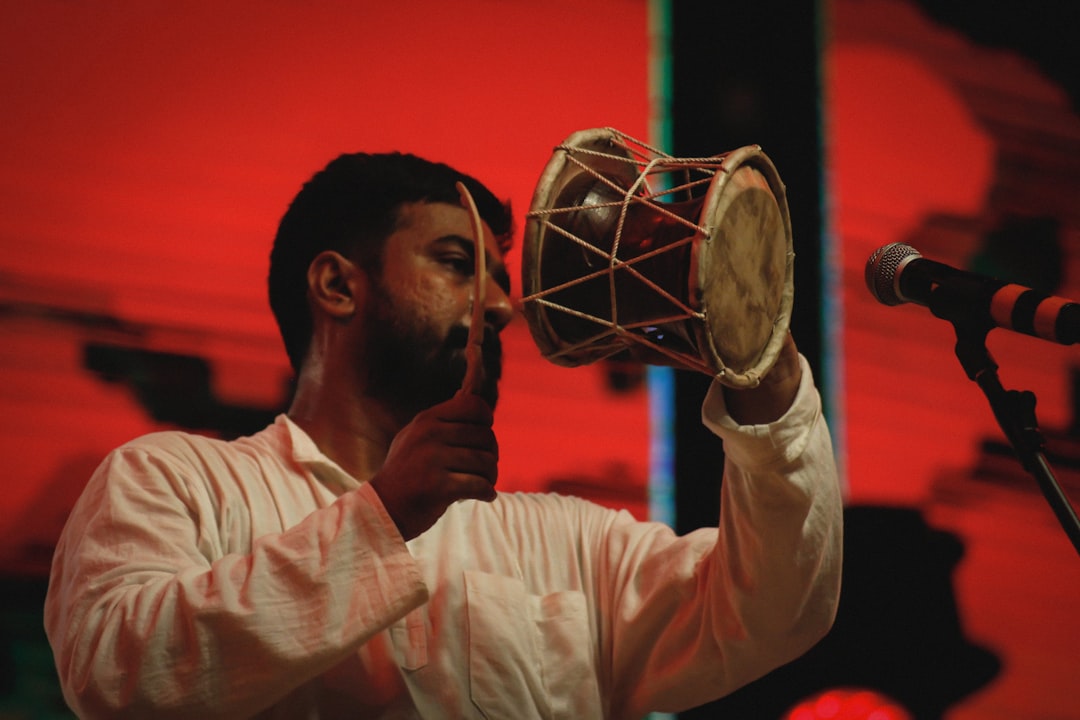
On a rainy Tuesday in January, fifteen students at Hip Circle Studio in Neffs City's River District stood before a wall of mirrors, isolating their rib cages to the thump of a doumbek. At the front of the room, instructor Dana Rourke wore a motion-capture suit, her movements feeding directly into a software program that would later place her inside a digital Moroccan souk. Half the class had signed up for theVR component; the other half, mostly dancers over fifty, had come for the live drummer in the corner.
This is belly dance in Neffs City circa 2024: not a single scene but several, sometimes uneasily sharing the same space.
Holding the Line
Rourke, 42, is one of a handful of instructors in Neffs City who still teaches Egyptian-style raqs sharqi as a sustained discipline rather than a fitness adjunct. At Hip Circle, her foundational classes require six months of study before students may advance to choreography. "The shimmy is not just a muscle contraction," she told me. "It's a vocabulary. If you don't know what you're saying, the fusion becomes noise."
That rigor is increasingly rare. According to Rourke, enrollment in her traditional track has held steady at roughly thirty students per term—enough to sustain the program, but not enough to expand it. Other studios have trimmed or eliminated their classical offerings entirely.
The Fusion Boom
Three miles east, at Serpent Moon Studio, the waiting list for "Tectonic"—a fusion workshop pairing Egyptian tabla with breakbeat and floor work adapted from contemporary dance—reached forty people within forty-eight hours of its February announcement. The March premiere drew a standing-room crowd.
Serpent Moon's owner, 29-year-old Kofi Mensah, came to belly dance through hip-hop and ballet. He makes no apologies for the hybrid approach. "The form survives because it mutates," Mensah said. "My grandmother's Egypt is not my Egypt. My students want to see themselves in this."
Not everyone agrees. At a March panel hosted by the Neffs City Arts Collective, Rourke and Mensah shared a stage for the first time. The exchange grew tense when Rourke suggested that some fusion pieces risked "aestheticizing fragments of a culture without honoring their source." Mensah countered that gatekeeping had driven younger dancers away from Middle Eastern dance for decades. The audience voted with its applause—split, though slightly favoring Mensah.
Technology as Experiment, Not Standard
The motion-capture residency that Rourke demonstrated at Hip Circle is not typical Neffs City fare. It is one output of a quarterly partnership between the studio and the Neffs City Arts Collective, funded by a 2022 state arts grant. Four local dancers have completed the residency; two have produced finished works. One of those, Rourke's Souk Simulator, will stream at a regional dance festival in June.
Elsewhere, technology's footprint is more modest. Serpent Moon offers occasional classes in video editing for social-media performance, and several instructors use projection mapping in annual showcases. No studio in Neffs City currently maintains VR equipment as a permanent teaching tool. The "digital elements" referenced in some promotional materials generally amount to recorded backdrops and Spotify playlists.
Who Gets to Dance
The most substantial shift in Neffs City's belly dance community may be the least glamorous. Four of the city's seven active studios now operate explicit pay-what-you-can tiers, and three have removed mirrors from at least one weekly class to accommodate dancers with body dysmorphia or gender dysphoria.
At Full Moon Dance in the North End, owner Priya Shah, 35, launched a "Dance for Every Body" series in 2021 that now accounts for 40 percent of her enrollment. "I grew up in this form feeling like I had to apologize for my thighs," Shah said. "Now I have students in their sixties, students in wheelchairs, students who are transitioning. The technique adapts. The expression doesn't."
That inclusivity has come with commercial pressure. Two studios closed in Neffs City between 2020 and 2023, and surviving spaces have raised drop-in rates by an average of 22 percent since 2021, according to Shah. The pay-what-you-can model, she acknowledged, works only because her larger classes subsidize it. "We're inclusive until the rent comes due," she said. "That's the tension nobody wants to talk about."
What Comes Next
At the close of the Neffs City Arts Collective panel in March, an audience member asked Rourke and Mensah whether they could envision collaborating. Both paused. Then Rourke said, "I'd want to see his