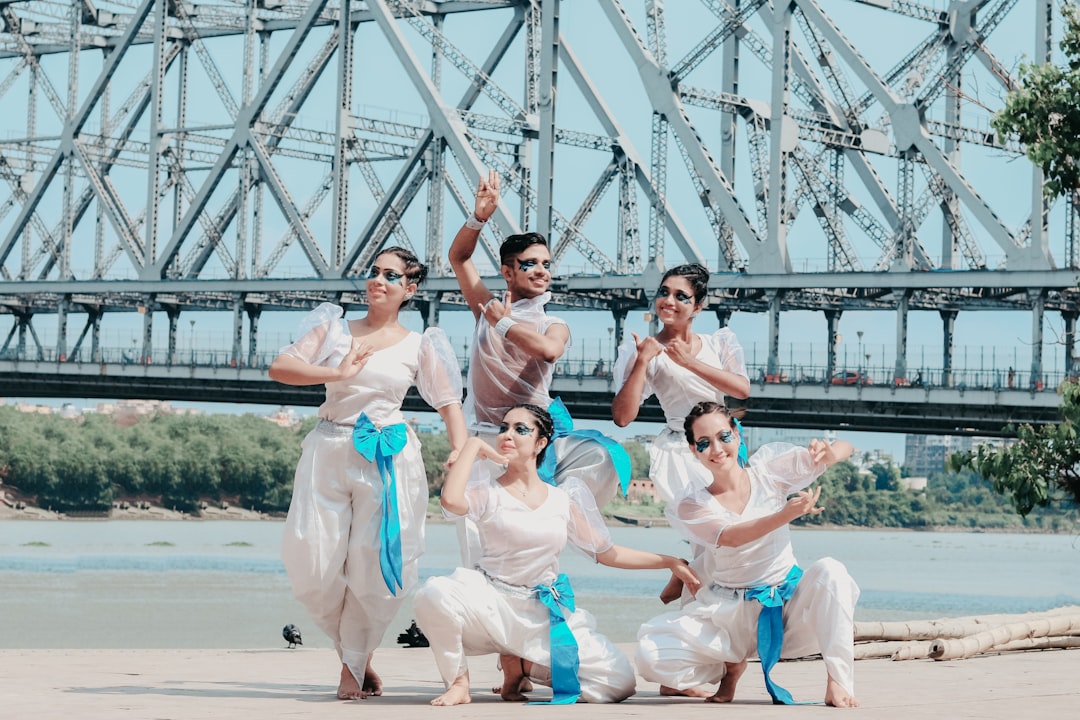
Walk into any professional contemporary audition and you'll notice something immediately: thirty dancers with identical training lists on their résumés, but only three who make you stop breathing when they move. Technical proficiency gets you through the door. These five skills keep you in the room.
The Real Problem with Most Training
Contemporary dance education has exploded, yet the gap between studio-ready and stage-ready dancers has never been wider. The issue isn't effort—most aspiring dancers work brutally hard. It's misdirected effort: accumulating styles without understanding principles, copying shapes without cultivating sensation, and conditioning bodies in ways that undermine the very movement quality the field demands.
The skills below progress from foundational to transformative. Each builds on the last. Skip the hierarchy, and you'll plateau early.
1. Technique: Principles Over Styles
Contemporary technique demands contradictory competencies: the articulated spine of Cunningham, the weighted release of Limón, and the ballistic freedom of Forsythe's improvisation technologies. Rather than accumulating certificates, focus on movement principles that transfer.
What to prioritize:
- Sequential initiation: Understanding how movement ripples from proximal to distal, or breath to periphery
- Spiral mechanics: How rotation organizes through the body's core rather than wrenching at joints
- Momentum management: The difference between collapsing into gravity and riding it
Red flags in instruction: Teachers who demonstrate without explaining mechanical logic, or who correct appearance rather than cause. Seek instructors who can articulate why a sequence works, not merely what looks correct.
Progressive application:
- Beginner: Master parallel and turned-out alignment in plié and roll-down; understand pelvic neutral versus tucked
- Intermediate: Integrate fall and recovery; execute seamless level changes without preparatory hesitation
- Advanced: Improvise within technical constraints; maintain clarity during off-balance, high-velocity phrase work
2. Musicality: Listening Beneath the Beat
Contemporary music rarely offers obvious counts. Your job isn't to hit beats—it's to reveal structure through physical choice.
Most dancers hear rhythm and melody. Working professionals hear:
- Timbre and texture: How to embody electronic distortion versus acoustic warmth
- Polyrhythmic layering: Moving against the primary pulse while maintaining internal subdivision
- Silence as material: The negative space where meaning accumulates
Practical training:
- Analyze scores, not just tracks. Study how Steve Reich's phasing patterns or Meredith Monk's vocal architectures suggest physical organization
- Practice with music that frustrates you—complex time signatures, ambient washes without clear pulse, speech-based compositions
- Record yourself improvising to the same piece three times, then edit: where were you illustrating the music versus interrogating it?
3. Somatic Intelligence: Your Internal Technology
Contemporary choreography increasingly draws from internal sensation rather than external shape. The mirror is a tool—and a trap. Proprioceptive acuity separates technicians from artists.
Core practices:
- Body-Mind Centering: Embodying specific tissues (bone, fluid, organ) to generate qualitatively different movement
- Alexander Technique: Releasing habitual tension patterns that limit dynamic range
- Blindfolded improvisation: Severing dependence on visual feedback to deepen spatial and textural awareness
Why this matters now: Post-2020, digital and hybrid training normalized dancing in domestic spaces without mirrors. Dancers who cultivated internal sensing maintained their development; mirror-dependent dancers regressed technically despite continued practice.
Integration drill: Learn a phrase fully mirrored, then execute it with eyes closed, then teach it to someone else without demonstrating—verbal translation forces somatic clarity.
4. Performance Quality: The Architecture of Attention
Expression without structure reads as indulgent. Structure without vulnerability reads as cold. Contemporary performance requires calibrated risk: choices that feel dangerous but are precisely controlled.
Develop through:
- Viewpoint training: Spatial relationship, tempo, and duration as compositional tools for solo work
- Failure rehearsal: Deliberately pushing expression past your comfort zone in studio, so performance reads as authentic rather than tentative
- Audience composition: Understanding how proximity, elevation, and sightlines alter what "reads"—a choice that devastates in studio may disappear in a 500-seat theater
Specific technique: Practice with a camera at various distances. What feels like subtle facial expression often vanishes; what feels like gross physical exaggeration often reads as nuanced. Calibrate accordingly.
5. Physical Preparation: Conditioning for Contradiction
Contemporary dancers need eccentric strength for controlled descents into floorwork, dynamic flexibility that activates through range rather than static holding, and intercostal endurance for movement that doesn't allow vertical recovery.
Replace these common mistakes:
| Instead of | Why it fails | Substitute |










