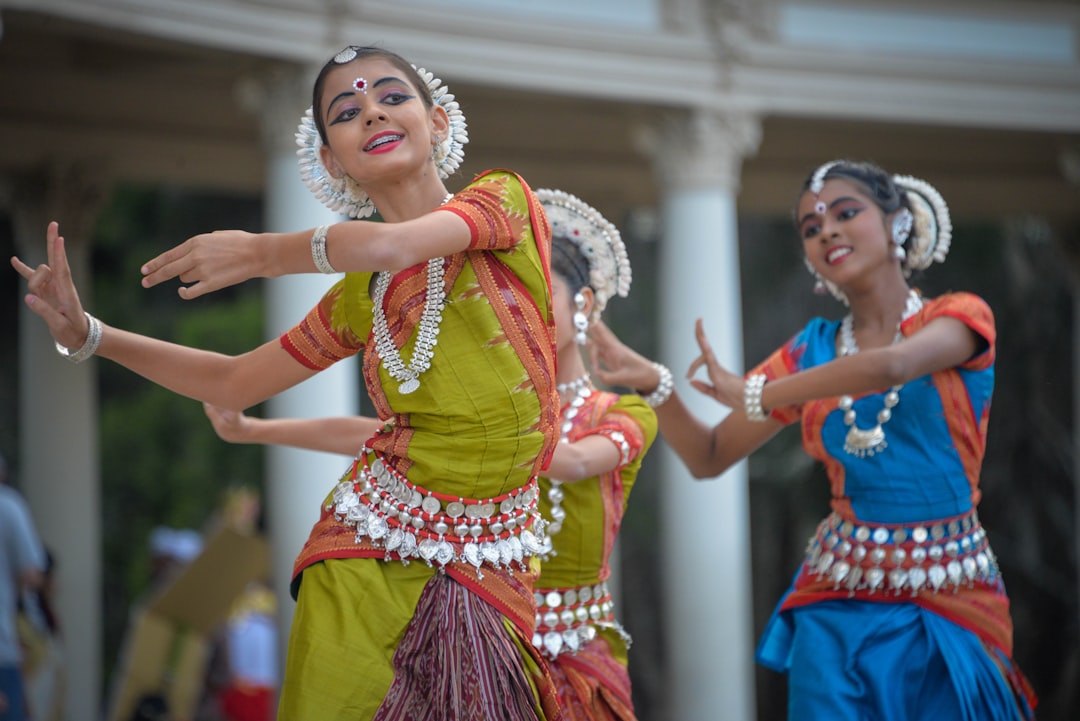
The studio mirror shows your foot placement. The stage lights show everything else—your hesitation, your partner's micro-expression, whether you've truly embodied the music or merely executed steps. The gap between competent studio dancer and compelling stage performer isn't technical; it's transformational.
Whether you're preparing for your first competition, a theatrical showcase, or simply seeking to elevate your practice, the journey from studio to stage demands more than additional rehearsal hours. It requires deliberate cultivation of skills that mirrors cannot teach: the architecture of attention, the grammar of emotional communication, and the physical vocabulary of presence itself.
Master Performance as a Discipline, Not an Afterthought
Technique provides the foundation; performance provides the reason audiences remember you. Yet too many dancers treat performance quality as something that will "naturally emerge" once technique solidifies. It won't.
Study the architecture of professional performances. Attend live ballroom events with analytical intent. Position yourself where you can observe audience members, not just dancers. Note precisely when spectators lean forward, when they exhale collectively, when they break into spontaneous applause. These moments rarely coincide with the most technically difficult sequences—they coincide with moments of genuine human connection.
Develop your performance arc deliberately. Practice the progression from neutral preparation through engaged partnership to emotional crescendo. For a tango, this might mean controlled intensity building to smoldering confrontation; for a jive, exuberant playfulness escalating to infectious joy. Map these arcs to specific musical phrases, not arbitrary moments.
Rehearse with recording discipline. Video every practice performance, then watch without sound. If your story reads clearly in silence, your facial expressions and body language are doing their work. If not, identify the disconnect: are your emotions arriving too early, peaking too late, or failing to match your movement quality?
Build Musicality That Survives Real-World Conditions
The current advice to "listen to different types of music" insults dancers who have already invested years in their craft. True musicality—the kind that distinguishes memorable performances from competent ones—operates at far greater depth.
Internalize phrase structure physically. Walk through your routine hitting only the '1' of each 8-count, then layer in the '3' and '5' to embody the music's architecture. When you can mark the underlying structure without conscious attention, you free cognitive resources for interpretation and adaptation.
Train for orchestral unpredictability. Live bands vary tempo, stretch phrases, and introduce rubato in ways recordings never will. Practice with variable-speed recordings or have your coach randomly adjust metronome settings mid-song. The goal isn't perfect prediction—it's unshakeable partnership communication that allows instantaneous adjustment.
Dance the spaces, not just the sounds. The most sophisticated musicality manifests in how you handle silence: the held note, the orchestral break, the moment before the downbeat. Choreograph these deliberately. A well-placed stillness often generates more impact than any sequence of steps.
Cultivate Stage Presence Through Specificity
"Stage presence" suffers from mystical reputation—either you have it or you don't. This is nonsense. Presence is a trainable skill composed of observable, practicable elements.
Master the aperture. The moment before movement begins—what theater artists call the aperture—establishes everything that follows. Practice entering your performance space, finding your mark, and doing nothing with complete commitment. Hold this stillness until the discomfort transforms into power. In competition, this might last fractions of a second; in theatrical performance, several deliberate beats.
Calibrate for your context. Adjudicators typically stand at floor level, requiring your projection to travel downward and outward. Practice "judicator scanning": deliberately making visual contact with multiple points around the floor perimeter without breaking partnership connection. Theatrical audiences, seated and distant, demand expanded vertical presence—practice feeling your energy reach the back row's eyeline.
Use the spotlight drill. Have your coach or partner randomly shine a phone flashlight on you mid-routine without warning. Train yourself to immediately expand your energy outward rather than contracting inward. Stage presence is fundamentally generous—it offers something to witnesses rather than protecting the self from scrutiny.
Partnership: The Stage's Ultimate Variable
No solo practice prepares you for the reality of partnered performance under pressure. The partnership skills that suffice in studio—basic lead-follow, shared timing—crumble under competitive adrenaline or theatrical lighting unless deliberately strengthened.
Develop repair protocols. Every partnership breaks down eventually on stage. Establish non-verbal signals for "slow down," "find the one," and "abandon and recover." Practice dancing with intentional disruption: have your coach call out "music stop" or "tempo change" mid-routine and execute your recovery seamlessly.
Rehearse the between-dance partnership. Judges and audiences observe you from entrance to exit, not just during choreography. Practice your entrance walk, your position-taking, your acknowledgment of applause, and your