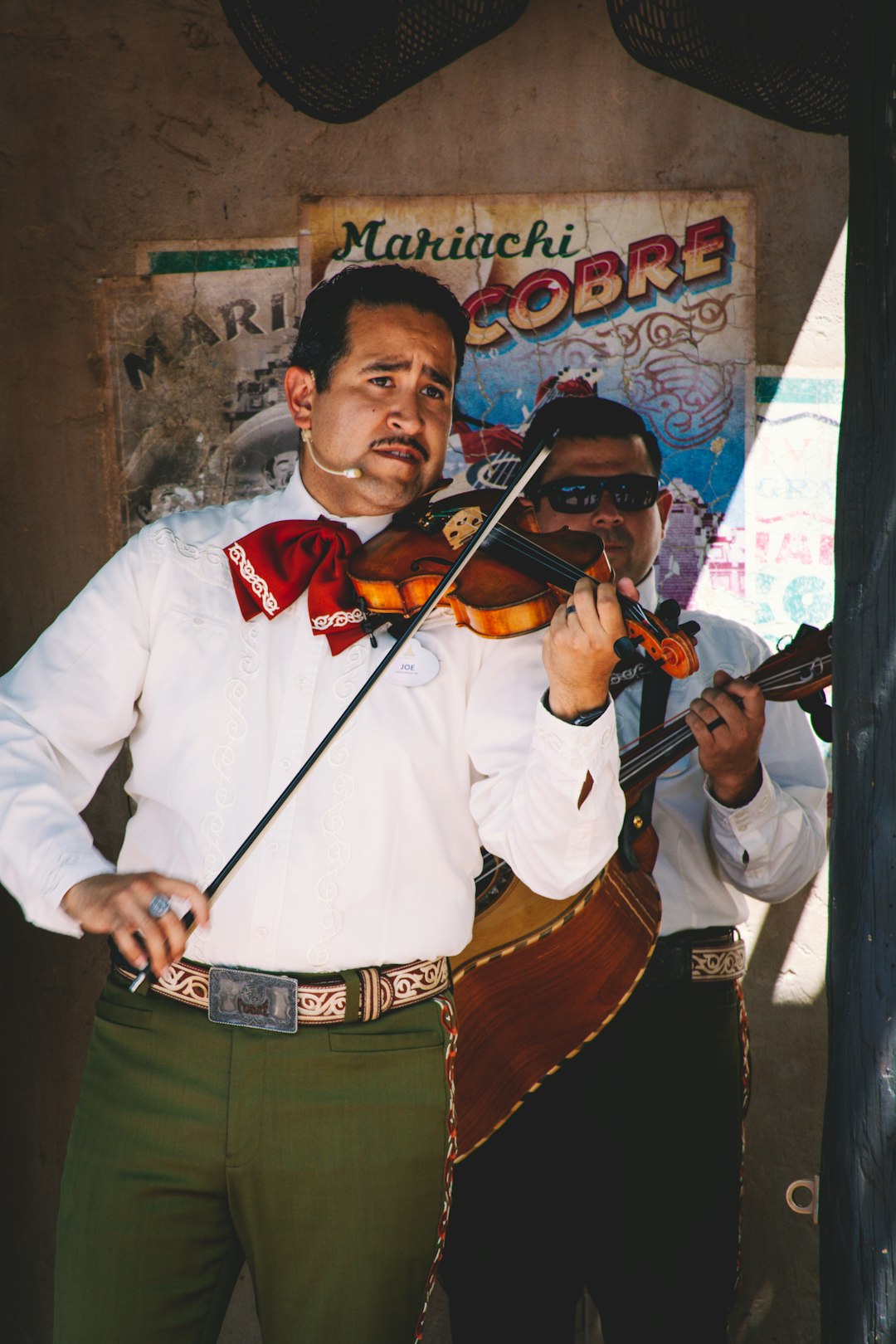
For dancers who have mastered studio technique, folk dance presents a different challenge entirely: authenticity without appropriation, improvisation within tradition, and the translation of cultural knowledge through physical vocabulary. This guide addresses the advanced practitioner's transition from competent performer to cultural interpreter—and eventually, to tradition-bearer.
Understanding History Through Embodied Research
Advanced folk dance requires moving beyond Wikipedia summaries into substantive ethnographic engagement. Your research methodology matters as much as your technique.
Archival Sources and Historical Practice
Early 20th-century collectors documented dances through systems like Labanotation, film fragments, and phonographic recordings. These sources reveal evolution: the Hungarian csárdás documented by Bartók in 1908 differs measurably from contemporary village practice. Learn to read these notations critically—what did collectors emphasize or ignore? Whose bodies were considered worthy of documentation?
Living Tradition Holders vs. Revivalist Interpretations
Distinguish between:
- Source communities: Practitioners for whom dance maintains social and ceremonial function
- Revival traditions: Conscious reconstructions, often by urban or diaspora populations
- Stage adaptations: Folklorized presentations for theatrical consumption
Your responsibility shifts depending on which stream you enter. Revival dancers must acknowledge their interpretive choices; those working with source communities must prioritize community needs over personal artistic goals.
Contemporary Political Contexts
Folk dance never exists in isolation. The Macedonian oro carries different meanings in Skopje, Sofia, and Toronto. Palestinian dabke functions as resistance and celebration simultaneously. Understand whose claims to authenticity you're navigating, and how your participation reads in contested spaces.
Technical Deep-Dives: Precision Within Tradition
Advanced folk dance demands specialization. Select traditions to study deeply rather than sampling superficially.
| Tradition | Technical Focus | Advanced Challenge |
|---|---|---|
| Hungarian csárdás | Csapás (foot slaps) and tempo transitions | Maintaining precision at accelerating friss tempos |
| Cape Breton step dance | Close-to-floor footwork and upper body stillness | Integrating with fiddle rhythm variations in real time |
| Bulgarian horo | Compound meters (7/8, 9/8, 11/8) | Leading line transitions while maintaining asymmetric meter |
| English Morris | Single-step, double-step, and capers with bells | Bell control for rhythmic accentuation and dynamic variation |
| Irish sean-nós | Battering and spatial improvisation | Responding to unpredictable structural changes in live music |
| Greek rebetiko | Syncopated tsifteteli rhythms | Hip articulation isolation while maintaining upper body carriage |
Musical Analysis and Meter Complexity
Studio dance typically emphasizes 4/4 and 3/4. Folk dance requires fluency in:
- Additive meters: 7/8 as 3+2+2 or 2+3+2 depending on regional style
- Asymmetric phrase structures: Five-measure sequences in kopanitsa
- Microtiming: The "swing" of Romanian hora vs. the precise placement of strathspey rhythms
Train your ear through transcription. Record live musicians, not polished studio tracks. Map where dancers anticipate, delay, or subdivide the beat.
Costume, Prop, and Spatial Technique
Many advanced traditions require technical mastery beyond footwork.
Prop Disciplines
| Prop | Technical Demand | Common Failure Points |
|---|---|---|
| Rapper swords (England) | Five-person interlocked "lock" formations | Maintaining blade tension without visible hand adjustment |
| Longsword (England/Norway) | Overhead weaving patterns | Spatial awareness with limited peripheral vision |
| Clogging (Appalachia) | Wooden-soled precision on varied surfaces | Sound quality degradation on non-wood floors |
| Tambourin (Provence) | Drum and dance simultaneously | Breath management during extended sequences |
| Ribbon sticks (Chinese) | Figure-eight patterns without tangling | Wrist rotation speed matching music tempo |
Spatial Mathematics of Set Dances
Longways sets, squares, and circles operate on precise geometries. Advanced dancers must:
- Calculate position changes across 64-bar sequences without visual reference
- Maintain square formation integrity while rotating as a unit
- Manage energy in circle dances: acceleration physics in hora or farandole
From Reproduction to Interpretation: Developing Artistic Voice
Competent dancers replicate. Advanced dancers interpret. Mastery requires knowing when each mode applies.
Choreographic Adaptation
Within traditional parameters, advanced practitioners make conscious choices:
- Variation insertion: Adding recognized figures in non-standard positions
- Tempo manipulation: Stretching or compressing phrases for dramatic effect
- Spatial reconfiguration: Adap