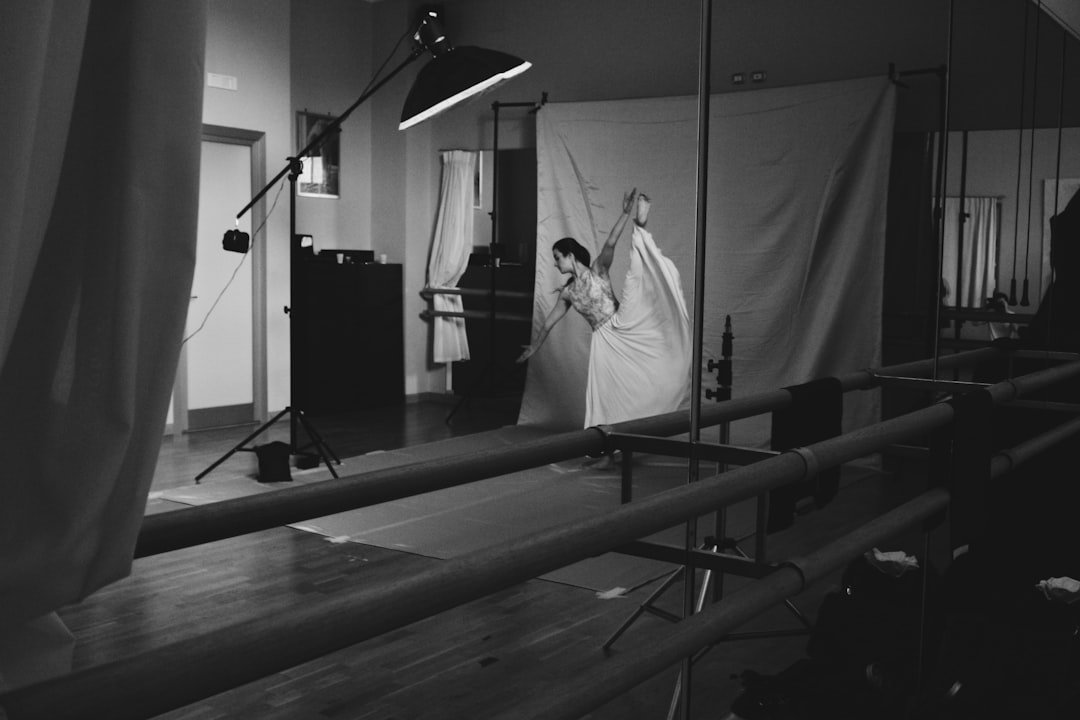
When Pina Bausch's dancers collapsed repeatedly onto a stage covered in soil, audiences didn't see technique—they felt grief. Martha Graham's Lamentation used nothing more than a body wrapped in purple stretch fabric to externalize mourning so raw it needed no program notes. Contemporary dance operates in this space between visible movement and invisible feeling, where the body becomes the only honest language we have.
What Contemporary Dance Actually Looks Like
Unlike ballet's vertical lines or hip-hop's rhythmic precision, contemporary dance draws from multiple lineages: the weighted, earthbound release of Graham technique; the pedestrian gestures of postmodern pioneers like Trisha Brown; the breath-driven flow of release work developed by Joan Skinner. This stylistic hybridity isn't academic trivia—it directly shapes how emotion materializes in performance.
A dancer trained in Cunningham technique will articulate grief through spine contractions and spirals. One grounded in Gaga, Ohad Naharin's movement language, might access the same emotion through continuous, micro-movement exploration of the body's interior. The form's diversity means no single emotional vocabulary dominates; instead, individual choreographers build distinct dialects from shared physical materials.
The Neuroscience of Watching Bodies Feel
Contemporary dance creates connection through mechanisms now visible in brain imaging. When audiences watch dancers express emotion, their mirror neurons activate—they mentally simulate the movements they observe, producing genuine physiological and emotional responses. Research by neuroscientist Beatriz Calvo-Merino demonstrates that experienced dance viewers show stronger activation in premotor and parietal regions, suggesting that kinesthetic empathy deepens with exposure.
This explains why a dancer's weighted collapse can trigger sympathetic tension in a viewer's own muscles, or why sustained eye contact across the footlights produces palpable intimacy. The connection isn't metaphorical; it's neural.
When Language Fails: The Subconscious in Motion
Dance/movement therapy, developed from the work of Marian Chace and Mary Whitehouse, operates on a premise contemporary dancers often discover intuitively: the body stores what consciousness cannot yet articulate. Whitehouse's "authentic movement" practice—moving with eyes closed, witnessed by another—mirrors how many choreographers generate material.
Crystal Pite, whose work with Kidd Pivot integrates spoken text and pure movement, has described generating choreography by "following the body into territory the mind hasn't mapped yet." This process differs from improvisation in jazz or social dance, where external rhythms guide response. In contemporary dance's exploratory modes, internal sensation leads.
The results resist paraphrase. Pite's Betroffenheit examined trauma and addiction through movement that literalized psychological fragmentation—dancers in identical costumes became indistinguishable, their bodies locked in compulsive, repetitive patterns. No summary captures the work's emotional architecture; it must be experienced kinesthetically.
Improvisation as Emotional Technology
Not all improvisation produces the same emotional effects. Contact improvisation, developed by Steve Paxton in 1972, generates intimacy through shared weight and spontaneous problem-solving—dancers must attend so completely to physical negotiation that social performance drops away. The form's emotional signature is presence without pretense.
Gaga technique, by contrast, uses continuous verbal cueing ("float your bones," "move from your lava") to bypass habitual movement patterns. Dancers report accessing emotional states unavailable through psychological introspection alone—grief emerging through shaking, joy through explosive expansion.
Authentic movement, with its closed-eye, witness structure, prioritizes unconscious expression over aesthetic result. These distinctions matter: a dancer seeking cathartic release needs different structures than one building ensemble connection or developing choreographic material.
The Risk of Exposure
Contemporary dance's emotional power carries genuine vulnerability. Unlike ballet's codified vocabulary, which mediates personal feeling through established forms, contemporary techniques often require dancers to generate movement from autobiographical material. Choreographers like Bill T. Jones have built entire works from oral history and bodily memory; his Still/Here (1994) incorporated movement derived from workshops with terminally ill patients.
This documentary approach raises ethical questions absent from abstract work. When does personal expression become exploitation? When does the audience's emotional satisfaction depend on a dancer's actual suffering? The field continues negotiating these boundaries, with increasing attention to dancer wellbeing and consent in generative processes.
Why It Matters Now
In an era of mediated, asynchronous communication, contemporary dance offers something increasingly scarce: co-present, unscripted emotional encounter. The form doesn't solve psychological struggles or repair social fractures. It does something more specific and perhaps more valuable: it creates conditions where feeling can be shared before it's named, where bodies recognize each other across the space that separates them.
The dancer on stage isn't performing emotion for inspection. They're extending an invitation—to feel together, without the defenses language provides.