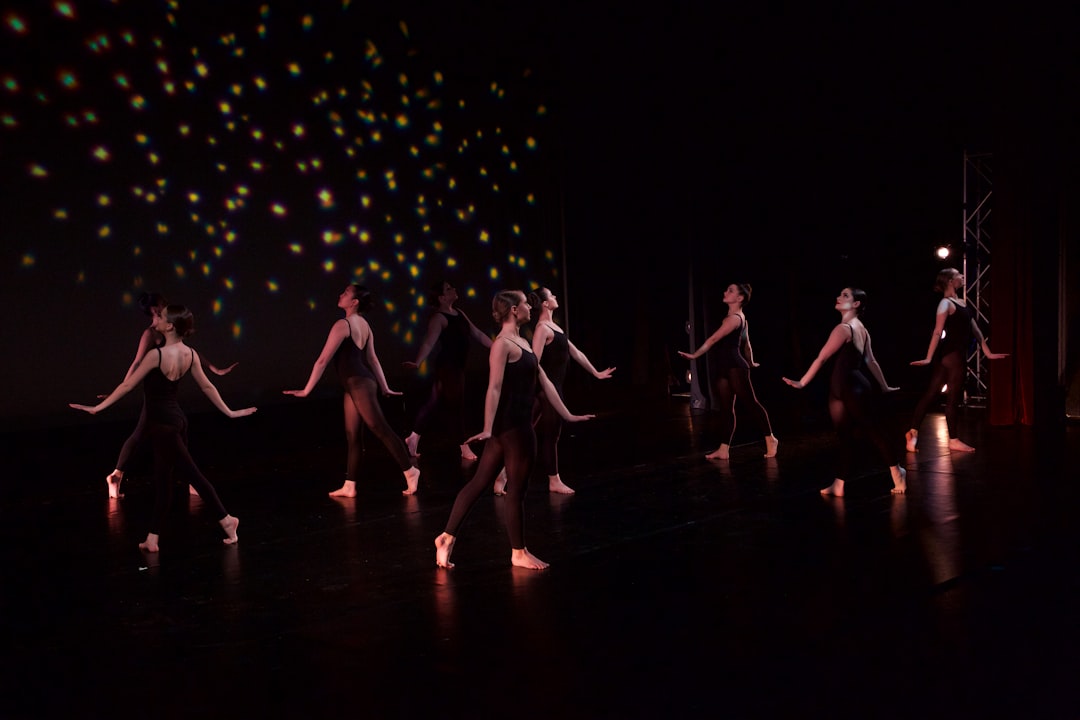
From flickering candlelight on Colombia's Caribbean shores to LED-lit festival stages across continents, cumbia has undertaken one of music's most remarkable journeys. It is a rhythm built on the deep resonance of the bombo and the sharp reply of the llamador, layered with the flickering scrape of the guiro. More than just a musical genre, cumbia is a living cultural document, its evolution mirroring the social history, migrations, and innovations of Latin America. This is the story of a rhythm that refused to stay still, thriving across centuries and continents.
Roots in the Colombian Caribbean: A Fusion of Three Worlds
Cumbia's formative period stretches back to the 18th and 19th centuries, born from the convergence of three cultures in Colombia's coastal region. Its foundational rhythm came from the drums and percussion traditions of enslaved Africans, with roots in regions like the Congo and Angola. The melodic call-and-response structures and the use of flutes like the gaita—both an Indigenous wind instrument and a broader coastal musical tradition—were inherited from peoples including the Kogi and Zenú. European influences contributed narrative lyrical forms and, later, instruments like the accordion.
Originally, it was a folkloric courtship dance performed at night, with women in long skirts carrying candles and men dancing around them in a flirtatious circle. For much of its early history, cumbia was marginalized by the urban elite, who viewed it as the music of the Indigenous, Afro-Colombian, and rural poor. This marginalization wasn't merely aesthetic snobbery—it reflected deep class and racial hierarchies that restricted cumbia to coastal celebrations and working-class gatherings while Bogotá's salons favored European styles. This would soon change dramatically.
Nationalization and Orchestration: Going Mainstream
The mid-20th century marked cumbia's transformation from regional folk music to a symbol of Colombian national identity. Pioneering bandleaders like Lucho Bermúdez were instrumental in this shift. In the 1940s and 50s, Bermúdez took the traditional rhythms, refined them, and arranged them for full orchestras with brass, piano, and clarinets. This "orchestrated cumbia" made the genre palatable for ballrooms and radio stations across Colombia's interior, effectively laundering its working-class associations for middle-class consumption.
By the 1960s, this commercial infrastructure had consolidated in Medellín and Bogotá, creating what scholars call cumbia's "Golden Age." Figures like Andrés Landero bridged folk and commercial forms, while the industry standardized recording practices and distribution networks. La Sonora Dinamita, formed in 1960, popularized a faster, brass-driven style that would become crucial international ambassadors in the decades to follow. As inexpensive discos fuertes (45 rpm records) and powerful radio stations like La Voz de Barranquilla carried these new sounds, cumbia leaped across borders. It took firm root in Mexico, Peru, Argentina, and beyond, where it would begin its next phase of radical reinvention.
Regional Explosion: The Birth of Subgenres
Between the orchestrated elegance of the 1950s and the digital experiments of the 1990s, cumbia underwent its most prolific period of geographic expansion and stylistic diversification. Once planted in new soil, cumbia didn't just spread—it transformed, reflecting the unique character of each new home. From the 1970s onward, it fragmented into vibrant regional styles.
Cumbia Sonidera in Mexico
Often conflated with the harder-edged Cumbia Dura (a distinct, brass-heavy style), sonidera emerged in Mexico City's working-class neighborhoods. DJs (sonideros) became central figures, manipulating records with echo and reverb, shouting dedications over the music, and creating a raw, psychedelic, and deeply communal dance experience. Bands like Los Ángeles Azules, masters of this celebratory sound, later achieved viral, cross-generational success with their timeless melodies.
Tecnocumbia in Peru
In the 1990s, Peruvian artists like Rossy War and Grupo 5 fused cumbia with synthesizers, electric guitars, and elements of chicha music—itself a prior fusion of cumbia and Andean folk. Tecnocumbia became a national phenomenon, its upbeat, electronic sheen dominating the airwaves and resonating as a modern, urban Peruvian identity.
Cumbia Villera in Argentina
Emerging from the villas miseria (shantytowns) of Buenos Aires during the 1998-2002 Argentine great depression, this subgenre was a raw