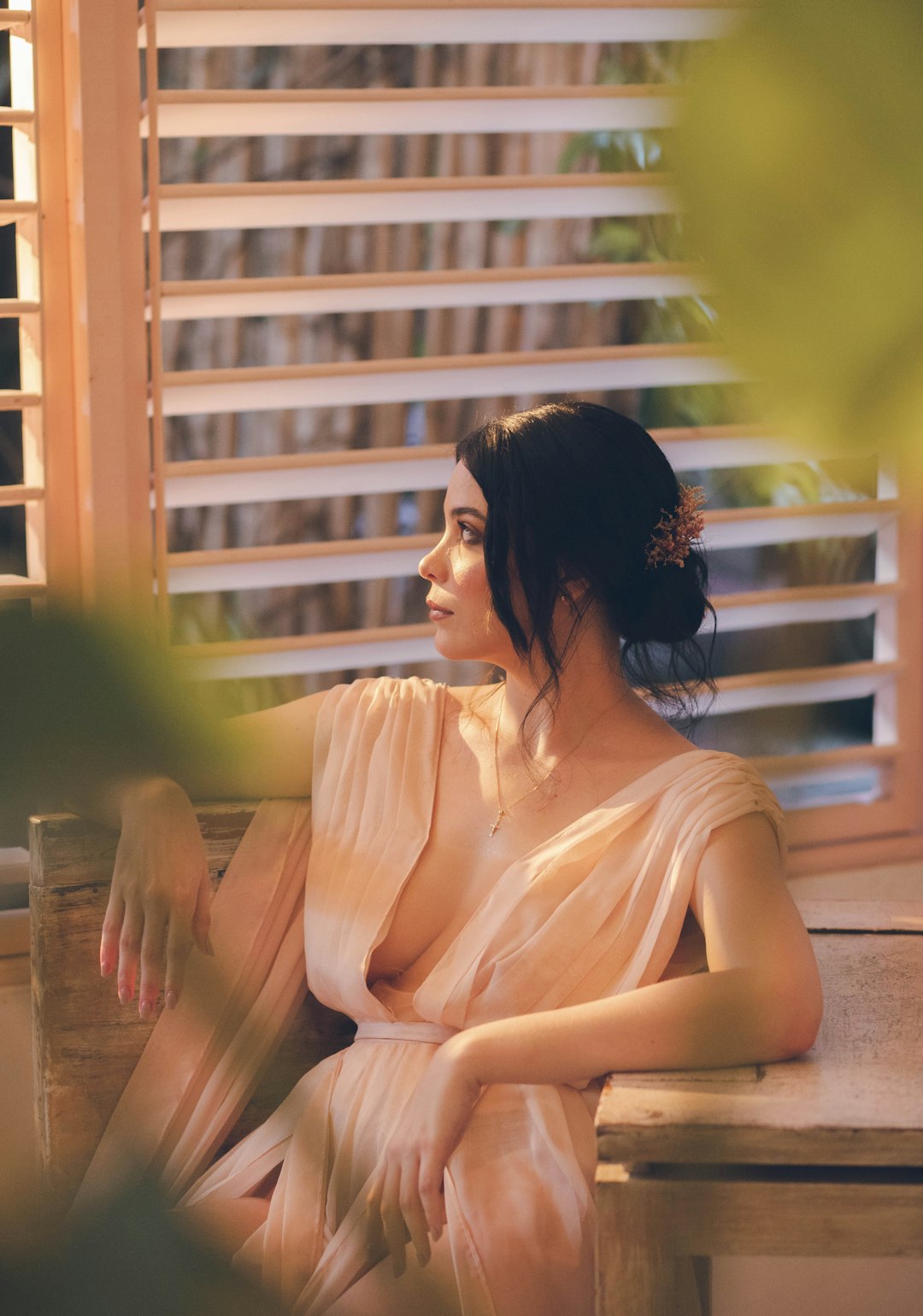
You execute the choreography perfectly—every extension, every fall, every breath in the music. Yet when you watch the playback, something's missing. Your body moved through the steps, but you never appeared in the frame.
This is the paradox facing countless lyrical dancers. The style demands technical precision and raw vulnerability, yet many dancers master the former while remaining invisible in the latter. Developing your voice in lyrical dance isn't about adding flair to someone else's movement. It's about discovering what your body naturally emphasizes when technique becomes automatic.
Here's how to bridge that gap between competent execution and unforgettable presence.
1. Study the Greats—Specifically
Generic advice to "watch famous dancers" wastes your time. Three choreographers have fundamentally shaped lyrical dance's evolution, each with a distinct approach worth analyzing:
- Travis Wall: Observe his narrative architecture—how he builds emotional arcs across eight counts rather than individual moments. Notice when he repeats a gesture at increasing intensity, turning movement into storytelling.
- Sonya Tayeh: Study her aggressive texture—the way she deploys sharp, almost combative attack within traditionally fluid vocabulary. Her dancers don't melt through transitions; they snap into them.
- Mandy Moore: Examine her seamless flow—the elimination of visible preparation. Her work demonstrates how breath can become the primary connector between phrases.
Watch each choreographer's work twice: first for emotional response, second with sound muted. Note when your body involuntarily responds. Those moments reveal your innate preferences.
2. Experiment Through Translation
"Try new things" fails without methodology. Instead, practice translation: take one technical element from an unrelated style and force it into lyrical context.
Concrete exercise: After a hip-hop isolations class, improvise to a slow ballad using only sharp, staccato initiation. The contrast between aggressive attack and sustained music creates tension that becomes distinctly yours. Or apply ballet's strict épaulement (shoulder opposition) to contemporary's grounded weight shifts—notice how this hybrid changes your spatial presence.
Document these experiments. Most will fail. The 10% that don't become your foundation.
3. Connect with Music—Lyrically
Lyrical dance's relationship to music differs fundamentally from other styles. Three specific practices develop this connection:
Dance to lyrics, not just melody. When the singer breathes between phrases, you breathe. When the lyric breaks grammatically, your movement fractures. This "singing with your body" tradition separates lyrical from contemporary's more abstract musicality.
Exploit silence. Lyrical's emotional power often lives in what you don't do. Practice holding positions through musical rests until the stillness becomes uncomfortable—then extend it further.
Map your breath. Record yourself improvising to a familiar song. Mark every inhale and exhale on the sheet music. Patterns emerge: do you suspend on inhalation? Collapse on exhalation? These physiological responses constitute your musical fingerprint.
4. Practice with Structure
"Dedicate time each day" means nothing without specificity. Try this 45-minute daily protocol:
| Duration | Activity | Purpose |
|---|---|---|
| 20 min | Structured improvisation | One constraint: "only floor work" or "only right side"—limitations force stylistic choices |
| 10 min | Filming and review | Compare today's movement to last month's; evolution becomes visible |
| 15 min | Technical drilling | Execute one element (developpé, fall/recovery, spiral) through your personal quality—speed, breath, gaze |
The final component matters most. Technique and style aren't separate domains. Your développé is your style when performed with your specific timing and intention.
5. Curate Your Feedback Sources
Not all feedback serves style development. Differentiate your sources:
- Instructors assess technical execution and safety. Their input preserves your instrument.
- Peers notice stylistic distinctiveness. Ask: "What would you recognize as 'my' dancing?"
- Video reveals habitual patterns you cannot feel—tension in your hands, where your eyes actually focus versus where you believe they focus.
Avoid feedback from family or non-dancers regarding style. Their encouragement is valuable; their aesthetic judgment typically isn't informed.
6. Document Your Evolution
The missing practice in most dancers' development: systematic documentation. Your voice emerges in fragments—a particular recovery from fall, songs that move you before conscious thought, recurring gestures that feel inevitable.
Maintain a movement journal. After each improvisation session, note:
- Three images or metaphors that arose spontaneously
- Tempo preferences (where did you naturally accelerate or resist?)
- "Signature" moments: movement choices that repeat across different music
**Build