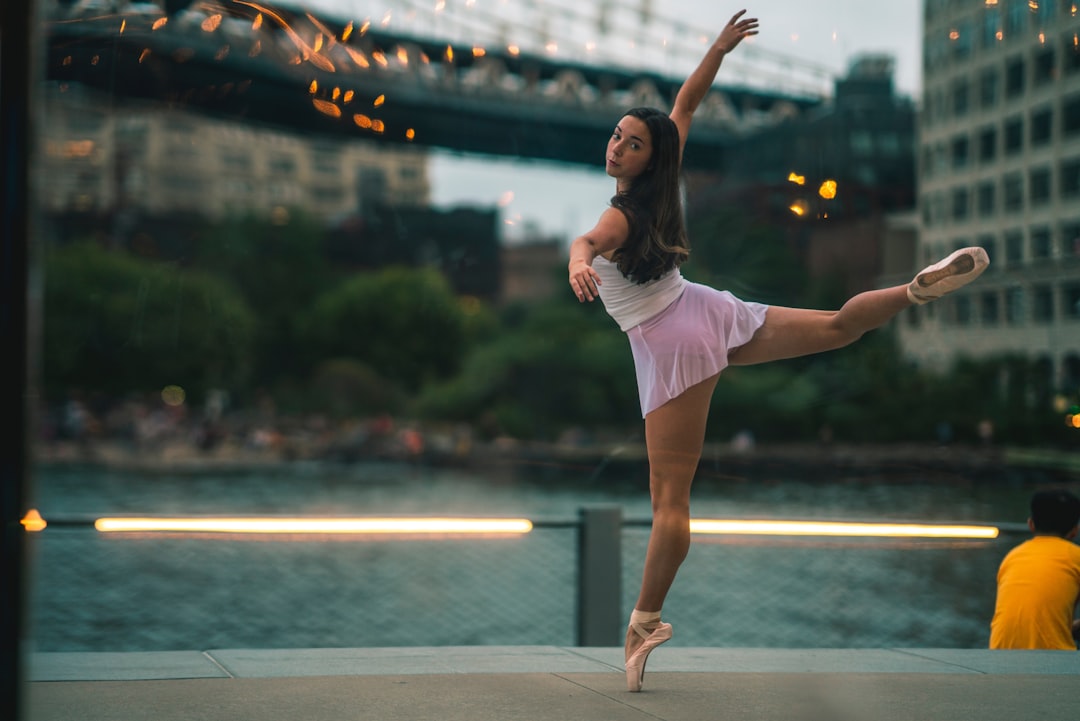
At 9:47 PM on a Thursday, María Vásquez forgets she's been standing for three hours. Her feet ache, her silk blouse clings with sweat, and she's never felt more alive. Around her, the brass section of a Héctor Lavoe record hits its peak, and the floor becomes a single breathing thing—fifty strangers who have learned to speak without words.
This is the hour salsa transforms you. Not eventually. Not metaphorically. Right now.
The Body Learns First
Your first class will feel impossible. The clave rhythm—three beats, then two, inherited from West African religious ceremonies—runs at 160 to 220 beats per minute. Your brain knows the count. Your feet refuse to believe it.
You will master the basic step's six-count pattern before you understand why it matters. You'll stumble through the cross-body lead, panic during the copa's sudden directional change, and apologize too often to your partner. This is the curriculum.
Then, somewhere around week six, your body betrays your anxiety. You complete a turn without thinking. You stop counting and start hearing—the way the horn section answers the vocalist, the space between the piano's montuno and the conga's slap. Three months in, James, a 34-year-old accountant who started classes after his divorce, describes leading a partner through a pattern without verbal cues: "It was the first time I felt competent at anything in a year."
The physical vocabulary rewires how you inhabit space. Shoulders drop. Hips unlock. You develop what dancers call "center"—the ability to move from your core while the world spins around you.
The Architecture of Connection
Salsa operates on a paradox: it is deeply social and requires absolute presence. You cannot check your phone mid-dance. You cannot rehearse tomorrow's meeting. For three to four minutes, you and a stranger negotiate physics and intention through palm pressure, frame tension, and the micro-adjustments of shared momentum.
The etiquette is precise. You ask for a dance with eye contact and an extended hand. You thank your partner when the song ends, regardless of skill mismatch. You return them to where you found them. These rituals create what sociologists call "temporary intimate publics"—communities built on repeated, bounded encounters.
Regulars develop reputations. There is the engineer who leads with mechanical precision, the retiree whose body remembers 1970s Bronx dance halls, the teenager learning her grandmother's vocabulary. You do not need to exchange life stories. The dancing is sufficient biography.
The Lineage You Join
To call salsa "Latin music" is to collapse three centuries into a single word. The form travels from Cuban son montuno through Puerto Rican bomba, picks up jazz harmonies in Spanish Harlem, electrifies in Eddie Palmieri's Bronx apartments, and crystallizes in the Fania Records sessions where Celia Cruz and Héctor Lavoe defined the sound you hear today.
When you learn salsa, you learn this geography. The clave pattern connects you to religious ceremonies in Yorubaland. The despelote body movement carries traces of carnival resistance. The very social structure of the dance floor—men asking women, the codified respect between partners—reflects working-class community organization in mid-century New York.
This is not heritage tourism. You will get it wrong. You will mispronounce musician names and confuse Santería with secular practice. The learning itself is the respect—showing up, being corrected, continuing.
What Actually Changes
The article's title promises transformation. Here is what that looks like in specific, reported terms:
You develop physical confidence that transfers. The same proprioception that lets you navigate a crowded dance floor helps you own space in meetings, on sidewalks, in conflict. You stop apologizing for your body's existence.
You build a social infrastructure without apps. Salsa communities operate on showing up. Reliability becomes currency. You know fifty people who would notice your absence, without having curated a single profile.
You acquire a stress response that works. The neurological state of social partner dancing—elevated heart rate, focused attention, positive social evaluation—resembles flow states achieved through meditation or athletics, but with built-in human connection.
Starting Where You Are
You do not need rhythm. You do not need a partner. You do not need Spanish, youth, or Latin American ancestry. You need a willingness to be temporarily incompetent in public.
Find a beginner class that emphasizes social dancing over performance choreography. Look for instructors who teach lead-follow dynamics rather than memorized routines. Expect the first month to feel like language immersion—overwhelming, then suddenly not.
The floor is waiting. The clave is counting. Three beats, then two.