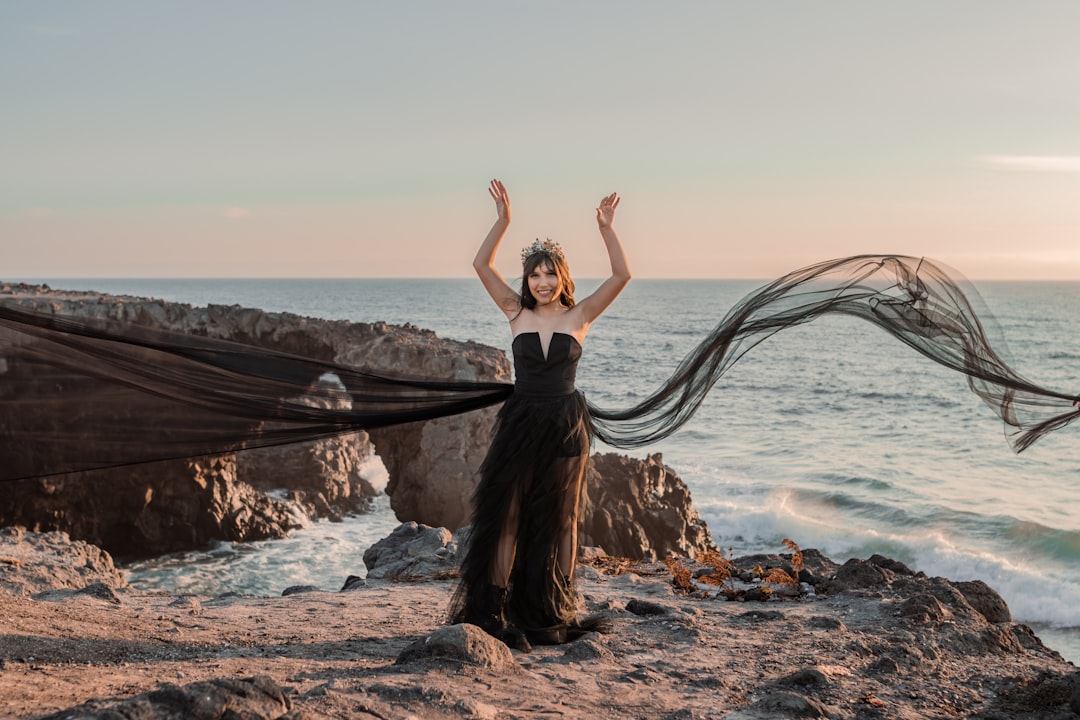
When Pina Bausch's dancers collapsed onto the stage of the Tanztheater Wuppertal, their bodies didn't simply fall—they unfolded, liquid and deliberate, limbs tracing invisible geometries through space. That same quality of controlled surrender has become one of the most sought-after aesthetics in contemporary fashion. What began as a century-old dialogue between choreographers and designers has accelerated into something more urgent: a fundamental rethinking of how clothing behaves when bodies refuse to stand still.
The Engineering of Flow
The relationship between dance and fashion has always been transactional. Loïe Fuller's serpentine silk performances in 1890s Paris inspired Art Nouveau's organic lines; Isadora Duncan's uncorsored tunics anticipated the liberation of 1920s flapper dresses. But contemporary dance—emerging from the radical experiments of Merce Cunningham, Trisha Brown, and William Forsythe—offers something more specific: a vocabulary of off-balance, spiraling, and falling that demands garments engineered for continuous motion rather than static display.
Iris van Herpen has built her practice on this principle. For her 2019 "Shift Souls" collection, developed in collaboration with dancers from the Netherlands Dance Theater, the Dutch designer created silicone-coated organza garments that appeared to hover and pulse around the body. "I wanted to capture that moment in dance when the body becomes pure energy," van Herpen explained. The resulting pieces—technically dresses, functionally kinetic sculptures—required dancers to model them on the runway, their trained responsiveness to fabric revealing possibilities invisible on conventional hangers.
Valentino's Pierpaolo Piccioli pursued similar territory at Spring 2023 couture, sending models down the runway in silk georgette gowns with kimono-inspired sleeves that pooled and swayed with each step. The reference was explicit: Piccioli had studied footage of Martha Graham's contractions and releases, designing garments less for standing than for the continuous wave motion of a torso folding and unfolding. The sleeves, extending nearly to the floor, transformed the simple act of walking into something closer to choreography.
Color as Gesture, Texture as Weight
Contemporary dance's influence extends beyond silhouette into the material language of fashion itself. Pina Bausch's choreographic method—asking dancers to respond to textures, temperatures, and emotional memories—has inspired designers to treat fabric as a partner rather than a substrate.
Christopher John Rogers, whose saturated color blocking has defined recent American fashion, has cited the lighting design of dance productions as a direct influence. "In theater, color operates temporally," he noted in a 2022 interview. "It changes as bodies move through it. I wanted clothing that does the same." His Fall 2023 collection featured ombré taffeta that appeared to shift from violet to flame-orange as models turned—colors that existed only in motion, never at rest.
The Japanese designer Issey Miyake pursued this logic to its endpoint with his Pleats Please line, developed through direct observation of how dancer bodies reshape fabric. Unlike traditional pleating, which fixes folds permanently, Miyake's garment-pleating technique allows cloth to expand and contract with movement—memory woven into material. The result is clothing that performs: a skirt that becomes a cylinder when the wearer spins, a jacket that billows and collapses with each arm's reach.
The Balletcore Economy
Perhaps no dance-fashion intersection has proven more commercially consequential than the mainstreaming of studio wear as streetwear. The global success of companies like Netherlands Dance Theater and Israel's Batsheva—whose dancers rehearse and perform in streamlined, logo-free practice wear—has helped normalize body-conscious knits, high-waisted briefs, and split-sole sneakers as everyday uniform.
Fashion retailers now categorize this aesthetic as "balletcore," and the numbers justify the terminology. According to retail analytics firm Edited, ballet-inspired product mentions increased 116% year-over-year in 2023, with corresponding sales growth of $184 million in the athleisure segment alone. The trend's visual signature—wrap cardigans, leg warmers, practice skirts layered over tights—derives directly from the rehearsal studios of contemporary choreographers like Ohad Naharin, whose Gaga movement language requires dancers to maintain constant readiness in clothing that never restricts.
This commercial success has, in turn, reshaped dance itself. Yumiko, the Japanese-Spanish dancewear company founded in 2002, now operates 12 flagship stores globally and collaborates annually with fashion designers on limited-edition collections. Capezio, the 137-year-old American dance institution, launched a "Lifestyle" division in 2021 specifically to capitalize on balletcore demand. The boundary between costume and clothing, once policed by occasion, has effectively dissolved.
The Choreographer as Consultant
The most recent evolution in this relationship involves choreographers moving from inspiration to active collaboration. Sasha Waltz, whose physical theater productions