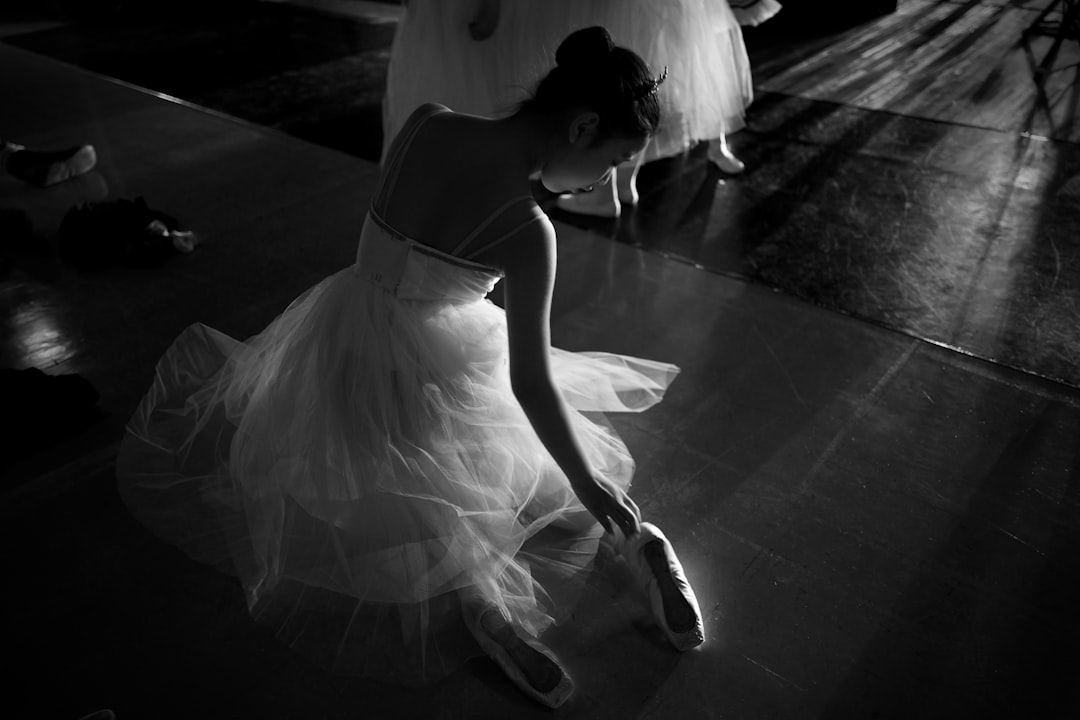
The mirror doesn't lie. At 6:45 AM in a cold studio, when your muscles shake during the hundredth grand plié of the morning, you'll understand why professional ballet demands more than love for The Nutcracker. The path from first tutu to paid contract is narrower than most aspiring dancers realize—and it begins earlier than you might think.
If you're serious about transforming ballet from passion to profession, here's what the glossy program notes won't tell you.
Master the Non-Negotiables (Ideally Before Age 12)
Classical ballet careers rarely start at fourteen. The professional pipeline typically opens between ages 8 and 12, when young bodies develop the turnout from the hip—not the knee—that protects joints through decades of strain. Miss this window, and you're not just behind; you're competing against dancers with eight years of foundational training already embedded in their muscle memory.
The basics that matter aren't generic "technique" and "flexibility." They're specific, measurable capacities:
- Turnout: External rotation initiated deep in the hip socket, maintained through core engagement
- Ankle stability: The gradual, medically supervised progression to pointe work, usually requiring 2–4 years of pre-pointe conditioning
- Port de bras: Upper body coordination so seamless that arms appear to breathe independently of legwork
Recreational studios rarely build these elements with the rigor professional schools demand. The difference shows up in auditions, instantly.
Find a Teacher Who Trains Professionals—Not Just Enthusiasts
"Good teacher" is insufficient guidance. You need instruction tied to a professional-track methodology: Royal Academy of Dance, Vaganova, Cecchetti, or Balanchine/American styles. These aren't aesthetic preferences. They're complete physical systems that top companies expect dancers to embody.
Elite teachers often audition students themselves. They maintain relationships with feeder schools and company artistic directors. They'll tell you when your facility—your body's natural proportions, flexibility, and strength—matches the repertory you dream of dancing, and when it doesn't.
The wrong teacher wastes years. The right one accelerates your trajectory through precise correction and professional connections you cannot manufacture independently.
Practice Quantified: 20–30 Hours Weekly, Plus Mental Rehearsal
"Practice, practice, practice" obscures the actual requirement. Pre-professional students typically train 20–30 hours weekly during academic years, escalating during summer intensives at major academies (School of American Ballet, Royal Ballet School, Paris Opera Ballet School, National Ballet of Canada, among others).
But physical repetition is only half the work. Professional preparation includes:
- Video analysis: Studying recordings of company performances to internalize rep
- Cross-training: Pilates, gyrotonic, or floor barre to build the deep stabilizing muscles ballet class alone won't develop
- Mental rehearsal: Walking through choreography mentally until patterns become automatic under pressure
The body follows where the mind has already traveled.
Protect Your Instrument—Including Your Mind
Ballet injures. Stress fractures, tendonitis, labral tears, and chronic ankle instability are occupational realities, not personal failures. Sustainable careers require:
- Pointe shoe fitting by specialists, not general dance retailers, with reassessment as feet strengthen and change
- Distinguishing productive soreness from dangerous pain—the former resolves with warm-up; the latter signals tissue damage requiring immediate attention
- Established relationships with sports medicine physicians and physical therapists who understand dance biomechanics
- Mental health support for navigating an art form with documented eating disorder prevalence, where body scrutiny is institutional
The dancers who last treat maintenance as seriously as technique.
Persist Through Statistics That Don't Favor You
Persistence in ballet isn't vague optimism. It's continuing after understanding the odds.
Thousands of trained dancers audition annually for dozens of company positions. The classical pyramid is steep: corps de ballet members outnumber soloists roughly 10:1; soloists outnumber principals similarly. Most careers end by 35–40, with transition planning essential from the start.
Alternative pathways matter:
- Second companies and apprentice programs provide paid or stipended experience
- Regional companies offer earlier casting opportunities than major institutions
- European systems often provide stronger state support than American models
- Freelance and commercial work sustain careers outside traditional company structures
Success redefined isn't failure. It's sustainability.
Understand the Timeline and Economics
Professional ballet operates on a schedule that doesn't accommodate delay:
| Stage | Typical Age | Key Milestones |
|---|---|---|
| Foundational training | 8–12 | Entry into pre-professional programs |
| Intensive specialization | 13–16 | Summer programs, competition circuit, international auditions |
| Pre-professional/Trainee | 16–18 | Second companies, studio company positions |
| Early professional |








