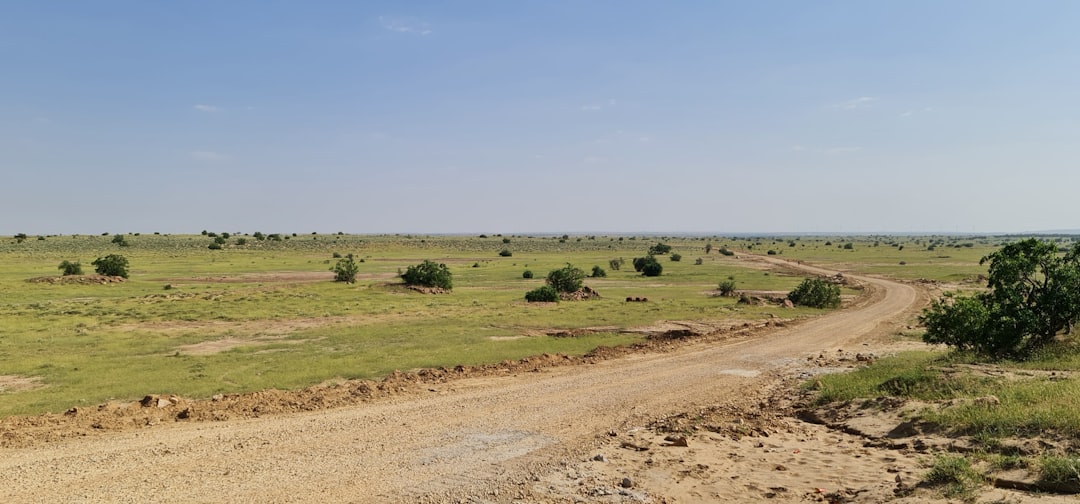
You wouldn’t expect to find world-class ballet training down a gravel road flanked by old tobacco barns. But in Brodnax, Virginia—a town with more historic churches than stoplights—that’s exactly what’s happening. I first heard about it from a dance parent at a Richmond competition. “We drive past five studios to get there,” she told me. “It’s worth every mile.”
And she’s not alone. Over the last decade, this tiny town has quietly become a magnet for serious ballet families. It’s not a suburb expanding outward; it’s a destination created by choice. Retired dancers came for affordable space. Frustrated parents came looking for rigor. What they built is a fascinating cluster of distinct training philosophies, all within a few miles of each other.
I spent a week talking to directors, taking class, and watching rehearsals. Here’s what I found—not as a directory, but as a glimpse into three very different worlds.
The Secret Garden: Where Russian Rigor Meets Rural Virginia
Tucked inside a renovated general store on Main Street, the Brodnax Ballet Academy feels like stepping through a portal. The air smells of rosin and old wood. And every afternoon, the sound of a live pianist spills onto the sidewalk.
This is Elena Voss’s domain. A former Bolshoi-trained dancer who defected during a tour in the ‘80s, Voss runs her school with the precision of a Swiss watch. Her Vaganova-based syllabus is non-negotiable. I watched a Level VIII class where 14-year-olds worked on port de bras for 20 minutes straight, their épaulement sculpted with quiet intensity.
“It’s not for the casual student,” Voss told me, her eyes sharp. “We are building instruments.”
The proof is in the alumni. Two dancers from here are now in Richmond Ballet’s second company. Their annual Nutcracker is a community spectacle, complete with guest artists from larger companies. But the real magic is in the daily grind: the mandatory live music, the character dance classes, the annual exam by an outside Russian master. Tuition tops out around $4,800, and they actively fund scholarships. The studios have soaring ceilings and sprung floors, but the parking lot is tiny—a testament to how many students carpool from afar.
The Cross-Training Hub: Ballet as a Foundation, Not a Cage
Drive ten minutes out of town toward the county line, and the vibe shifts completely. The Virginia School of the Arts is housed in a converted textile mill, its wide hallways buzzing with actors, visual artists, and dancers in both ballet slippers and bare feet.
This place was born from a “both/and” philosophy. “We had kids who loved ballet but were suffocating in strict pre-programs,” says co-founder David Chen. “They wanted to choreograph, to try West African dance, to still be kids.”
Ballet here is required—but it’s the base camp, not the entire mountain. A 16-year-old might have ballet at 9 AM, Graham technique after lunch, and a choreography workshop in the afternoon. They’ve formalized partnerships with top BFA programs like Juilliard and the Ailey School. Alum Marissa Jones, now dancing with Complexions, trained here.
The facilities reflect this eclectic spirit: a huge main studio, smaller rooms for theater rehearsals, even an on-site PT clinic. Tuition is higher (up to $7,800) to cover the arts academics, but work-study options exist. It’s less about perfect fifth position and more about building a versatile, thinking artist.
A Town That Dances
So why Brodnax? It’s the chicken-and-egg question. The low overhead attracted serious teachers. The serious teachers attracted dedicated families. That concentration created a critical mass you can’t fake.
It’s not a polished suburb. The studios are in old buildings with character. The “downtown” is a few blocks long. But that’s part of the charm. Between classes, students grab sandwiches at the same diner or walk to the creek behind the mill. It’s a complete world.
For families weighing the options, the choice here isn’t just about technique. It’s about philosophy. Do you want the deep, focused lineage of the Russian school, or a broader artistic playground? Brodnax, improbably, offers both.
As I left Voss’s academy one evening, a car with North Carolina plates pulled up. A girl leaped out, ballet bag over her shoulder, and ran inside. The lights in the old mercantile building glowed against the darkening sky. In a town that time might have forgotten, the next generation is being shaped, one careful relevé at a time. They’re not just learning to dance here; they’re learning how to dedicate themselves to something. And in a world of endless options, that kind of focus might be the rarest find of all.








