The Cabaret That Refused to Stay Put
Picture this: it's 1893, and a dancer named Little Egypt is gyrating her hips at the Chicago World's Fair. Victorian ladies clutch their pearls. Men can't look away. None of them realize they're witnessing the birth of an American obsession.
Belly dance didn't arrive in the U.S. through museum exhibitions or academic channels. It crashed in like a party nobody invited, then became the party nobody wanted to end. But here's what the scandalized newspaper accounts missed—this "shocking" performance was already ancient, already layered, already carrying the weight of Cairo's smoky cabarets and Nile-side weddings in its sinewy DNA.
What Cairo Actually Looks Like at 2 AM
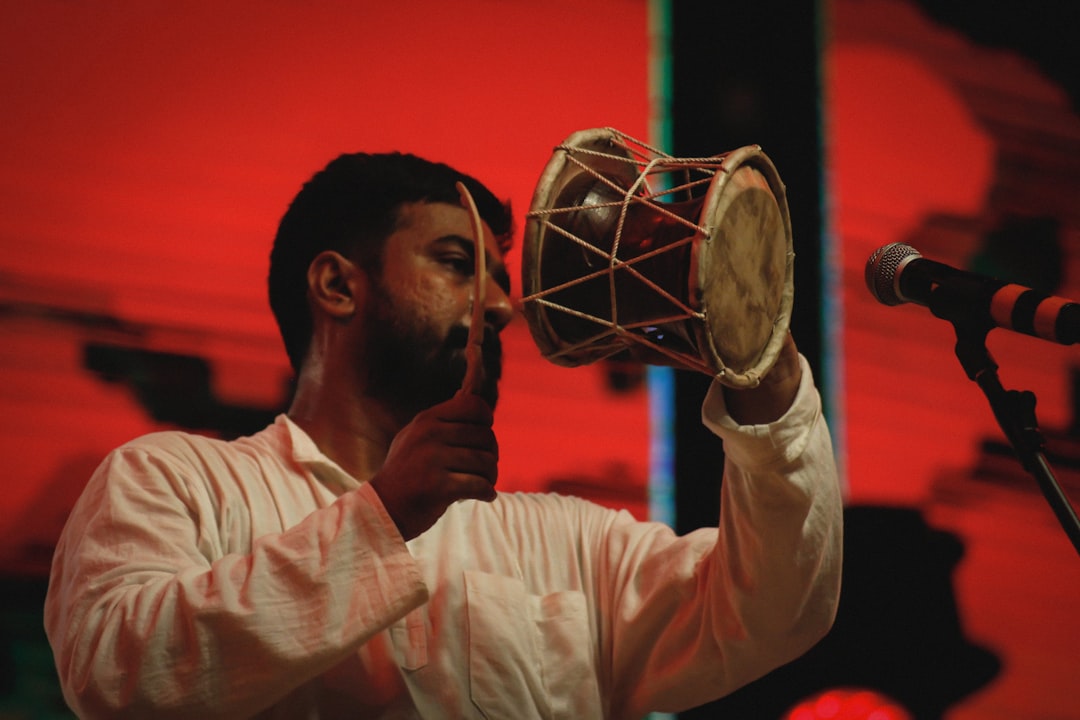
Walk into a proper Egyptian nightclub on a Friday night, and you'll see something American fusion classes rarely capture. The dancer enters with a live tabla thundering behind her. Her costume weighs ten pounds of beaded velvet, and she wears it like armor. This isn't fitness. This isn't "self-care." It's storytelling with your entire body.
Raqs Sharqi—the classical Egyptian style—demands isolation so precise it takes decades. The ribcage slides left while the hip drops right. The wrist circles as the zills (those tiny brass cymbals) chatter out rhythms that mimic the drum. Old-school dancers learned by following grandmothers at family gatherings, not by watching YouTube tutorials at half-speed.
I once watched a dancer in Cairo's Islamic quarter perform a thirty-minute set without leaving a six-foot circle. She conveyed a full narrative: flirtation, heartbreak, defiance, finally joy. No lyrics necessary. The audience knew every emotional beat because their grandmothers had done the same gestures at their own weddings.
Then the Hippies Got Hold of It
By the 1960s, something wild happened. California caught the bug. But West Coast dancers weren't interested in replication—they were interested in liberation.
American belly dance became less about entertaining a room and more about claiming space. Dancers traded the cabaret glitter for chiffon skirts and bare feet. They performed in parks, at Renaissance fairs, in feminist collectives. The music shifted too; you might hear a drum solo melt into Fleetwood Mac, or see tribal-style improv that looked more like modern dance than anything you'd find on the Nile.
Carolena Nericcio formalized this rebellion in the 1980s with American Tribal Style, creating a vocabulary of group improvisation that rejected the solo spotlight entirely. Dancers faced each other, mirrored movements, built something communal. It was undeniably Middle Eastern in origin. It was undeniably Californian in attitude.
Your Neighborhood Studio Isn't What You Think
Walk into any suburban dance studio on a Tuesday evening now, and you'll find the real revolution. Middle-aged accountants. Teenage theater kids. Grandmothers who always wanted to try it. They're not preparing for nightclub careers. They're learning to occupy their bodies without apology.
Something shifted when belly dance hit the global mainstream. Classes stopped promising performance skills and started promising something rarer: permission. Permission to jiggle, to take up room, to adorn yourself in coins and silk on a random Wednesday. In a culture that polices women's bodies relentlessly, a dance centered on the torso becomes quietly radical.
I've watched a forty-year-old woman cry during her first hip drop—not from pain, from recognition. "I didn't know I could move like this," she told me. That moment happens in Dubai, in Des Moines, in São Paulo, in Seoul. Same revelation. Same trembling smile.
The Algorithm Meets the Ancient
Social media should have killed the mystery. Instead, it amplified the cross-pollination.
A teenager in Jakarta watches a Tunisian dancer's Instagram tutorial. By Thursday, she's incorporating those hip accents into her own choreography. A teacher in Stockholm livestreams a class combining Egyptian technique with Afrobeats footwork. A hundred students comment from six continents. The "authenticity" purists wring their hands, but dance has never stayed still. It mutates or it dies.
What's fascinating isn't the purity—it's the conversation. When a Chinese dancer interprets Egyptian maqam music through the lens of her own movement background, she's not "ruining" tradition. She's extending it. Every global adaptation adds another dialect to an already multilingual art form.
The Body Doesn't Forget
Here's what stays constant across every transformation: the physical intelligence of the dance itself. The way a sharp hip accent syncopates against a drum hit. The way a slow, controlled undulation creates tension that holds a room breathless. The way isolations build until the body becomes percussion instrument.
You can strip away the costumes, the cultural framing, the music choices. That kinetic vocabulary survives. It's survived Ottoman courts, Victorian scandal, 1960s communes, and TikTok algorithms.
The next time you see belly dance dismissed as mere entertainment, remember what actually traveled from Cairo to California. Not just steps. Not just sequins. A technology of embodiment that women keep rediscovering, appropriating, and making their own—across every border, against every expectation, one hip circle at a time.
Written by: Samira Cole