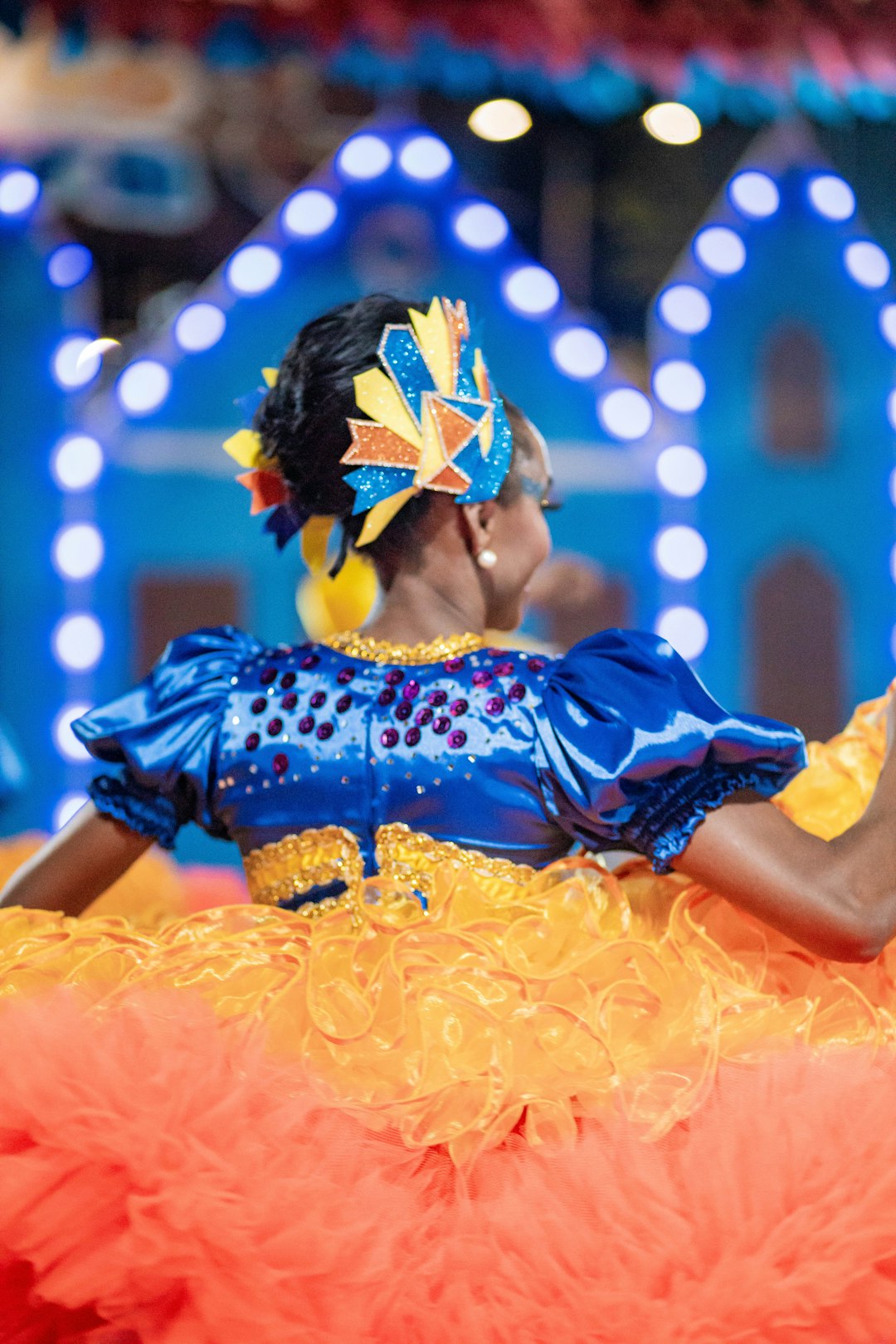
In a mirrored studio above a former hardware store in Woden Valley, ACT, twelve adult beginners are learning to pound out a soleá rhythm on a sprung hardwood floor imported from Jerez de la Frontera. The floor was a gamble: ordered in 2019 by Esther Morales, a guitarist from Córdoba who settled in Canberra after a touring career, it sat in customs for six months during the pandemic. Now it anchors what Morales calls "probably the only Andalusian-built dance floor in the Southern Tablelands."
Woden Valley is not Seville. It is a post-war planned suburb 12 kilometres south of Canberra's Parliament House, better known for Westfield and the 1960s shopping precinct than for cante jondo. Yet in 2024, its three established flamenco schools report waiting lists for adult beginners for the first time since 2019, and the National Multicultural Festival expanded its Canberra flamenco programming by 40% in February. Something is shifting.
From One Guitarist to a Small Ecosystem
Flamenco arrived here not through grand migration waves but through individuals. Morales landed in 2003 to join the Australian chamber ensemble Cordoba, then stayed. She began teaching in community halls. By 2011, she had enough students to lease the Woden studio.
"I thought I would be lonely here," Morales says, tuning between classes. "Instead I found Australians who treat flamenco like marathon training. They want the technique, the history, the discomfort. They do not want it easy."
That density of committed amateurs created conditions for expansion. Two other schools now operate within four kilometres: Sol y Luna Flamenco, founded in 2015 by dancer Ana López (a Madrid native and former member of Ballet Nacional de España), and the Centro Andaluz de Arte Flamenco, run by brothers Miguel and José Salazar, cante singers from Granada who added guitar and palmas classes in 2018.
Together, the three schools enrol roughly 340 students across dance, guitar, and vocal programs. None are "elite" in the sense of competitive audition-only entry. All three charge between AUD $420 and $580 per ten-week term, comparable to ballet or advanced martial arts training in the ACT.
What Each School Actually Does
Estudio Flamenco Morales remains the most technically focused. Morales requires all dance students to study rhythm theory (compás) before advancing to choreography. The studio's signature is its cajón fabrication workshop, held twice yearly, where students build their own Peruvian-Spanish box drums under the guidance of a luthier from Fremantle. "If you understand how the sound is made," Morales says, "you stop treating it as percussion and start treating it as conversation."
At Sol y Luna, López structures her curriculum around the palos, the distinct rhythmic and emotional families of flamenco. Beginners start with tangos—accessible, four-count forms—before progressing to the heavier seguiriya or the elusive bulerías. López is known for a strict rule: no choreography mirrors until a student can sustain the compás for three minutes without accompaniment. "The mirror lies," she tells classes. "It makes you decorative. Flamenco is not decoration."
The Centro Andaluz distinguishes itself through cante. Miguel Salazar teaches group vocal classes in a small room lined with acoustic panels tuned specifically for unamplified guitar and voice. The centre also runs a monthly peña—a public informal gathering where students, professionals, and the merely curious sit in a semicircle while Salazar calls palos and anyone can attempt to dance or sing. In March, the peña drew 87 people to a Portuguese community hall in Phillip. Four were visiting Spaniasts. The rest were Canberrans.
The Tension of Authenticity
The question of what an Andalusian art form means in an Australian suburb is not abstract here. It comes up in classes, in peñas, in grant applications.
López has a pragmatic view. "Authenticity is not a passport," she says. "It is the relationship between your body and the time signature. I have students who sound more flamenco than some Spaniards because they have stopped trying to look Spanish and started trying to be honest."
Morales is more protective of lineage. She maintains a partnership with the Fundación Cristina Heeren in Seville and sends her advanced students there for immersive study every two years. Two of her former students now perform professionally in Melbourne and Sydney. One, dancer Claire Huang, will headline the 2024 National Folk Festival in Canberra in April.
The