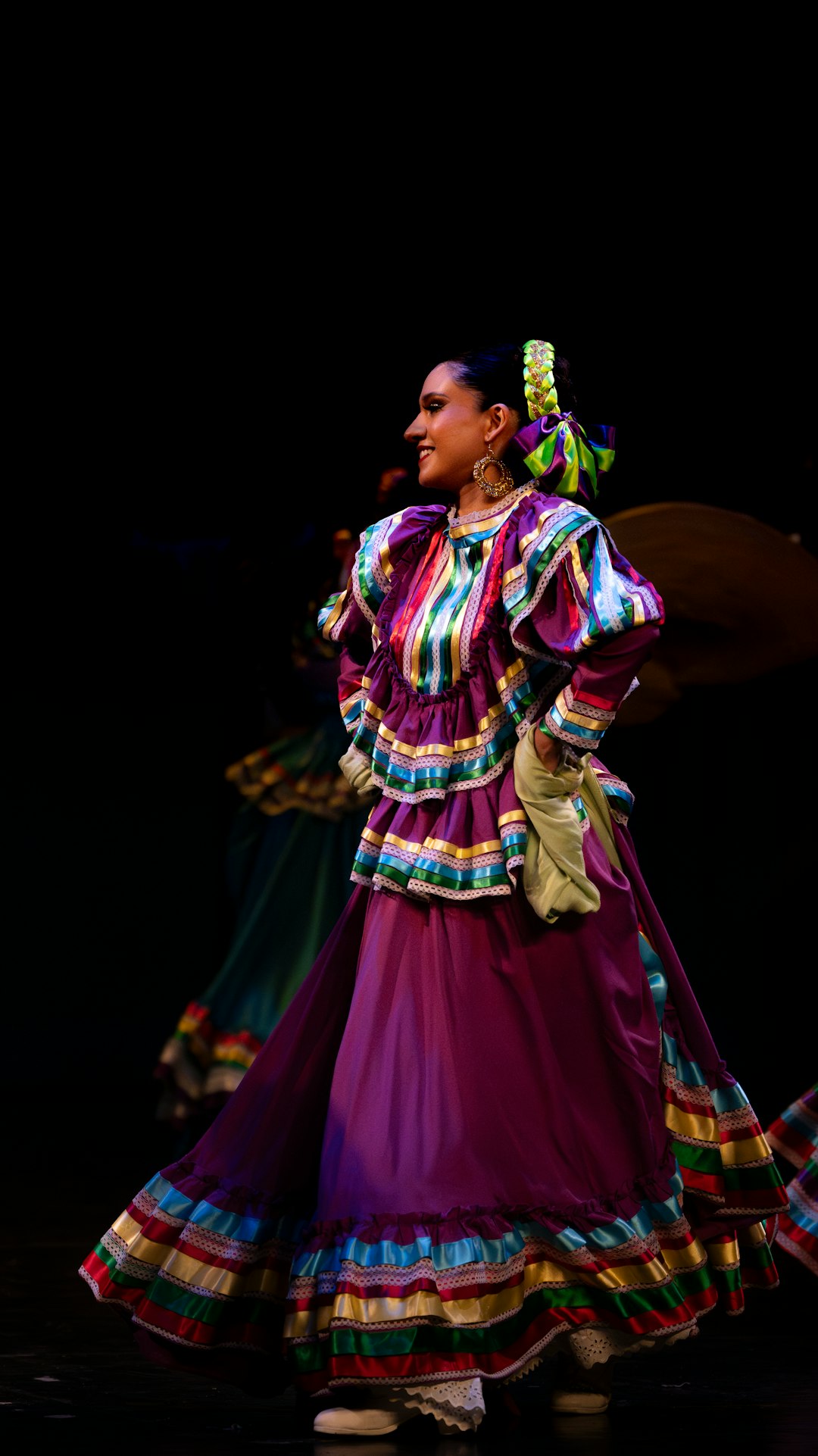
On a Thursday evening in early March, the worn wooden floors of a renovated hardware store on Okemah's Broadway Street creak under the careful steps of twelve dancers. A retired rancher from nearby Paden counts aloud in halting Spanish. A high school junior leads her grandmother through a basic eight-count. A couple on their first date collides gently, then laughs. Three years ago, this building sold tractor parts. Now it houses the [Studio Name], one of three dance spaces in this Oklahoma town of roughly 3,000 people where Argentinian tango has become an unlikely social fixture.
The revival did not happen overnight, and it did not happen without skepticism. Okemah remains best known as the birthplace of Woody Guthrie, the Dust Bowl folk singer whose portrait still greets visitors on Main Street. For decades, the town's cultural identity was built on fiddle music and Friday night bluegrass jams. That a dance form born in the dockside bars of Buenos Aires would find adherents here—where cattle trucks still rattle through downtown—surprises even some of the people now teaching it.
"We Started in a Feed Store Parking Lot"
The movement traces its origins to a humid evening in June 2021, when Marcus Chen, a Tulsa-based physical therapist, and Dolores Hartley, a retired Okemah school librarian, unfolded a portable dance floor behind the old Guthrie family's feed store. Chen had discovered tango during a medical rotation in Miami. Hartley had stumbled across it on YouTube during the pandemic. Neither had formal training. Thirty-two people showed up, mostly out of curiosity.
"We didn't know what we were doing," Hartley said, laughing. "Marcus brought a Bluetooth speaker. I brought a pitcher of sweet tea. Someone else brought mosquitoes."
By the fall of 2022, the informal gatherings had outgrown parking lots. Chen and Hartley recruited Maria Gonzalez, a tango instructor from Oklahoma City who had previously commuted to teach in Tulsa and Dallas. Gonzalez drove the hourlong stretch of Highway 40 east each Tuesday. Her first Okemah class drew six students. Her November 2023 class drew thirty-four.
Enrollment figures from the three studios now offering tango in Okemah and the surrounding area show the growth in measurable terms. At the [Studio Name], beginner class rosters grew from 8 students in January 2023 to 27 in January 2024, according to owner [Name]. A second studio, [Name], added tango to its schedule for the first time in February 2024 after fielding repeated requests. Gonzalez now teaches four weekly classes and a monthly milonga, or social dance, that regularly pulls attendees from Shawnee, Stillwater, and Muskogee.
From Dance Steps to Dinner Tabs
The economic footprint remains modest but traceable. [Restaurant Name], a family-run diner on Division Street, began staying open late on milonga nights after Hartley mentioned that dancers were driving home hungry. Owner [Name] estimates that tango-related business now accounts for roughly 15 percent of the restaurant's monthly revenue during the winter slow season.
"We used to close at eight," [he/she] said. "Now we're here until ten-thirty some Thursdays. It's not a fortune, but it's real money in a town this size."
The Okemah Historical Society hosted its first tango-themed fundraiser in October 2023, selling 140 tickets—nearly double the attendance of its previous annual event. A bed-and-breakfast in a converted 1920s farmhouse three miles outside town added "milonga packages" to its website and reported six bookings from out-of-state tango dancers between December and March.
Not every business has embraced the shift. One Main Street merchant, who asked not to be named, described the dance events as "a nice hobby for some folks" but questioned whether the town should invest further in what [he/she] called "a trend."
The City Council Connection
Talk of institutional support has begun, though it remains preliminary. Okemah City Council member [Name] confirmed that a resident submitted a proposal during the March 12, 2024 council meeting to designate a three-block stretch of Broadway Street as an arts and culture district—a designation that could include tango studios, performance spaces, and a small museum tracing the dance's history in Oklahoma. The council took no vote. The proposal was referred to the planning committee, with a report expected in June.
"There is no 'tango district' yet, and there may never be," [Name] said. "But we're listening. The question is whether this has staying power beyond the current enthusiasm."
Plans for a regional tango festival are slightly further along. Chen and Hartley have incorporated as a nonprofit, the Okemah Tango Initiative, and have secured a $12,000