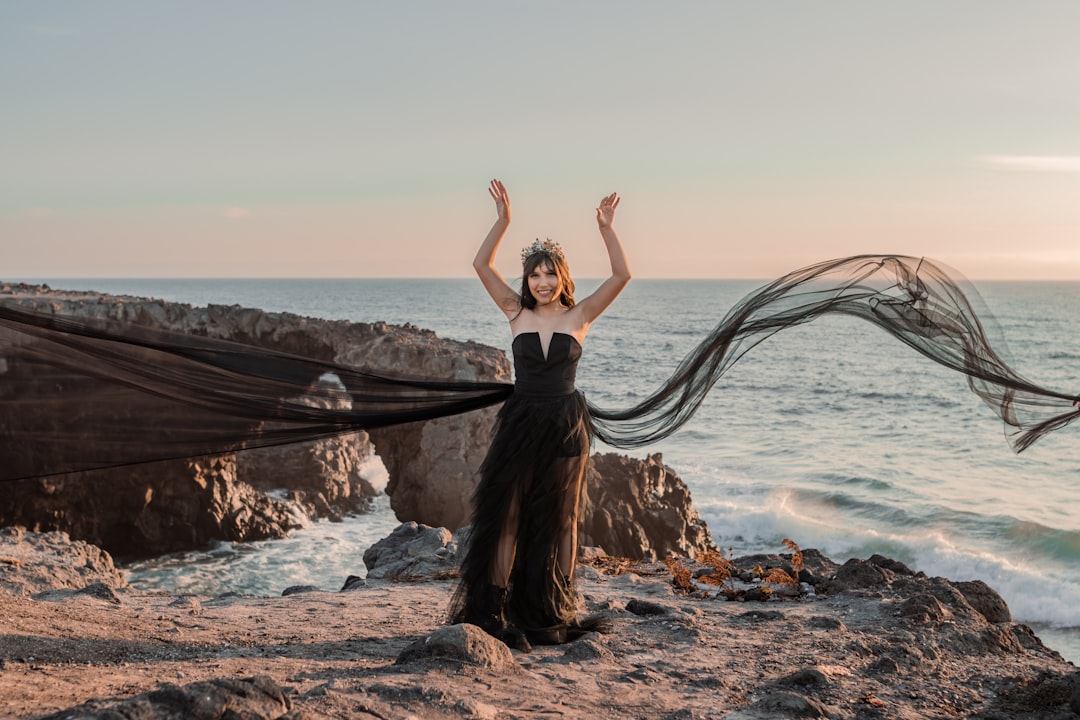
When you watch your improvisation back, whose choreography do you see—yours, or your teachers'?
Contemporary dance promises freedom. No fixed syllabus, no universal technique, no rigid rules about what a body should look like in motion. But that openness can be paralyzing. Without guardrails, many dancers become skilled chameleons: fluent in multiple styles, yet unable to answer the question, What do I look like when no one is telling me what to do?
This guide is for dancers ready to move past imitation and build a vocabulary that is unmistakably their own. It is not a manifesto on "being yourself." It is a set of practical tools for excavating, testing, and refining your movement identity.
The Problem With Starting From "Freedom"
Contemporary dance is often described with the same abstract nouns: fluidity, groundedness, authenticity. These words sound meaningful until you try to apply them in the studio. What does "grounded" actually feel like in your body? How do you manufacture "authenticity" on demand?
The truth is that style does not emerge from aspiring to adjectives. It emerges from constraints, habits, and choices repeated until they become signature. Your task is not to express everything at once. It is to notice what you keep returning to—and then to ask whether you are returning out of comfort or conviction.
Try this: Stand still. Close your eyes. Place your full attention on the soles of your feet. Notice how your weight shifts microscopically across the metatarsal arch. Let that sensitivity initiate a single movement—an arm reaching, a head turning, a step sideways—rather than forcing the impulse from your shoulders or chest. Film 30 seconds of this. That is groundedness, made concrete.
Build a Vocabulary of Theft
Every distinctive style is a collage of influences made invisible through digestion. The difference between a derivative dancer and an original one is not the absence of borrowing—it is the depth and specificity of the sources.
Do not simply say, "I am influenced by ballet and hip-hop." Name practitioners. Study single phrases until you understand why they move you. Consider these departure points:
- Pina Bausch's theatrical repetition: How does returning to the same gesture five, ten, twenty times transform its meaning?
- Akram Khan's kathak fusion: What happens when rhythmic footwork collides with spiral, release-based torso work?
- Crystal Pite's ensemble unison: How can group precision create emotional isolation rather than harmony?
Then distort what you steal. Take a Bauschian gesture and perform it at double speed. Apply Khan's footwork while lying on the floor. Use Pite's unison concept in a solo, splitting your body into two "dancers" that fall out of sync.
Try this: Choose one video clip of a choreographer you admire, under two minutes. Learn the first 16 counts exactly. Then impose three rules: no movement above shoulder height, every step must travel backward, and you must add one full minute of stillness. What survives? That residue is yours.
Translate the Unnameable
Your unique style is not a costume you put on for performance. It is the physical residue of your inner life: your anxieties, your obsessions, the way you process time and space and other bodies.
The challenge is that emotions do not arrive in danceable form. You must build a translation practice.
Start with language. Write for five minutes without stopping about a recent conflict, a memory that surfaces uninvited, or a sensation you cannot name. Then select three sentences. Perform them literally: "I couldn't get the words out" becomes hands clutching the throat, mouth opening and closing. Next, abstract them: reduce the gesture by 70%, change the facing, initiate it from the elbow rather than the hand. Finally, reverse the dynamic: if the original was urgent, perform it as if underwater.
This is not therapy. It is choreographic craft. You are learning to convert private material into readable, repeatable movement without losing its charge.
Collaboration as Friction, Not Validation
Seeking feedback is useful. Seeking friction is better.
Too many dancers surround themselves with mirrors: teachers who confirm their strengths, peers who share their training, choreographers who cast them in familiar roles. A unique style hardens in opposition as much as in practice.
Work with someone whose training annoys you. Take class from an instructor who corrects your default alignment. Improvise with a musician who ignores your phrasing. Join a workshop outside dance entirely—contact improvisation with actors, composition with visual artists, somatic practice with therapists.
The goal is not to agree. The goal is to notice