In a village hall in County Clare, Ireland, a ceili band finishes tuning. The fiddle lifts first, then the bodhrán drops in with a steady 4/4 pulse. Dancers line up, waiting for the figure to begin. The moment the tune starts, feet hit the floor in unison. This is not performance for an audience. It is a conversation between body and sound, shaped by centuries of practice.
Folk dance and its music are inseparable. Yet choosing the right pairing—whether for a dance class, a wedding, or a cultural festival—requires more than good taste. It demands an understanding of rhythm, structure, instrumentation, and context. This guide offers concrete criteria, specific examples, and practical recommendations for matching music with folk dance traditions from around the world.
What Makes a Good Dance-Music Pairing?
Before exploring individual traditions, it helps to establish what actually matters when pairing music with folk dance. Four elements determine whether a pairing succeeds or fails:
| Element | Why It Matters | Example |
|---|---|---|
| Tempo (BPM) | Dictates energy level and physical feasibility | A horo from Bulgaria works at 120–140 BPM; too slow, and the sustained arm holds collapse |
| Time signature | Determines step patterns and phrasing | Irish jigs are in 6/8; reels are in 4/4. Dancers cannot substitute one for the other without changing the entire choreography |
| Phrasing structure | Tells dancers when to transition between figures | A 32-bar strathspey gives Scottish dancers predictable landmarks |
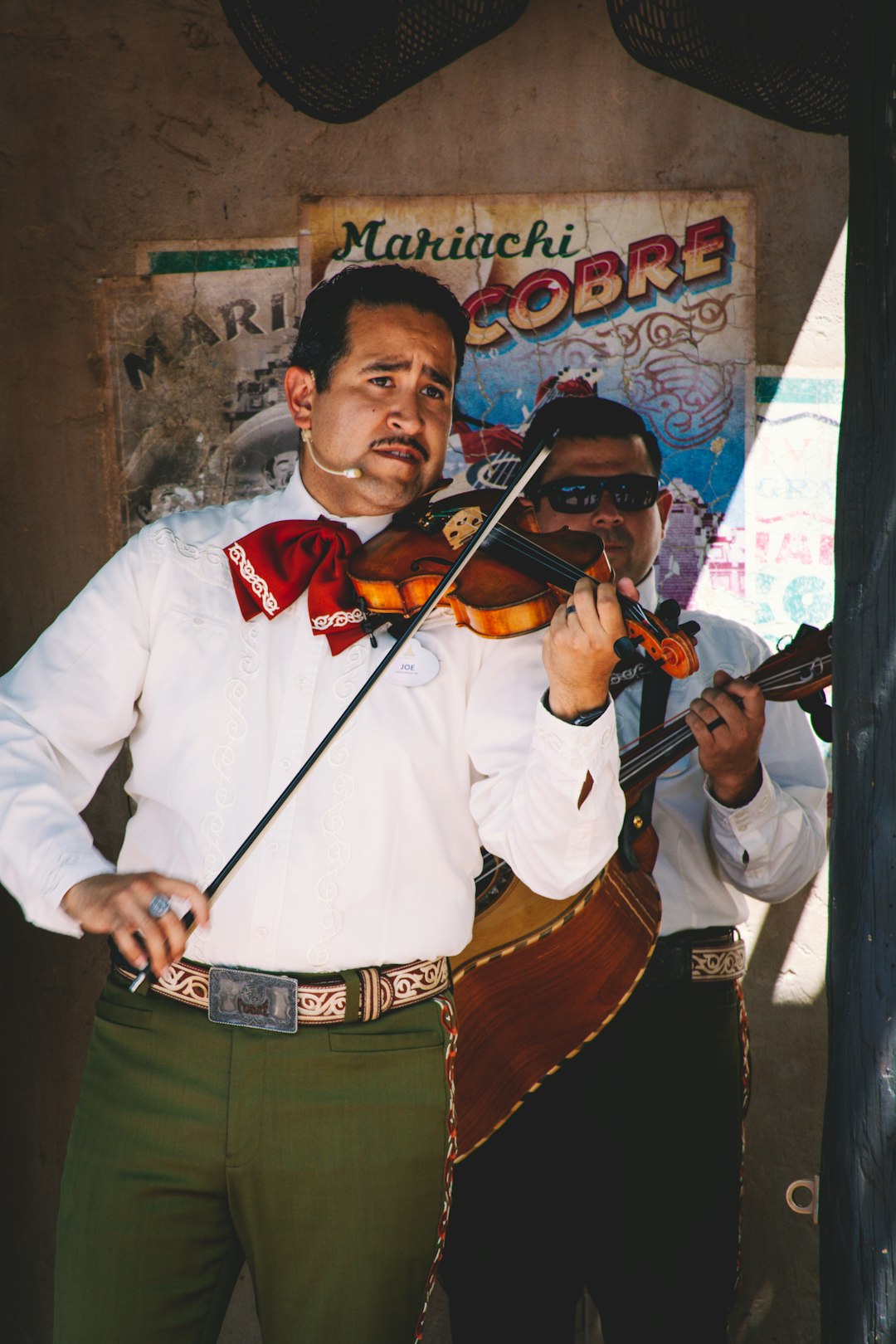
| Emotional register | Aligns music with the occasion | A mariachi jarabe tapatío carries celebratory pride; a Portuguese fado-accompanied dance carries melancholic weight |
Get these four elements right, and the dance practically leads itself. Get them wrong, and even skilled dancers struggle to find the floor.
European Traditions: Precision and Pulse
Irish Ceili Dancing: Jigs, Reels, and the Bodhrán
Irish social dance (ceili) relies on two primary tune types: jigs (6/8 time, lilting and propulsive) and reels (4/4 time, driving and even). The bodhrán, a single-frame drum, does not merely keep time. It accents the backbeat, creating lift that helps dancers launch into jumps and switches.
"A bad bodhrán player follows the tune. A good one follows the feet." — Colm Murphy, bodhrán teacher and All-Ireland champion
Practical pairing: For teaching the Siege of Ennis, start with a double jig at 116–120 BPM. The 6/8 meter naturally supports the dance's hop-step-close pattern. For experienced dancers, push to 126–132 BPM.
Austrian Schuhplattler: From Ländler to 3/4 Time
The waltz, often associated with Vienna, developed from earlier volks traditions—the Ländler and Steirer—but sits uneasily as "folk dance" in its polished ballroom form. A clearer Austrian example is the Schuhplattler, a shoe-slapping dance from the Alpine regions. It is performed in 3/4 time, typically to Steirische Harmonika (diatonic accordion) or zither.
The music is moderate, around 100–120 BPM, allowing dancers enough time to execute complex knee bends, thigh slaps, and heel clicks without rushing.
Practical pairing: For an authentic Schuhplattler, seek recordings featuring Steirische Harmonika in the key of B-flat or E-flat, with clear first-beat emphasis.
Serbian Kolo: The Power of the Tamburica Orchestra
At Serbian weddings, the kolo is non-negotiable. This circle dance demands music with relentless forward momentum, usually provided by a tamburica orchestra—string instruments descended from the Ottoman saz tradition. The bugarija (rhythm tamburica) provides chordal drive, while the brač or čelo tamburica carries the melody.
Tempos vary by regional style: Morava kolos run 120–140 BPM, while Vlach kolos can exceed 160 BPM.
Practical pairing: For a mixed-ability group, start with a Morava kolo at 128 BPM. The steps are walking-based, and the steady 2/4 meter is forgiving.