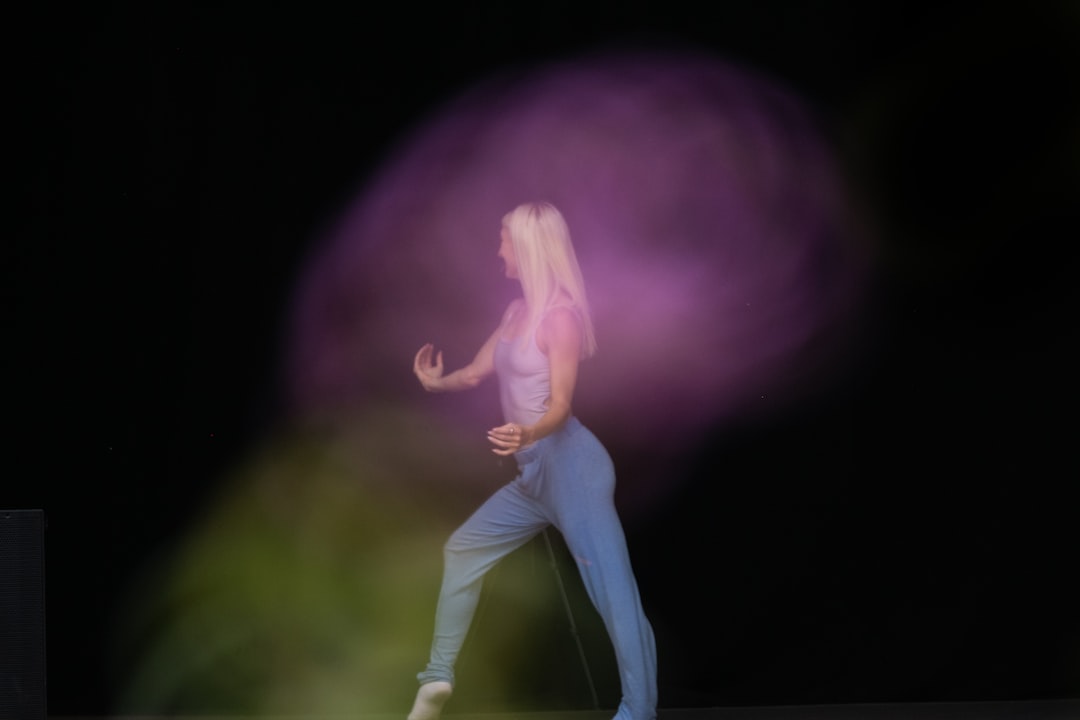
The floorboards of a converted textile warehouse on Eschbach's Industriestraße vibrate with a rhythm rarely heard in this corner of southwestern Germany. Twenty pairs of feet drag and pivot in unison, executing the signature arrastre step that defines cumbia's coastal Colombian origins. The temperature outside hovers just above freezing in late January, but inside Maria Delgado's school, the atmosphere carries the humid intensity of Barranquilla's carnival season.
Delgado founded Eschbach's Premier Cumbia Training in 2014, bringing with her fifteen years of performance experience in Colombia's cumbia de orquesta tradition and a determination to establish something that didn't exist in the region: an institution treating cumbia as living cultural heritage rather than exotic novelty.
What the School Actually Teaches
The curriculum here is deliberately structured, not improvised. Beginners spend their first eight weeks mastering fundamentals: the dragging footwork derived from cumbia's folkloric roots among Colombia's indigenous and Afro-Colombian communities, the proper partner frame for social dancing, and the essential rhythmic structure—tres por cuatro with its characteristic emphasis on the second beat.
Intermediate classes introduce regional variants that most European dance schools conflate or ignore. Students learn to distinguish between the brass-driven cumbia sonidera popularized in Mexican working-class communities, the electronic-influenced cumbia villera that emerged from Buenos Aires' villa miseria neighborhoods, and the cumbia rebajada with its slowed, bass-heavy tempo that Delgado herself encountered during research trips to Monterrey, Mexico.
Advanced students tackle performance choreography and a monthly musicalidad workshop that brings live musicians—typically accordionists or guacharaca players from Cologne's Latin music scene—into the studio. "Without understanding the instruments, you're just exercising," Delgado explained during our visit. "The llamador drum calls the dancer. The gaita flute tells you when to turn. You must hear this."
The People Inside the Warehouse
The student body defies easy categorization. On the Tuesday evening we observed, the roster included a 34-year-old Peruvian-German engineer who discovered cumbia through his grandmother's record collection, two teenage siblings preparing for their Quinceañera choreography, and a retired postal worker who began at age 61 after seeing Delgado's troupe perform at Ludwigshafen's 2022 Sommerlichter festival.
Carlos Mendez, the instructor leading that evening's intermediate session, interrupted the music twice to correct a student's posture—not with generic encouragement, but with precise physical adjustment and explanation of how Colombian cumbia's upright torso differs from the more grounded stance of salsa. Each teacher at the school undergoes Delgado's own pedagogical training, which emphasizes cultural transmission alongside technical instruction.
Performance opportunities are concrete, not hypothetical. The school's Grupo Folclórico appears annually at the Speyer International Festival and has secured recurring slots at Mannheim's Latin American Cultural Week. In 2023, six advanced students traveled to Medellín to participate in the Festival de la Cumbia, placing third in the international amateur division—a first for any German-based school.
The Founder and Her Friction Points
Delgado's vision, articulated in our interview, carries deliberate tension with commercial pressures: "Our goal is not just to teach dance, but to foster a deep appreciation for the cultural heritage of Cumbia. We believe that through dance, we can connect with our roots and share this beautiful tradition with future generations."
That emphasis on heritage over marketability has cost the school opportunities. Delgado declined a 2022 partnership with a major fitness chain that wanted to rebrand cumbia as a cardio workout. She has also resisted expanding into the more commercially viable salsa and bachata markets, though student demand exists. "If you want salsa, Ludwigshafen has twelve schools," she noted. "If you want to understand why cumbia is the mother of Latin American popular dance, you come here."
The school's location in Eschbach—population 3,400, no direct rail connection—presents genuine accessibility challenges. Students drive from as far as Frankfurt (45 minutes) and Saarbrücken (50 minutes). Delgado has negotiated subsidized rates with a local guesthouse for out-of-town students intensive workshops, but acknowledges the geographic limitation has likely capped growth.
Practical Information
Eschbach's Premier Cumbia Training operates from the Industriestraße warehouse Tuesdays through Saturdays, with class schedules varying by level. Introductory courses run in eight-week cycles; drop-in sessions are not available for beginners,










