Posted on May 11, 2024
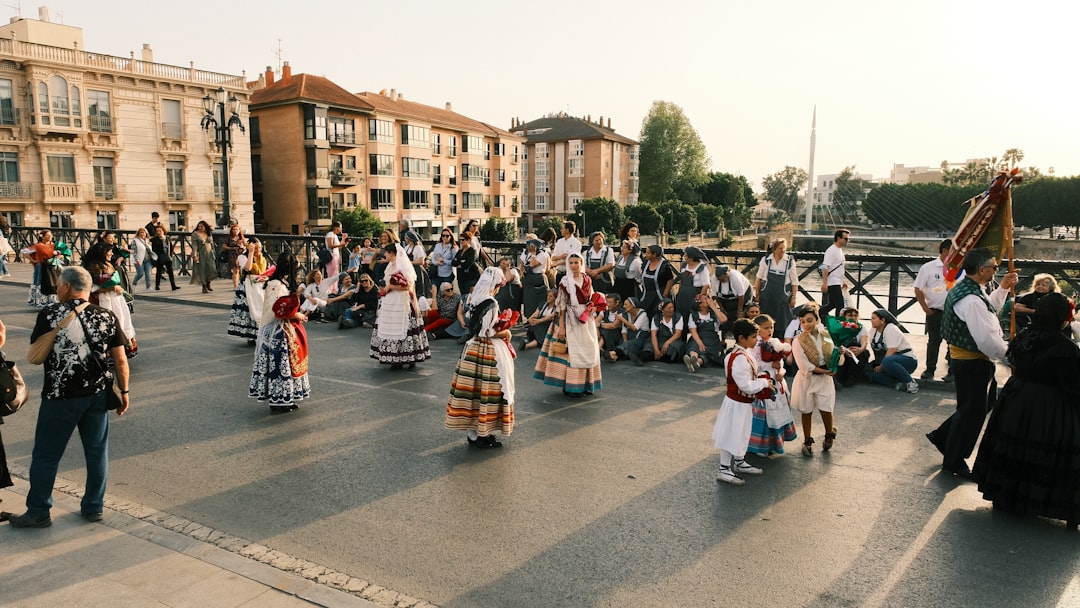
The American Legion hall in Falls City, Texas, doesn't look like much from the outside. A low-slung brick building on a quiet stretch of road, it sits in a town of just 611 people, surrounded by ranchland and oil fields. But on Saturday nights, the wooden floor bounces under the weight of 40 to 60 dancers, the ceiling fans spin overhead, and a six-piece band plays jump blues to a crowd that drives from as far as San Antonio and Corpus Christi.
This is the home of the "Texas Twist"—a regional swing dance scene that, according to its founders and followers, shouldn't exist in a place this small.
The Unlikely Origin
The Texas Twist began in March 2022, when Johnny Thompson, a 34-year-old welder and self-taught Lindy Hopper, posted a flyer at Falls City's only gas station. He wanted to teach swing dance to anyone willing to show up. Eight people came to the first session in the Legion hall. Six were relatives.
"I figured we'd do it for a month and it'd die out," Thompson said. "I was wrong."
By fall 2022, attendance had grown to 25 people weekly. Thompson partnered with Sally Martinez, a Corpus Christi native who had trained in West Coast Swing and country two-step. Together, they developed what they now call the Texas Twist: a hybrid style that blends East Coast Swing's energetic triple steps with the closed-position turns of country two-step and the laid-back delays of Texas blues.
Martinez demonstrated the difference during a recent social. "In pure Lindy, you're flying—open position, lots of space," she said. "Texas Twist keeps you closer. You pause on the back beat, let the blues guitar breathe, then push off again. It's partner dancing with our regional accent."
What the Dance Actually Looks Like
The signature elements are specific enough that regulars can spot an outsider quickly. Dancers typically start in closed position, unlike most swing styles. The basic footwork follows East Coast Swing's rock step, triple step, triple step pattern, but leaders often insert a two-step "traveling basic" to circle the floor. The most distinctive feature is the "blue delay"—a deliberate half-beat hesitation on counts two and six, borrowed from regional blues phrasing.
At the April 27 social, Thompson and Martinez performed a choreographed routine that illustrated the storytelling aspect proponents emphasize. Set to a slow-tempo version of "Corrine, Corrina," the dance depicted a couple's argument, reconciliation, and eventual joyful spin-out—communicated through tension in the frame, sudden breaks in movement, and a final accelerated sequence of turns.
"It sounds corny until you see it," said audience member Doris Vela, 58, who drives 50 miles from Floresville each week. "Then you realize they're actually acting out the song."
A Scene Built on Regional Labor
The Falls City socials survive because of deliberate geographic triangulation. The town sits roughly equidistant from San Antonio (55 miles north), Corpus Christi (70 miles southeast), and Victoria (45 miles east). For dancers in those cities, Falls City is the convenient middle point that none of the larger cities provided.
"San Antonio has ballroom studios. Corpus has country dance halls. But nobody was doing this hybrid thing in a casual, cheap, community setting," said Martinez. Cover charge is $7. Lessons run $10. The Legion hall rents for $75 per night.
Local businesses have noticed the traffic. The Falls City Steak House, the town's only sit-down restaurant, began staying open until 10 p.m. on Saturdays after dance regulars repeatedly arrived at 8:45 to find the kitchen closed. Owner Ray Gutierrez confirmed that Saturday revenue has increased roughly 35 percent since the dance socials stabilized in 2023.
"They're polite, they tip well, and they fill tables we wouldn't fill otherwise," Gutierrez said. "I didn't expect tourists in Falls City."
Credibility Questions and Cautious Ambitions
Not everyone in town embraces the narrative of a cultural renaissance. Falls City Mayor Bryan Wiatrek, who has attended two socials, described the scene as "a nice hobby for some folks" but pushed back on claims that the town is becoming a dance destination.
"It's good for the steak house," Wiatrek said. "But let's be realistic. We're 611 people. We're not turning into Austin next week."
Thompson and Martinez acknowledge the scale limitations. Their stated goal for 2024 is modest: a one-day workshop and social in October, with one nationally recognized instructor already contracted—San Antonio-based swing historian and teacher Marcus Bellamy, confirmed by Bellamy via email. They have discussed a regional competition with the Texas Swing Dance Society, a statewide organization, but no contract