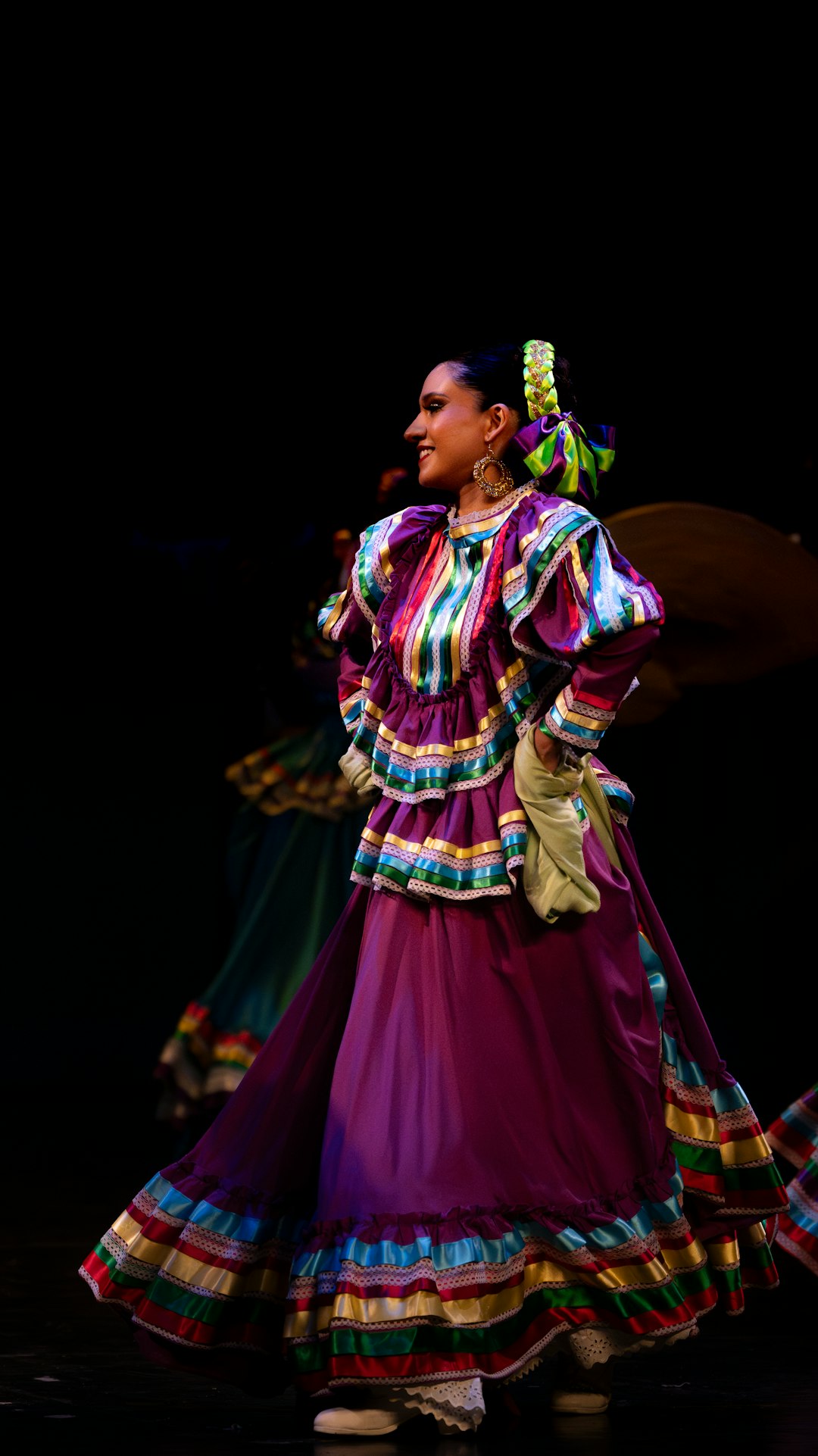
At 2 AM on a Thursday in Villa Crespo, the worn wooden floor at El Beso glows amber under vintage chandeliers that haven't been dusted since the last military junta. Seventy-year-old Roberto Cabrera adjusts his suspenders and scans the room for his next partner while a doctoral student from Seoul, three months into her tango obsession, waits for the cortina—the short musical break that separates one dance set from the next—to finally end.
This is tango. Not the sequined spectacle of televised ballroom competitions, but something older, stranger, and far more intimate.
The Widow's Ritual
María Elena Vásquez arrives at La Viruta every Saturday at 11:47 PM, seven minutes before the beginner class ends. She has done this for eleven years, since her husband's death. She wears the same navy dress with the small tear near the hem that Miguel once teased her about. "Fix it, mi amor," he'd say. She never has.
"For me, tango is the conversation we still have," she explains, accepting a cabeceo—the subtle nod that invites a dance without words—from a man twenty years her junior. Their embrace is close, almost familial. She closes her eyes. For twelve minutes, across three songs, she is not a widow. She is a woman being asked, being led, being seen.
The abrazo—tango's signature embrace—creates what dancers call the "shared axis." Two bodies find a common center of gravity. One breathes; the other feels it. The lead proposes; the follow responds. Nothing is forced. Everything is negotiated in milliseconds of muscle and intention.
"You cannot lie in this embrace," says Dmitri Volkov, the Moscow-born instructor who now teaches in Berlin. "Your marriage might be failing. Your job might be killing you. But for three songs, your body tells the truth."
The Language of Three Rhythms
Most outsiders know only one tango: slow, dramatic, dripping with theatrical sorrow. But Argentine tango lives in three distinct musical forms, each demanding different emotional registers.
Tango proper moves in a walking rhythm—caminata—that can accelerate into controlled explosions of footwork or slow to a near-standstill where only the chests communicate. Vals, in waltz time, spins and floats. Milonga, the earthy, uptempo ancestor, demands a grounded, almost aggressive playfulness.
"The milonga is where you sweat out your week," says Amara Okafor, a London psychotherapist who discovered tango during her divorce. "The tango is where you grieve. The vals is where you remember you might still fly."
Each form requires different shoes, different posture, different stories. A dancer might spend years mastering the technical vocabulary—boleos, ganchos, sacadas—before realizing that the true technique is listening. To your partner. To the music. To the hundred-year conversation between the bandoneón's wheezing exhale and the string section's reply.
The Codigos: Anarchy and Order
Every milonga operates by unwritten rules so precise they might as well be constitutional law. The codigos govern everything from navigation (move counterclockwise, never stop in the line of dance) to rejection (decline with averted eyes; never explain).
"The codigos taught me boundaries," says Kenji Tanaka, who traveled from Osaka to Buenos Aires for what he planned as a three-week vacation and stayed for three years. "In Japan, I could never refuse my boss. In tango, I can refuse anyone. The cabeceo protects us both from embarrassment. It is technology for dignity."
This etiquette emerged from tango's origins in the marginalized barrios of late-19th-century Buenos Aires, where African and European immigrants, excluded from respectable society, created their own aristocracy of skill. The dance that UNESCO now recognizes as Intangible Cultural Heritage was once banned in polite Argentine households. The codigos evolved to protect dancers from police harassment, from class judgment, from each other.
Today they create what anthropologists call "communitas"—temporary social equality. At El Beso, the taxi driver and the cardiologist wait equally for the nod. Age, nationality, profession dissolve in the embrace.
The Transformation
Something happens to beginners that veteran dancers recognize immediately. The first six months are mechanical misery: counting steps, apologizing for collisions, wondering why everyone else seems to be having spiritual experiences while you are having foot pain.
Then, usually without warning, the counting stops. The body absorbs what the mind cannot master. "It was my forty-third beginner milonga," remembers Okafor. "I stopped trying to dance and started trying to listen. Suddenly I was