---
There's a moment every belly dancer remembers. Mine happened in a cramped community center in Cairo, watching my teacher Randa weave through a drum solo like her body had its own language. I couldn't do a single thing she was doing. My hips felt like concrete blocks. But something shifted when the orchestra hit that ascending saffron melody—and for maybe two seconds, my body moved without me telling it to.
That was it. I was done for.
You don't learn belly dance. You remember it.
Here's what nobody tells you starting out: you're not building something from nothing. Belly dance lives in the muscles you already have. The hip drops, the figure eights, the undulations—they're already in there somewhere, buried under years of walking like a normal person. Your job isn't to become someone new. It's to excavate someone you've always been.
The basics feel absurd at first. Hip lifts feel like flexing something you didn't know existed. Figure eights make your lower back cramp in the most humbling way possible. Undulations look nothing like the smooth wave your instructor does, and instead resemble a confused caterpillar. This is fine. This is exactly right. The awkwardness isn't a sign you're bad at it—it's a sign you're doing it.
I spent three months doing hip circles that looked more like pelvic tilts with ambition. Then one morning, twelve weeks in, I caught my reflection mid-movement and my hips were moving the way they do in my dreams. Two seconds. But those two seconds rewired everything.
Finding the right guide matters more than you think
My first instructor was a retiredRaqs Sharqi professional named Nadia who had zero patience for fluff. She corrected my posture in week one, taught me to breathe into my isolations by week three, and by month two had me doing shimmies while maintaining eye contact in a mirror without flinching. She was demanding in a way that felt like respect.
Not everyone has access to someone like Nadia. Online classes are legitimate—Samira's Studio, if you can find it, is worth every penny. The key is finding someone who watches your body, not just demonstrates at you. A good teacher gives you mirrors, questions, and corrections that make sense. A great teacher gives you a vocabulary for what's happening inside your own body.
If you're starting completely alone, film yourself. I know, I know. It's excruciating. But watching a thirty-second clip of yourself doing hip drops will teach you more than an hour of following along with a screen. You can pause, compare, adjust. Your phone camera is the most honest teacher you'll ever have.
The clothing thing is real (but not for the reason you think)
You don't need a coin bra and a thirty-foot veil on day one. What you do need is something that lets you see your hips. A fitted top that rides up slightly. A hip scarf with some weight to it—not the feather-light ones, the ones with actual coins or beads that drag a little when you move.
Here's what happens: when you can see your hips, you start understanding them. The scarf catches movement you can't feel yet. The coins ring when you shimmy right but go quiet when you shimmy left. Your body becomes legible to you, and that's the whole game.
I bought my first hip scarf at a souk in Alexandria for about forty pounds. It was scratchy, slightly too big, and the coins were mismatched. I wore it every single day for practice for six months. It smelled like my kitchen. I loved it unreasonably.
On practicing when you don't feel like it
Discipline is unglamorous. Nobody posts Instagram videos of themselves practicing isolations in their kitchen at 7 AM when they'd rather be sleeping. But the dancers who get somewhere—the ones whose movements look effortless—built that ease through sheer stubborn repetition.
Fifteen minutes a day, every day, is better than three hours on a Sunday. Your muscles need repetition to form patterns. That shimmy you're struggling with? After a hundred times, your body stops asking your brain for permission. The movement becomes reflex. That's the whole secret, really: you practice until the dance practices itself.
There's something almost meditative about the repetition. The same hip circle, over and over, until your brain finally gets bored and lets your body take over. That's when the real dancing starts.
The music is not background noise
This took me embarrassingly long to understand. I used to put on a playlist and dance "to it." I was moving, the music was happening, but we weren't really together.
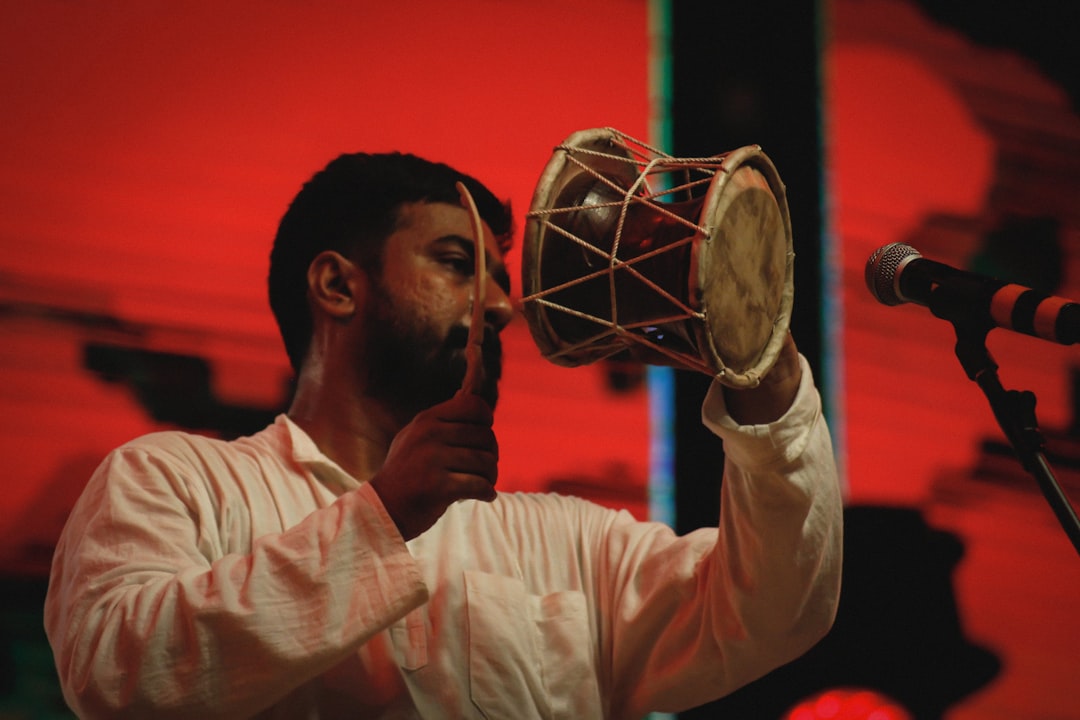
Belly dance doesn't accompany music. It converses with it. The drum solo tells you when to tighten your shimmy. The oud melody asks for slow, expansive movements. The tabla might throw in a trick beat that only makes sense if your body responds to it, not your thinking.
Start listening like a dancer, not a listener. When a dum tek lands, where does your body want to go? What does your spine do when the melody climbs? Don't choreograph it—just notice. The music has opinions, and if you listen hard enough, it will share them with you.
Why community changes everything
I performed for the first time at a friend's hafla—a informal gathering of belly dancers sharing space and food and dancing without judgment. I was terrified. My combination was shaky, I'd forgotten half of it, and my veil work looked like a bedsheet in a windstorm.
But afterward, a woman I'd never met told me my Egyptian in-shoulder had the right quality to it, that she could see I'd been working on my timing. She was specific. She noticed something real. And suddenly I wanted to practice for six hours a day, every day, for the rest of my life.
Dancers who share space with other dancers get better faster. Not just from watching or learning—though that's part of it—but from being seen. From having someone recognize the work you're doing even when you can't see it yourself. Find the hafla. Find the forum. Find the one teacher who fills up your class on a Tuesday night. Be where the dancing is.
On patience, and what it actually looks like
Patience doesn't mean accepting that you'll never improve. It means accepting that improvement doesn't always announce itself. Some weeks you'll feel like you're moving backwards. Some days your body will betray every movement you thought you'd mastered. This is the territory. Every experienced dancer has been through it.
The trick is to keep celebrating the microscopic. You held a hip lift for four seconds instead of two? That's not small. That's your body learning something. Your figure eight finally closed the loop without stopping? That's enormous. Keep a list. Write down the tiny victories. On the days when everything feels wrong, you read the list and remember that you are, in fact, going somewhere.
Performance is a different skill, and you need it
Practicing alone and performing are two completely different activities. Alone, you can pause, reset, start over. Performance demands commitment to the movement in real time, without edits. Your body has to know what it's doing.
Start small. A mirror works. Stand in front of it, play a song you know, and dance all the way through without stopping, rewinding, or correcting yourself. Then try it in front of a friend. Then a few friends. Each step teaches you something different about what lives in your body versus what's only in your brain.
The first time I performed without my brain micromanaging every hip drop, I felt something I can only describe as free. Not perfect—I missed half my cues and my veil got tangled twice. But free. That's the feeling you're building toward.
The deeper you go, the more there is
Belly dance is a rabbit hole with no bottom, and that is its gift. Once you have the basics, there's always another layer: a new style (Egyptian raqs sharqi, Turkish cisleri, American Tribal Style), a new prop (veil, cane, shamadan, sword), a new musical tradition to explore. The learning never dries up because the dance itself never does.
After five years, I'm still finding new things my body can do with a basic hip circle. My teacher—different now, still demanding—showed me a variation last month that I thought I had mastered. I hadn't. Not even close. I went home and practiced in my kitchen, and it was like starting over, and it was wonderful.
Let the dance have you
Here's the truth nobody puts in the roadmap: belly dance will change how you exist in your body. Not just how you move—how you exist. You'll start noticing your hips in everyday life. You'll catch yourself doing a hip drop while standing in line at the grocery store. You'll hear a darbuka in a restaurant and feel your spine start to undulate without permission.
That's not a bug. That's the whole point.
You're not going from zero to shimmy. You're going from unaware to awake. Every layer of technique you learn, every hour you spend in practice, every community you join—all of it is just peeling back another layer of numbness and finding that there's a dancer underneath, patient and insistent, waiting for you to finally pay attention.
Your body has been trying to tell you something for years.
Time to listen.