---
I remember the exact moment I realized I wasn't actually dancing—I was just executing. Clean isolations, textbook technique, perfectly timed steps. And completely forgettable.
That was five years ago. Since then, I've spent countless hours in workshops, studios, and stages trying to understand what separates the dancers who hold a room's attention from the ones who just fill it. Here's what I've learned actually moves the needle.
Stop Practicing Moves. Start Practicing Silence.
Most dancers spend hours moving from one technique to the next. What they skip is the pause between movements.
When Sohair Zaki performs, she doesn't just hit the accents—she rests on them. There's a held breath, a suspended moment where nothing moves. Then she releases. That contrast is what makes the movement land. Without it, everything bleeds together into background noise.
Practice doing nothing. Seriously. Stand still for four beats, eight beats, sixteen beats. Feel how uncomfortable it is. Then use that discomfort strategically. The silence after a sharp hip drop makes the drop hit harder. The stillness before a shimmy cascade makes the cascade feel like rainfall instead of flailing.
Your Core Is a Conversation, Not a Foundation
Teachers throw around "engage your core" like it's a light switch. Either you're on or you're off.
It's not.
Your core is a conversation happening in layers. The deep stabilizers (transverse abdominis, pelvic floor) work first, silently. Then the mid-layer fires. Then the superficial muscles add intensity. Most dancers only access the superficial layer, which is why their movements look effortful instead of effortless.
Try this: lie on your back, knees up. Exhale completely until your lower back presses into the floor. Hold that. Now, without forcing, allow the exhale to deepen. Feel how there's another half-inch of engagement hiding underneath what you thought was "engaged." That's your deep core talking. When you find it standing up, everything gets easier.
Musicality Isn't About Hitting Every Beat
Here's a question: Can you dance through an entire song and then describe the drum pattern without singing it? If not, you don't know the music yet.
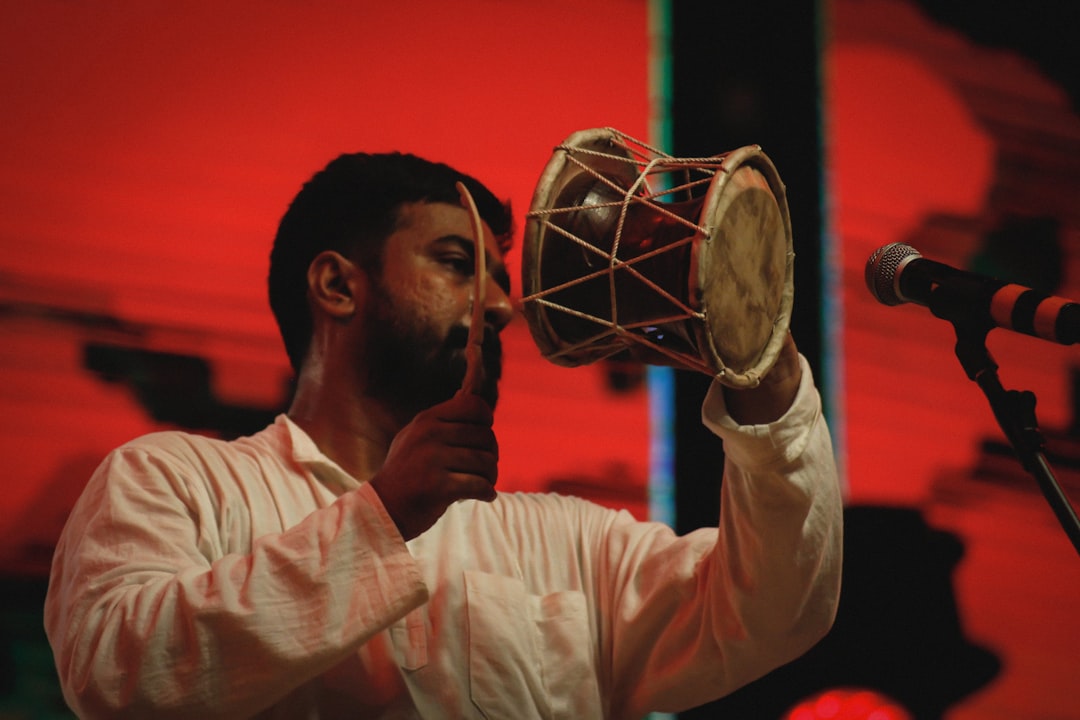
Knowing a song means feeling where the musician breathes, where they anticipate, where they delay. Mahmoud Refat's drum solos aren't metronomic—they swell and recede like speech. When you dance to them, you're not hitting beats. You're having a conversation with another person.
Pick one song. Listen to it for a week straight. In the car, while cooking, during your commute. Listen until you know where the accents fall in your body, not just your ears. Then dance to it. The difference will shock you.
Styles Are Personalities. Find Yours.
I spent two years bouncing between Egyptian Oriental, ATS, and tribal fusion, trying to be well-rounded. What I actually became was forgettable.
A friend—Dana, who's been performing for fifteen years—told me something that stung: "You dance like you're taking a quiz. Every style, correct answers, zero personality."
She's right. You don't need to master every branch of belly dance. You need to find the style (or styles) that makes you want to dance when no one's watching. For me, it was Egyptian Classic—the golden age sound, the precise hipwork, the held moments of stillness. When I stopped trying to be versatile and started going deeper into what I loved, my performances changed overnight.
Explore widely, commit deeply.
The Mirror Is Lying to You
Everything looks fine in the mirror. Your arms are extended, your posture is upright, your isolations are clean. Then you watch the video.
The mirror flips your perspective. Your right side looks like your left. Your timing feels smooth until you see it reversed. That arm extension that felt elegant? It drops halfway through in reality.
Video doesn't lie. Record yourself regularly—not to judge, but to see. The goal isn't perfection. The goal is awareness. Once you know what you actually look like versus what you think you look like, you can make real choices about what to adjust.
Collaboration Will Break You Open
I've learned more from dancing with people who intimidate me than from any workshop.
Last year I joined a rehearsal with three dancers who'd been performing together for a decade. They had inside jokes, unconscious timing, a shared language. I had no idea what I was doing. By the end of two hours, I'd absorbed more about group dynamics, weight-sharing, and improvisation than in a year of solo practice.
Find dancers at your level and above. Different bodies read music differently. Different backgrounds bring different movement vocabularies. The collision of those differences is where growth happens.
---
The dancers who hold my attention aren't the ones with the cleanest technique. They're the ones who seem to be discovering something in the moment—taking a risk, following an impulse, letting the music pull them somewhere unexpected.
That's what you're practicing toward. Not perfection. Presence. The ability to be fully in your body, fully in the music, fully there for the people watching.
Go practice your silence first.