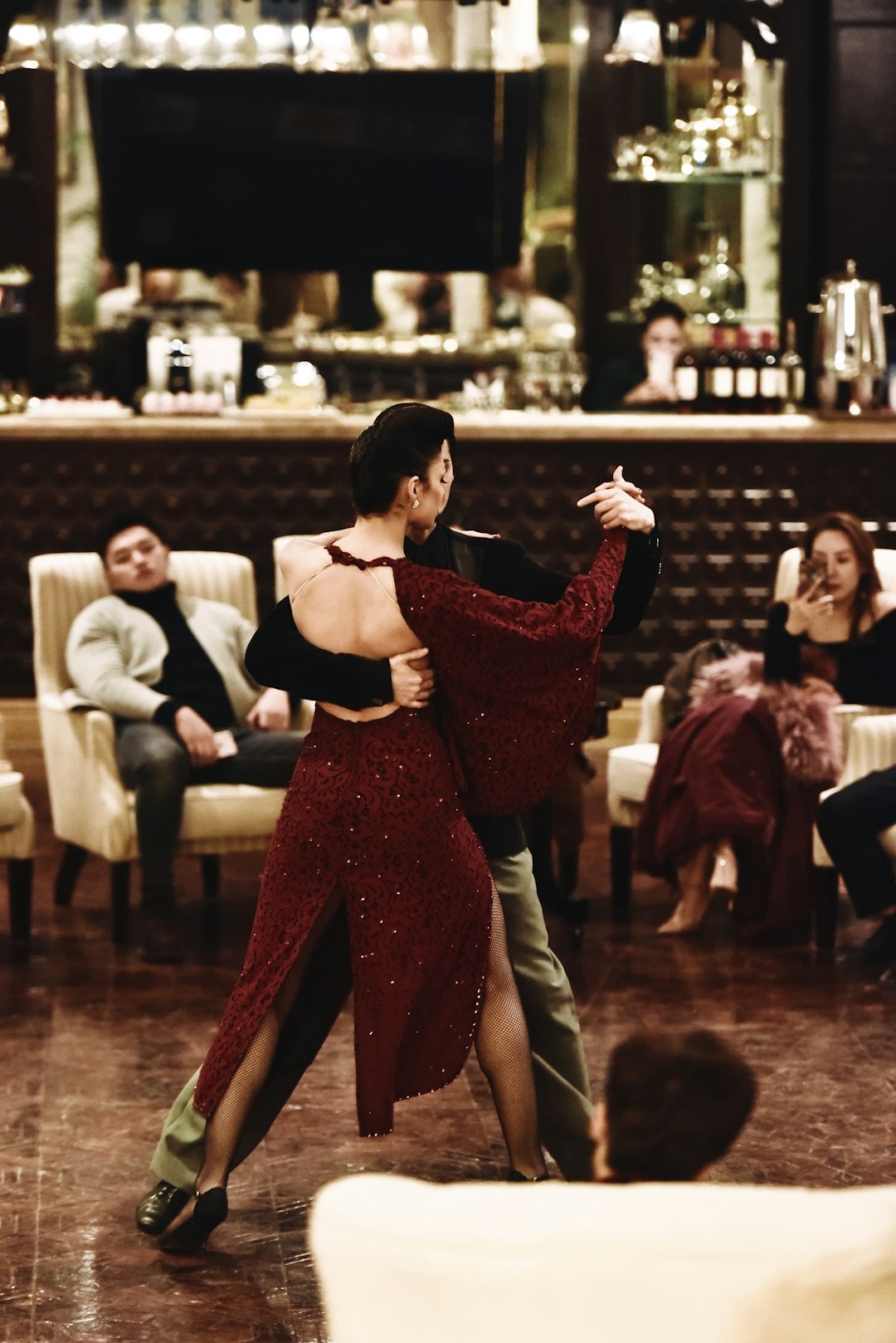
At 7 PM on Tuesdays, the basement studio at Movement Arts Center in Portland fills with a sound unlike any other: thirty feet striking maple in synchronized precision, then breaking into individual improvisations, then reuniting in collective rhythm. For the lawyers, teachers, and healthcare workers who make up this adult beginner tap class, the next hour will be the only time all week their minds go quiet.
Sarah Chen, a 34-year-old emergency room nurse, started tapping two years ago during the height of pandemic burnout. "I couldn't meditate. I tried running. Nothing stopped the rumination," she recalls. "But when I'm counting out a time step—'shuffle, hop, step, flap, ball change'—there's no room for anything else. The anxiety just... pauses."
Chen's experience aligns with what researchers are increasingly documenting: tap dance possesses distinctive therapeutic properties that extend beyond general exercise or even other dance forms. While anxiety and depression rates continue climbing—now affecting an estimated 264 million people globally, according to the World Health Organization—this accessible, rhythmic practice is emerging as a powerful, evidence-based intervention.
Why Tap Dance Specifically? The Neurological Distinction
Not all dance heals equally. Tap dance operates through unique mechanisms that make it particularly effective for mental health conditions.
Auditory-Motor Integration and Present-Moment Awareness
Tap dance creates immediate, concrete feedback. When a dancer strikes the floor, they hear the result instantly—a sharp crack, a muffled thud, a clean tone. This auditory-motor loop engages the brain differently than silent movement forms.
"The sound production grounds practitioners in interoceptive awareness," explains Dr. Rachel Bar, a dance movement therapist and researcher at Lesley University. "For individuals with anxiety, whose minds typically race forward into catastrophic predictions or backward into rumination, the sensory immediacy of tap creates what we might call 'forced mindfulness.' You cannot tap correctly without being present."
This aligns with research on rhythmic auditory stimulation (RAS), pioneered by neuroscientist Michael Thaut. Thaut's work at Colorado State University's Center for Biomedical Research in Music demonstrates that rhythmic auditory cues engage motor planning regions while simultaneously activating attention networks. A 2021 systematic review in Frontiers in Neurology found RAS interventions produced significant improvements in gait and motor control for neurological conditions—with emerging evidence suggesting similar attention-regulation benefits for psychiatric populations.
Mathematical Structure and Cognitive Engagement
Tap dance is fundamentally mathematical. Dancers subdivide beats, execute polyrhythms, and translate numerical patterns into physical action. A basic "paradiddle" requires executing four distinct sounds in precise sequence: dig-heel-toe-heel.
This cognitive load is not incidental—it is therapeutic. A 2019 meta-analysis by Koch, Kunz, Lykou, and Cruz published in Frontiers in Psychology examined 23 studies of dance movement therapy (DMT) and found moderate effect sizes for depression reduction (Cohen's d = 0.67) and anxiety reduction (d = 0.72). The researchers noted that dance forms requiring "complex spatiotemporal coordination" showed stronger cognitive benefits than simpler repetitive movement.
For individuals with depression, whose executive function often deteriorates, tap's structured demands provide scaffolded cognitive exercise. "The counting, the pattern recognition, the error correction—it's cognitive behavioral therapy embedded in physical form," says Dr. Bar.
Improvisation and Social Connection
Unlike ballet or many contemporary forms, tap tradition includes extensive improvisation—"trading fours," call-and-response, and solo choruses within group structures. This creates what researchers term "structured spontaneity": enough safety for anxious individuals to risk self-expression, enough unpredictability to interrupt depressive stagnation.
The social dimension proves equally crucial. A 2020 study by Murphy, Karkou, and Maidment in The Arts in Psychotherapy followed 62 adults with moderate depression through 12 weeks of group DMT. Participants showed significant reductions in depressive symptoms compared to waitlist controls, with qualitative data emphasizing "shared rhythmic experience" and "nonverbal communication" as key mechanisms.
"There's something about making noise together," says Marcus Williams, a Chicago-based tap instructor who specializes in trauma-informed teaching. "In my classes, we start with unison exercises—everyone hitting the same rhythm. Then we branch into individual voices. People who've been isolated by depression hear themselves heard by others. That's not metaphorical. That's acoustic."
The Historical Resilience Embedded in the Form
Tap dance carries therapeutic DNA in its very origins. The form emerged from the forced collision of West African rhythmic traditions and Irish step dancing in 18th and 19th century America—practiced by enslaved people and impoverished immigrants who transformed oppression into art.
"Tap was survival practice before it was entertainment," notes Dr. Constance Valis Hill,