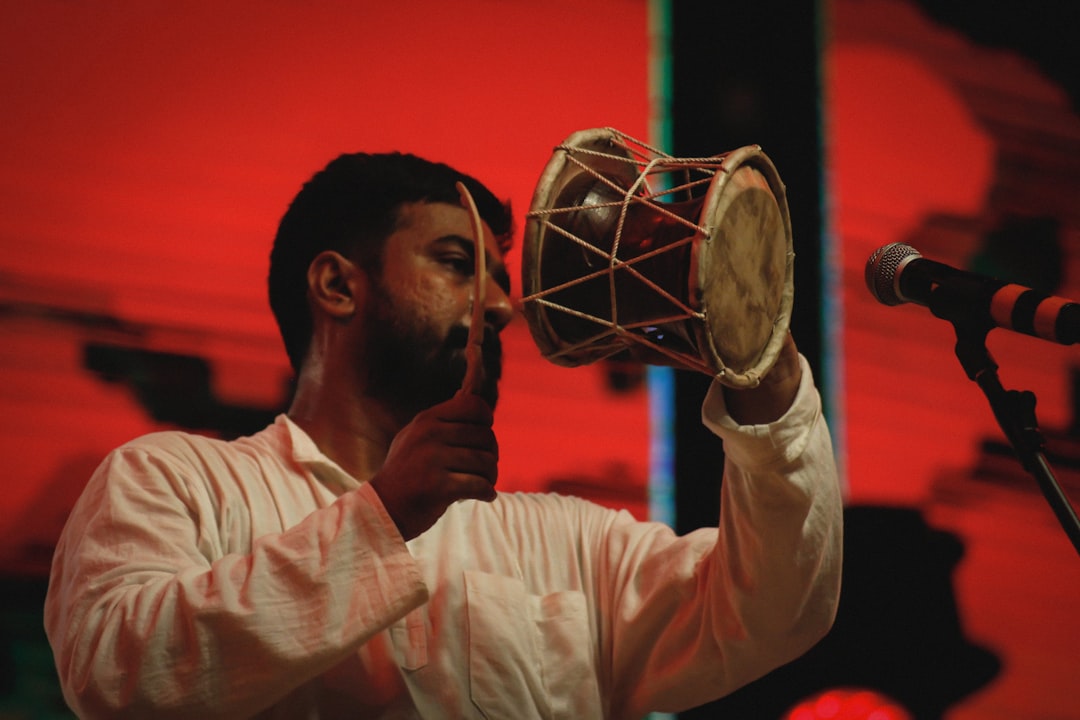
The lights dim. A single spotlight finds the edge of the curtain. Then comes the sound—a rolling cascade from a doumbek, the goblet drum's voice swelling from silence like a heartbeat accelerating. The audience stills. The dancer emerges not on a visual cue, but on a rhythmic one: the drummer's flourish reaches its peak, and her body answers. This is the essence of belly dance—where music is not accompaniment but partner, not background but breath.
For centuries across the Middle East, North Africa, and the Mediterranean, belly dance (raqs sharqi) has developed in intimate dialogue with its musical traditions. Understanding this relationship transforms casual viewers into informed enthusiasts and transforms dancers' movements from imitation into conversation.
The Instruments: Voices of Wood, Skin, and Reed
The Doumbek (Goblet Drum)
Shaped like an hourglass with a flared base, the doumbek—also called darbuka or goblet drum—anchors belly dance ensembles with its penetrating, articulate voice. Played with fingertips, palms, and sometimes the flat of the hand against a fish-skin or synthetic head, it produces a vocabulary of tones: the deep, resonant dum (center strike), the sharp, crisp tek (rim strike), and the muted ka (finger snap on the edge).
A skilled player doesn't merely keep time. The doumbek carries melodic responsibility—rhythmic phrases become sentences, questions, exclamations. In live performance, dancers and drummers engage in tarab, a state of shared musical ecstasy where improvised calls from the drum meet spontaneous responses from the body. The drum's skin, sensitive to humidity and heat, changes character through a performance, demanding constant adaptation from its player.
The Riq (Frame Drum)
Often overshadowed by its larger cousin, the riq—a tambourine with five pairs of brass cymbals and a goatskin head—deserves recognition as the most versatile percussion instrument in the tradition. Held upright in the left hand while the right strikes, shakes, and rolls, it combines drum and cymbal in one voice. In classical Egyptian ensembles, the riq player often serves as director, signaling transitions between sections with specific cymbal patterns.
The Oud: The Sultan of Instruments
With its bowl-shaped body, short neck, and eleven strings (five courses), the oud produces the warm, resonant tones that define Middle Eastern melodic sensibility. Unlike the Western lute it resembles, the oud has no frets, allowing players to explore the microtonal intervals (quarter tones) essential to Arabic maqam (modal system).
The oud typically opens classical pieces, establishing the maqam and emotional mood. Its sound—sometimes described as "tears in the wood"—can shift from meditative introspection to exuberant celebration within a single phrase. Notable oud masters like Farid al-Atrash and Mohamed el-Qasabgi shaped the golden age of Egyptian belly dance music in the mid-20th century, their compositions still performed today.
The Ney: Breath Made Audible
Crafted from nine segments of hollow reed, the ney is one of humanity's oldest instruments, its design unchanged for thousands of years. Played at an angle against the chin, it requires the player to direct breath across the sharp rim while manipulating finger holes—producing a sound that begins not with attack but with breath, not with certainty but with searching.
In belly dance music, the ney often signals transitions: the end of a rhythmic section, the beginning of a lyrical improvisation (taqsim). Its association with Sufi spiritual practice lends it an air of transcendence, a reminder that dance, in its origins, was never purely entertainment.
The Qanun: The Law Giver
The qanun—its name deriving from Arabic "rule" or "law"—is a trapezoidal zither with 78 strings stretched across a wooden sounding board. Resting on the player's knees, plucked with finger picks attached to index fingers, it produces crystalline, cascading tones that create the shimmering texture of classical ensembles.
The qanun player (qanunist) typically establishes the melodic framework (skeleton) that other instruments ornament. A small lever mechanism allows rapid retuning between pieces, enabling the microtonal shifts between maqamat that Western fixed-pitch instruments cannot achieve.
Zills: When Dancers Become Musicians
No survey of belly dance instruments is complete without the zills (Turkish zil, Arabic sagat)—small brass cymbals worn on the thumb and middle finger of each hand. Dancers