There's a split second before the music starts — when the world goes quiet and you feel the full weight of the fabric against your legs. That's when you know: the clothes aren't just something you're wearing. They're already dancing.
The Dress That Moves First
A flamenco dress doesn't wait for you to lead. The Traje de Flamenca has a mind of its own, and honestly? That's the whole point.
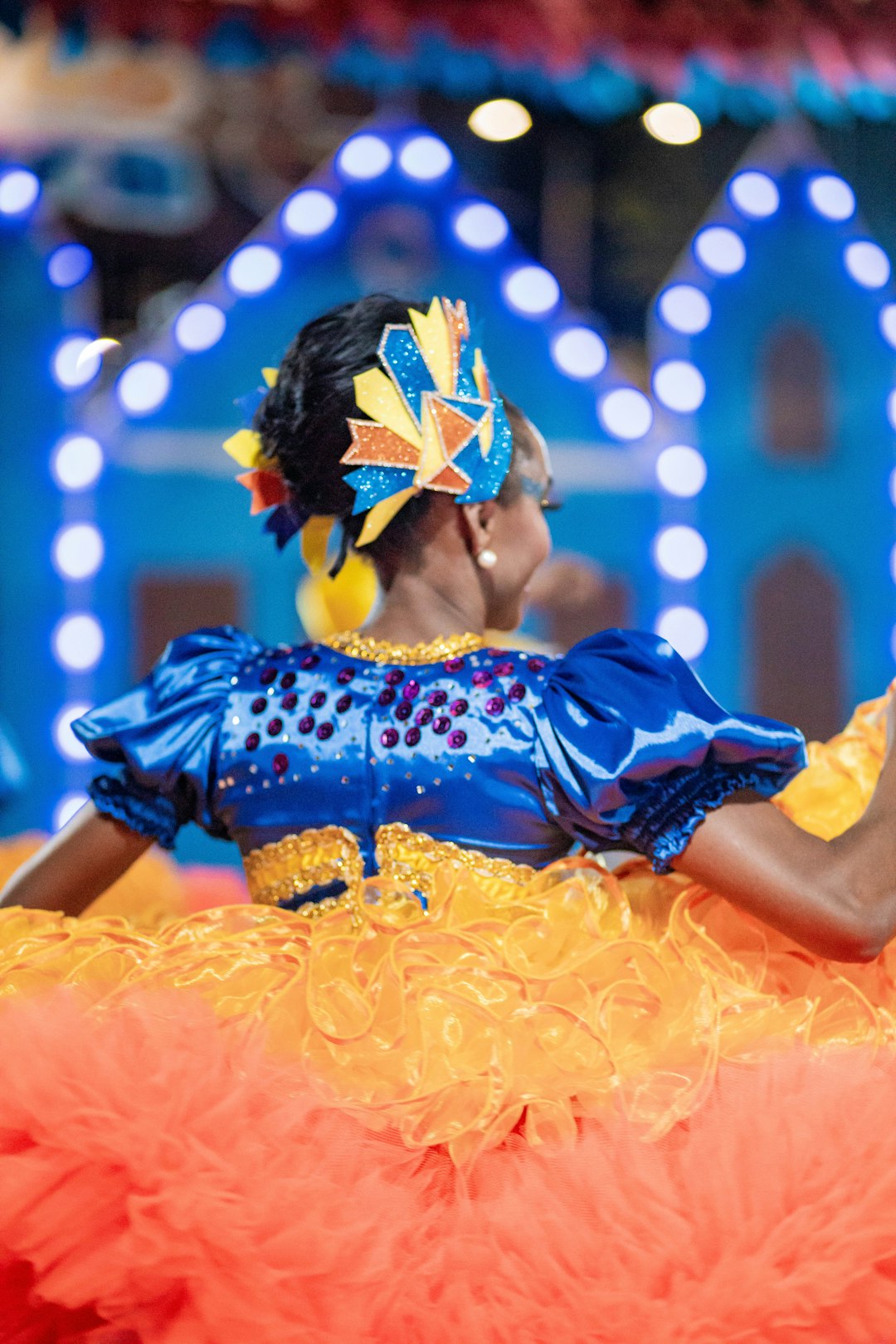
When you spin, the ruffled skirts — the volantes — catch air and become something bigger than your body. They extend your emotion. A sharp pivot becomes dramatic. A slow turn becomes mournful. The fabric does the talking before your expression does.
But here's what most people don't realize: the weight matters. A well-made dress has substance. It resists you enough that every movement lands with intent. The heaviness forces you to commit to each step, which is exactly what flamenco demands. Half-measures show. There's no faking it in a dress that weighs ten pounds — you either mean it, or you look like you're fighting the fabric instead of dancing with it.
The bold colors aren't decoration. They're a warning. Red says "I'm here." Black says "Watch me." The dress announces your mood before you ever hit the first beat.
Shoes That Add a Fourth Instrument
Your zapataos — those heels with the sharp, metallic tap — are percussive weapons. They don't just keep time. They interrupt time. They demand attention.
A skilled dancer's heel work becomes its own voice in the conversation between guitar, cante (singing), and palmas (handclaps). The hollow click against the floor hits differently than you expect: sharper, more urgent. It punctuates. It challenges. When the music pauses and a dancer stamps three deliberate beats into silence, the audience feels it in their chest.
The decorative ribbons and tassels aren't vanity. They catch light. In a dim tablao (flamenco club), that flash of sparkle becomes visual rhythm — another layer keeping time without sound.
The Shawl That Lies
The mantón de Manila is the drama queen of flamenco costume. Cover your face with it, and suddenly you're hiding something — a secret, a longing, a lie. Pull it back slowly, and you're revealing it.
Dancers use the shawl to lie to the audience. They'll peek over the edge, coy, then snap the fabric open like a challenge. They'll wrap it around one arm and use it to trace shapes in the air — circles that mean "come here," sharp snaps that mean "never."
A good dancer makes the shawl look effortless, but handling twelve feet of flowing fabric takes serious control. It has momentum. It'll betray you if you don't respect it. The mantón doesn't forgive mistakes — it amplifies them.
The Comb That Holds History
The peineta tucked into an elaborate updo isn't just decorative. It's practical (keep your hair out of your face when you're down on your knees, stomping) and symbolic (the ornate designs trace back to specific regions, families, traditions).
When you see a dancer with a particular style of comb, you're seeing her roots. It's subtle. Most audiences won't notice. But other dancers will — and that's the unspoken conversation happening across the stage.
The Truth No One Says Out Loud
Get a flamenco dancer slightly drunk at a party and ask her what her dress means to her. She'll probably shrug and say something like "it's heavy" or "it costs a fortune." But watch her face when she talks about her favorite performance dress — the one she's worn a hundred times — and you'll see something deeper than costume attachment.
The clothes become witness. They know her best work. They remember the shows where everything clicked, the ones where everything fell apart, the nervous energy of new stages and the comfort of familiar ones.
Next time you watch a performance, don't just watch the footwork. Watch the fabric. The way the dress finds light. The moment the shawl becomes a shield or a gift. The heel tap that lands exactly on the beat.
The clothes aren't wearing her.
They're dancing with her.