It's Not Your Steps — It's What Happens Between Them
I watched a couple at a milonga in Buenos Aires last year who barely moved. They occupied maybe a square meter of floor space the entire tanda. And yet every single person in the room couldn't stop watching them. What they had wasn't technique — though they had plenty of that. It was something harder to teach and impossible to fake.
That thing? Total presence with each other.
If you've been dancing tango for a while, you already know the basics work. Your ochos are clean. Your walk has weight. You can get through a song without stepping on anyone. But there's a ceiling you keep hitting, and it has nothing to do with learning another fancy pattern.
Leading That Actually Communicates
Here's what nobody tells you about leading: most of it isn't physical. I've danced with leaders who barely touched me and I knew exactly where we were going. I've also danced with men who gripped my back like they were steering a car and I couldn't read a single intention.
The difference is internal. A real lead starts in your solar plexus — not your hand, not your arm. When you shift your weight, your partner should feel the pull of gravity itself, not a push from your shoulder. Think about it like this: you're not moving someone. You're creating a vacuum they want to fill.
Your core does the heavy lifting here, literally. A wobbly center means muddy signals. If you haven't spent serious time on solo balance work — walking slowly, pausing mid-step, transferring weight with zero wobble — your lead will always feel like a rough draft.
And the musicality piece? Stop thinking of it as "dancing to the beat." Start thinking of it as having a conversation with the orchestra. When D'Agostino hits a phrasing pause, you pause. When Troilo's bandoneón swells, you let the movement swell too. Your partner isn't just following your body — she's reading your relationship with the music.
The Art of Listening With Your Whole Body
Following gets treated like the passive role, which is honestly insulting. The best followers I know are doing more mental work than the leaders. They're processing micro-signals in real time, making split-second decisions, and adding musicality of their own — all while appearing effortless.
The trick is staying rooted in your own axis. The moment you lean into your partner for support, you've lost the ability to truly listen. Your embrace should be like holding a bird — firm enough that it knows you're there, loose enough that it could fly away if it wanted to.
Balance drills sound boring until you try standing on one leg in tango shoes for sixty seconds without the slightest tremor. That's the level of stability that lets you respond to a lead in the millisecond it's given, not half a beat later.
And here's the part that separates advanced followers from intermediate ones: you're allowed to have opinions. When a leader gives you space — a pause, an open moment — fill it. A tiny adorno, a subtle shift of weight, a flick of the ankle. You're not just executing choreography. You're co-authoring it.
Style Isn't What You Wear
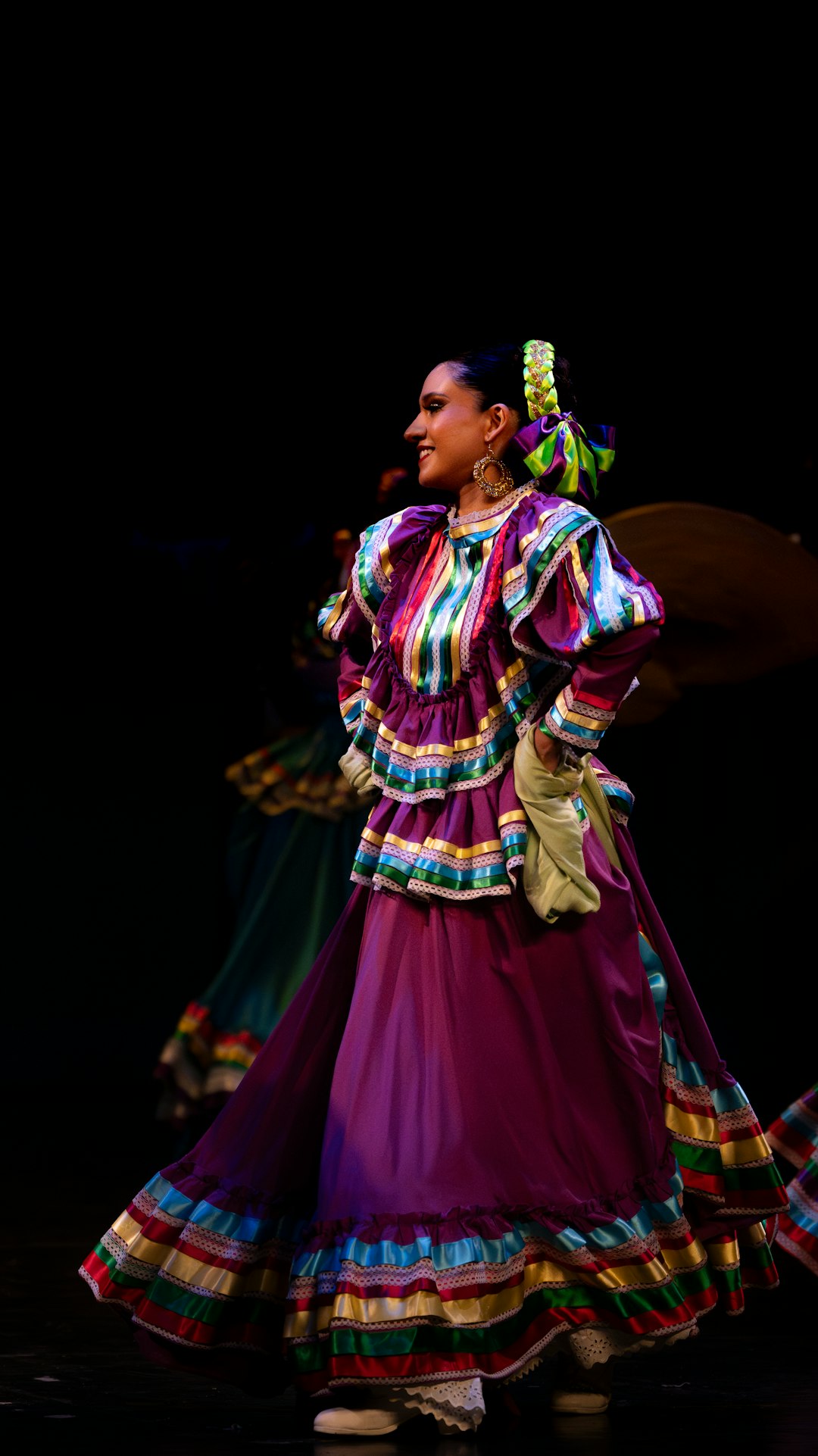
I've seen dancers in thousand-dollar outfits who looked like furniture. I've seen dancers in jeans and a t-shirt who commanded the room. Style lives in your spine, your relationship to the floor, the way you breathe through a turn.
Watch old footage of Carlos Gavito. The man barely did steps. He had this forward lean, this almost reckless commitment to falling into the next movement, and it was mesmerizing. His style wasn't something he added on top of technique — it was his technique, inseparable from who he was.
Develop yours by spending time with music outside of class. Listen to tango orquestas while cooking dinner. Let your body respond without thinking about sequences. The movements that come out naturally, without instruction — those are yours. Those are style.
One practical thing: adornments work best when they're invisible. If someone watching can point to your embellishment and say "that was an adorno," it was too much. The best ones feel like punctuation marks in a sentence you're already reading smoothly.
The Partnership Nobody Talks About
Off the dance floor, talk to each other. Not about steps — about feelings. "I felt rushed during that milonga." "I loved that moment in the second song when you paused." "I got nervous when the floor got crowded and I think it affected my embrace."
This stuff matters more than drilling ganchos for an hour.
Practice together, sure. But practice quality over quantity. Three songs of focused, connected dancing beats thirty minutes of going through the motions. Film yourselves occasionally, not to judge, but to notice things you can't feel in the moment — a collapsed frame, a missed musical accent, a moment where you were both somewhere else mentally.
And go to milongas. Not to perform. To sit, to watch, to dance with different people, to feel how the energy of a room shapes the dance. Tango doesn't live in the studio. It lives in those crowded floors where you have to make magic in a two-by-two-foot space with a stranger.
The Real Unlock
There's no switch that flips when you become "advanced." It's more like slowly realizing you've stopped thinking about your feet and started thinking about your breath. You've stopped counting and started listening. You've stopped performing and started having a deeply physical, wordless conversation with another human being.
That couple I watched in Buenos Aires? They weren't doing anything complicated. They were just fully, completely there — with each other, with the music, with the moment. And that's the thing nobody can teach you in a workshop. You just have to show up, night after night, and keep choosing presence over perfection.