---
The Moment Everything Stops Making Sense
There's a specific moment every belly dancer hits, usually around the six-month to one-year mark. You've got your basics down. Your hip drops are clean, your figure-eights have some roundness to them, and you can follow along in a group class without constantly glancing at the person next to you. And then — nothing. The moves still work. The combos still function. But something feels flat. Mechanical. You've learned all the steps, but the dance itself hasn't arrived yet.
That plateau isn't a sign you're untalented. It's a sign you're ready for the real work to begin.
This is where intermediate belly dance stops being about learning new choreography and starts being about learning to move in ways that feel impossible when you first try them. The techniques in this article aren't just advanced moves — they're the difference between executing steps and actually dancing.
When Your Body Learns to Argue With Itself
Isolations are the first thing any beginner teacher drills into you, and for good reason. But here's the thing nobody tells you: most intermediate dancers are still doing isolations wrong. Not wrong as in incorrect — wrong as in isolated. They're moving one body part, then another, then trying to string them together.
The real breakthrough with isolations comes when you stop thinking of them as separate skills and start thinking of them as your body's native language. When I watch Ranya Kamel perform, she doesn't "do a hip circle" — her hip circle emerges from a conversation between her ribcage, her spine, and the breath she's been holding for four counts. The isolation isn't the movement. The isolation is the control that lets the movement feel effortless.
Practicing isolations in front of a mirror while really looking — not at whether your hip goes far enough, but at where the tension lives in your body — is unglamorous work. It feels slow. It feels repetitive. And it's the single most important investment you'll make in your dancing.
Layering: This Is Where the Magic Actually Happens
If isolations are your vocabulary, layering is your grammar. It's also where most dancers either fall in love with intermediate work or decide it's too hard.
Here's a concrete example. Take a basic hip circle — most beginners can do one after a few classes. Now add a shoulder shimmy on top of it, keeping the shoulder movement completely independent from the hip movement. Sounds simple. Try it for five minutes and you'll understand why it feels like patting your head and rubbing your stomach at the same time.
Layering is the technique that transforms belly dance from "watching someone do cool moves" to "watching someone be in four places at once." When you layer a chest lift with a hip drop and a head slide, you're no longer a dancer doing a sequence. You're a conversation between three different rhythms happening in the same body, and the audience feels the complexity even if they can't name it.
Start small. One isolation plus one isolation. Get those two talking to each other fluently before you add a third voice.
Why Your Teacher Keeps Insisting on Floorwork
Floorwork scares people. There's something vulnerable about dropping to the ground in front of a room full of strangers, and that vulnerability is exactly the point.
When Samira Adly choreographs a piece with floorwork, she doesn't think about how she'll get down and back up again. She thinks about the floor as a partner — something she's in conversation with, not something she's escaping to. The transitions between standing and floor are where most dancers lose their audience, because those transitions reveal whether a dancer is thinking about her whole body or just the parts that are easy to see from the waist up.
Work on your core strength before you add dramatic floor drops. A controlled descent tells a different story than a controlled descent that turns into an uncontrolled collapse. Practice your rolls slowly, without momentum, until your body knows exactly where it is in space at every moment. Then add the speed back in. The drama comes from control, not chaos.
Drum Solos: The Most Terrifying and Rewarding Thing You'll Ever Attempt
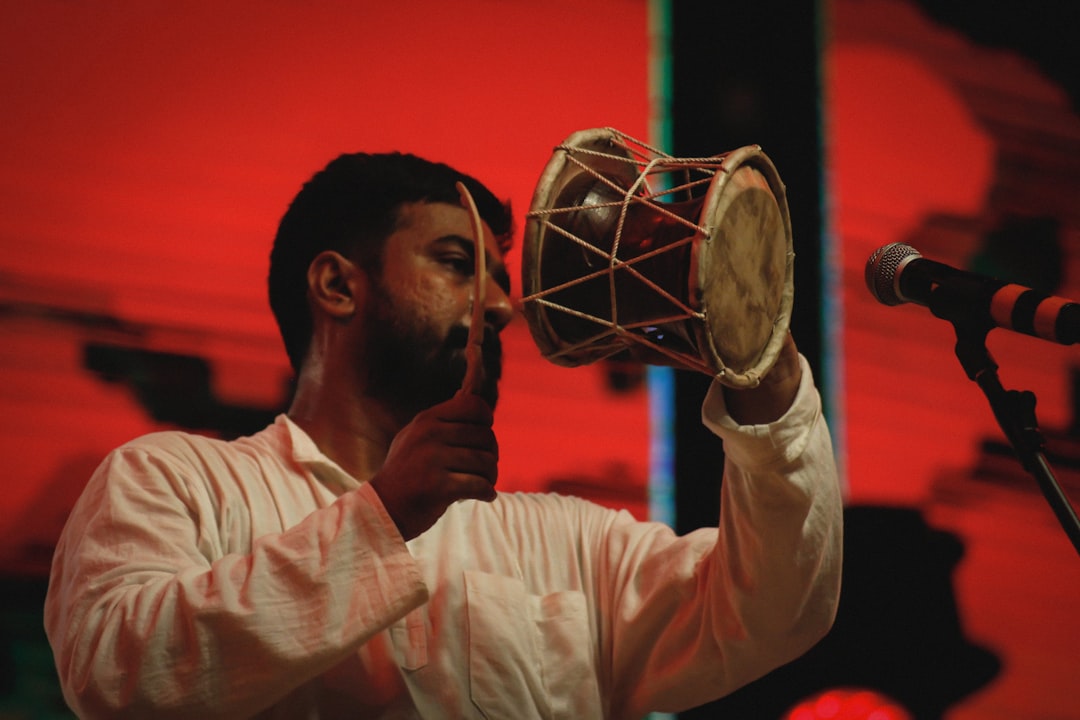
Ask any belly dancer what she's most afraid of performing and the answer, almost universally, is a drum solo. Not because the drumming is hard to hear — because there's nowhere to hide.
In a choreographed piece, you can plan your movements and fall back on muscle memory. In a drum solo, the music is improvising and so are you. You have to listen in real time, translate rhythmic accents into movement instantly, and somehow stay connected to your own body instead of your brain's desperate attempt to plan three moves ahead.
The technique here isn't complicated to understand, but it's brutal to develop. Build your vocabulary of percussive responses — sharp hip accents for heavy beats, fast shimmy accents for rolls, stillness for dramatic pauses. Drill those responses until they live in your body and your brain can focus on listening instead of remembering. Record yourself. Listen back. The gap between what you felt you were doing and what you were actually doing will be educational in ways you won't always enjoy.
Veils, Swords, and the Art of Learning to Let Go
Veil work and sword balancing are technically challenging, but the real skill they teach is something more fundamental: how to dance while something else is happening.
When a veil catches the light wrong or a sword starts to slip, your instinct is to stop dancing and start managing. But the moment you do that, the performance breaks. The best veil dancers I've seen — like Kaeshi Dina — treat the veil like an extension of their breath, not a prop they're controlling. The sword dancers who look effortless are the ones who've practiced enough that the sword is just another part of the conversation, not a separate problem to solve.
Start with one thing at a time. If you're learning veil work, use it as your entire vocabulary for the first few sessions — don't add it on top of a dance you already know. Let the veil teach you what it wants to teach you before you try to make it fit into something else.
The Secret Nobody Talks About: Improvisation Is a Skill, Not a Gift
Here's what trips up more intermediate dancers than any isolation or layering issue: they think they can't improvise because they're not "creative enough." That's like saying you can't speak French because you're not "smart enough." Improvisation is a craft with learnable skills, and the dancers who seem like they're channeling pure intuition on stage have usually spent years building their toolkit.
Develop your movement vocabulary. Learn to recognize rhythmic patterns in music — not just "this is a fast song" but "this section has a call-and-response structure that wants me to pause on the answer." Build a mental library of transitions you can pull from in any direction. Then practice putting those pieces together with no plan, no choreography, no safety net.
The first dozen times are going to be uncomfortable. That's the point.
What Actually Changes When You Cross This Threshold
When you finally break through the intermediate plateau, something shifts that you can't un-feel. The dance stops being something you do with your body and starts being something your body does. You stop counting steps and start listening. You stop worrying about whether you're doing the move right and start wondering what the move wants to become next.
That transition doesn't happen because you learned one more technique. It happens because you practiced the ones you already knew until they stopped being techniques and started being yours.