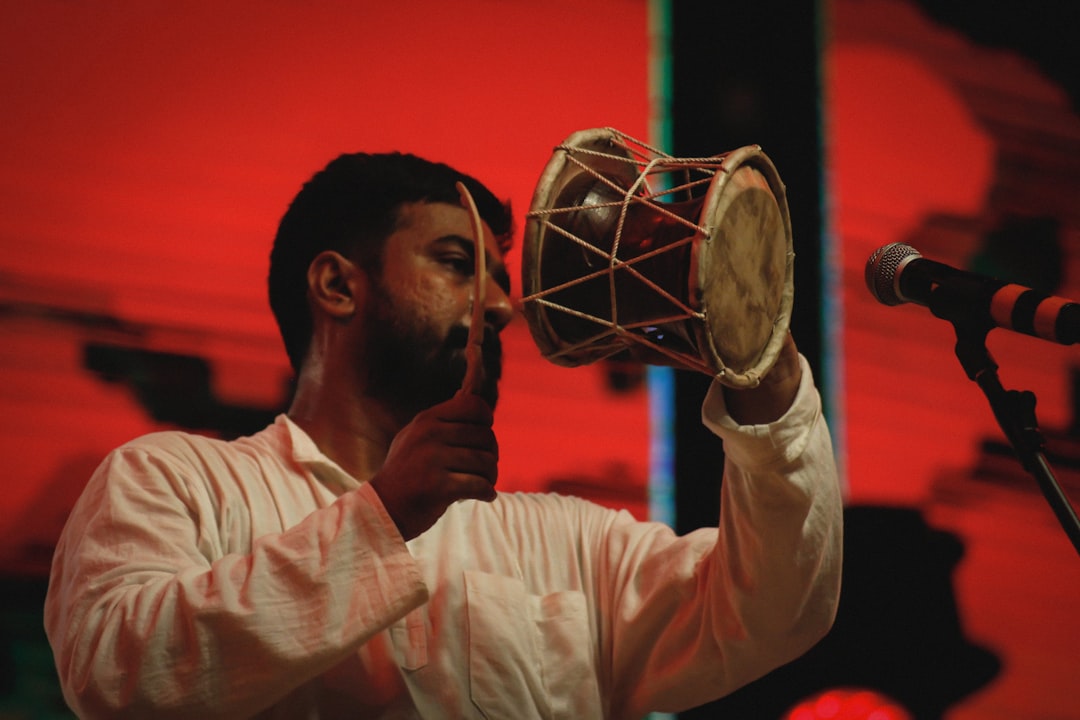
The first time I watched a professional belly dancer perform, I forgot to breathe. Not because she was technically perfect—she wasn't. But when she isoloved her hips to a drum solo, something shifted in the room. Every eye locked on. That's when I knew: this dance isn't about memorizing steps.
It's about learning to let your body speak.
The Foundation Nobody Rushes
Here's what most new dancers get wrong: they want to choreography before they can shimmy. Not just any shimmy—I mean the controlled, chest-freezing-while-hips-move shimmy that takes months to build correctly. Your instructor will tell you this. Listen to them.
The other thing nobody rushes: learning to hear the music the way a dancer hears it. Tahti. Maqsoum. Those aren't just rhythms—they're emotions. When the darbuka drops into a specific pattern, your body needs to know where to go before your brain catches up. That takes hundreds of hours of moving to music before you start adding layers.
Find a teacher whose corrections make you uncomfortable. The ones who hand out praise freely aren't building your technique—they're building your ego. You need the corrections.
What "Finding Your Style" Actually Means
Everyone says it. Nobody explains it.
Your style isn't the costumes (though those matter). It isn't the music genre you pick. It's deeper than that. It's the specific combination of softness and power you bring to the stage. It's whether you dance with your eyes or your hands first. It's how you hold stillness.
Some dancers are collectors—they take a little from every teacher, every workshop, every video, until their movement vocabulary is this strange, layered thing that only they do. Other dancers are purists—they go deep into one tradition, one lineage, until the history lives in their body.
Both paths are valid. The mistake is standing still, waiting to "find your style" before you start moving. It doesn't arrive like a vision. It accumulates, one class, one messy practice session, one embarrassing gig at a middle school fundraiser after-party at a time.
The Hustle Nobody Talks About
Here's the part the Instagram highlight reels skip: going pro means being a small business owner with a dancer attached.
You'll need a website. Not a social media page with a Linktree—a real website with pricing, availability, and photos that make you look like a professional rather than someone's cousin at a hafla. You'll send emails. Cold emails, specifically, to event coordinators, restaurant owners, wedding planners. Some won't respond. Some will respond with rates that make you laugh and then cry.
The dancers who book consistently aren't always the best technically. They're the ones who show up early, communicate clearly, and make the coordinator's job easier. Reliability compounds. A reputation for being easy to work with opens doors that technique alone keeps closed.
Costumes: Where Your Money Actually Goes
This is where your savings account goes to die.
A decent beginner costume runs three hundred dollars minimum. A performance-ready piece with proper structure, matching belt, and hand-sewn beading? Double that. More if you want something that makes a room react when you hit the light right.
Some dancers sew their own. I won't pretend that's easy—it takes a entirely separate skill set, and honestly most of us cry over our third dropped sequin at midnight before admitting we should have just ordered from a professional designer. But when you wear something you made with your own hands, the audience feels it. There's an ownership in it that shows.
Start with a simple coin belt and a well-fitted top. Add pieces over time. Nobody walks into their first professional gig wearing a fully hand-beaded bedlah.
The Room You Have to Get Into
Perform. Perform again. Perform until your heart rate before walking on stage is lower than your heart rate sitting still.
Start ugly. A community center talent show. A restaurant where nobody's listening. An uncle's sixtieth birthday where half the crowd thinks belly dance is "just hip circles." Those gigs are not beneath you. They are training you.
Every professional dancer you admire has a story about their first terrible gig. They don't usually share it because it's embarrassing, and because it sounds like a warning when it should sound like a permission slip. Everyone's first gig is rough. Go anyway.
The Loneliness of It
Dance studios are full of people and somehow this work is isolating.
You spend hours alone in a room, replaying the same eight counts, filming yourself to see what your body is actually doing versus what you think it's doing. You edit your own videos. You book your own gigs. You manage your own schedule. When something goes wrong—a gig cancels the morning of, a costume doesn't fit right, you pull something two days before a show—there's no team to call.
The dancers who last are the ones who build their community deliberately. Not just other belly dancers—performers from other disciplines, event producers, photographers who understand what you do. Your circle outside the studio matters as much as your circle inside it.
The Thing That Keeps You
Every professional belly dancer I know has a moment. A specific, private, probably-embarrassing-to-talk-about moment when they almost quit.
The industry is real. The rejection is real. The weeks with zero income are real. You're going to have a month where you question every choice that led you here. That's not if—that's when.
What carries you through isn't discipline or strategy or even talent. It's the specific, in-your-bones inability to imagine yourself doing anything else. The feeling you got the first time you moved to music and it worked. When it starts to feel like obligation, step back. Find the version of this dance that made you fall in love with it, and go back there.
The dancers who stay didn't find a way around the hard parts. They just didn't leave.