The Moment Everything Changes
There's a particular moment in every belly dancer's journey. You've nailed the hip figure-eight until it feels as natural as breathing. You can shimmy until your shoulders ache, drop your hips on the downbeat like you invented it. And then — nothing. You're doing everything right, but something feels... flat. Like you've hit a wall made of your own repetition.
That's not a failure. That's growth. You've simply outgrown the phase where executing moves correctly was the goal. Now, the real work begins.
What separates the dancers who truly captivate from the ones who just know steps isn't more choreography. It's a complete shift in how they inhabit their body. Here's what that transformation actually looks like.
Learning to Do Two Things at Once (Then Adding a Third)
Layering feels like a party trick when you first try it — your brain literally cannot process two movements simultaneously. You drop your hips and your shoulders lock up. You add arm waves and your rib cage freezes mid-breath.
Here's what no one tells you: you're not supposed to layer everything at once. The secret is accumulating control, one layer at a time.
Take a hip drop and just your shoulder shimmy — that's layer one. Master that until it stops feeling like patting your head while rubbing your stomach. Then add your arms. Then add your head. Then suddenly you're doing five things and they all feel like one thing, because your body has learned to decompose complex movement into smooth, overlapping pieces.
This is where dance stops looking like moves and starts looking like weather — different systems moving in conversation with each other.
Making Every Body Part Lie
Basic isolation is impressive. Advanced isolation is unsettling — in the best way.
When you can make your ribs travel one direction while your hips travel another while your chest travels a third — your body starts to communicate things your brain hasn't even formulated yet. The audience can't explain what they're watching, but they can't look away.
The fingers matter here. Most dancers stop at the wrist. But advanced belly dance lives in the fingertips — every tiny bone capable of independent intention. Your hands should be able to tell part of the story while your hips tell the rest.
Practice in front of a mirror with nothing on. Yes, you'll feel ridiculous. That's the point. You're building precision with nothing to hide behind.
Learning to Love the Floor
Floorwork is where most dancers stall out — there's something about being that close to the ground that triggers primal vulnerability. But that's exactly why it matters.
When you're on the floor, you can't fake anything. There's nowhere to hide in sloppy technique. Your core is either strong enough to control your undulation or it isn't. Your flexibility is either there or it isn't.
Start with basic body waves moving from standing to on-the-floor-instructor. Roll down your spine one vertebra at a time, feel each bone arrive. Build from there. The floor becomes another instrument in your body, not a scary place.
The first time you execute a shimmied fall from standing to floor that feels effortless, something unlocks. You realize the floor isn't a boundary — it's an extension of your movement vocabulary.
When the Beat Becomes a Language
Drum solos are the cardio of belly dance — high BPM, full commitment, no hiding. But here's what most beginners get wrong: they're trying to match the drum.
Don't. Let the drum match you.
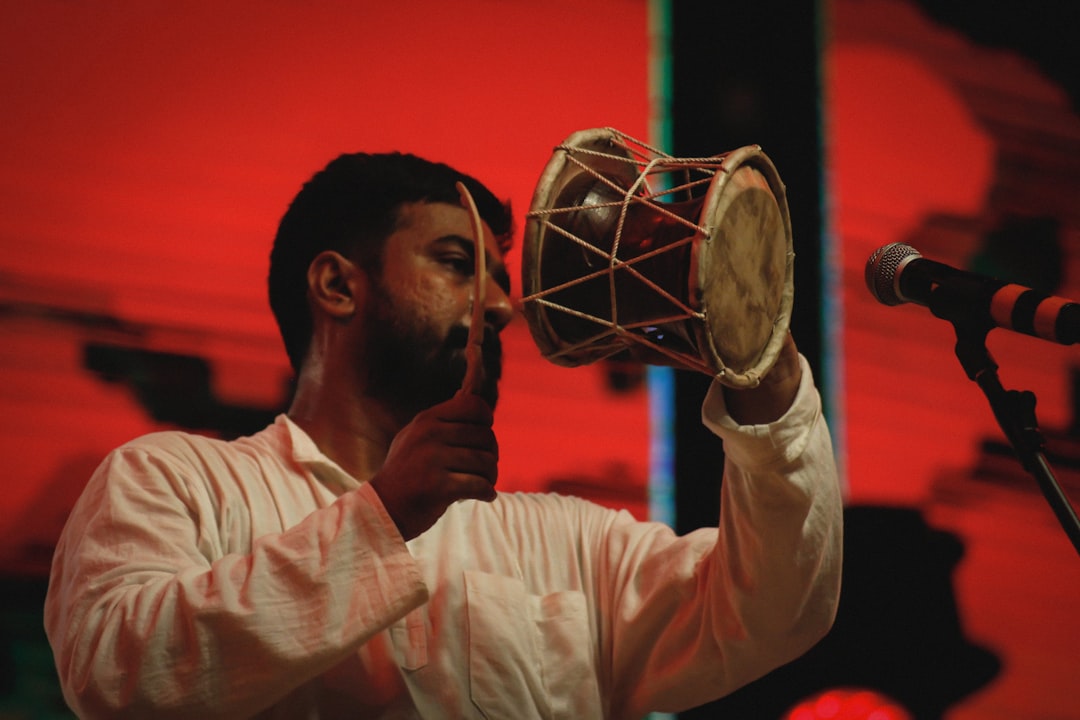
A true drum solo isn't速 — it's responsive. You're not just executing patterns, you're having a conversation with the rhythm. The doumbek says something, your body answers. The dialogue happens in real time.
Practice with different rhythms playing and intentionally play with them. Speed up when the energy rises, pull back when it pulls back. Some of your best moments will be in the rests — the held pause that makes the next explosion land harder.
This is also where improvisation stops being optional. You cannot choreograph a conversation. You have to be present.
Adding Props Without Becoming a Prop
Sword and veil aren't about skill demonstration. They're about extended presence — the props become additional limbs, additional intention fields.
Sword balancing especially: the goal isn't to balance a sword. It's to look like you forgot it's there while still being completely aware of it. That sounds contradictory until you practice it. Your body extends to include the prop, it becomes part of your skeleton's story.
Start with a ruler. Literally a plastic ruler. Build the spatial awareness with nothing dangerous. When you can hold a conversation while balancing a ruler on your head without thinking about it — add weight. Then add motion. Then add the sharp object.
Veil work follows the same principle: the veil should look like it's floating around you, not like you're controlling it. You're not wrestling the fabric. You're having a relationship with it.
The Part Nobody Can Teach
Here's the truth that sounds like a cliché but isn't: at some point, technique stops being the point.
Musical interpretation isn't something you learn. It's something you stop preventing. Every dancer has an instinct for expression — the basics just drown it out with the work of coordination. Once your body handles the mechanics without asking your brain, your brain is free to feel the music and respond.
This is why advanced dancers sometimes look like they're barely moving while beginners are convulsing with effort. The beginner is working hard. The master is feeling freely.
You don't practice musical interpretation. You practice until you stop practicing and what comes through is just you.
---
The Only Advice That Matters
Everything above can be broken down, practiced, mastered. That's the lie of advanced technique — it feels like it's about complexity, but it's really about depth. You're not learning more things. You're going further into the same movements until they unlock.
The wall you hit when basics stop feeling exciting? That's not a wall. That's a door. The dancers who break through are the ones who realize there was never a finish line — just an infinite downward path into the same well, and it gets more interesting the deeper you go.
Your next shimmy doesn't need to be bigger. It needs to be deeper. That's the only direction that actually matters.