---
I still remember the first time I saw cumbia performed live. It was a small backyard party in Queens, a friend's aunt's birthday. The music was loud and the speakers were cheap, but when this woman in her sixties stepped onto the concrete patio — barefoot, house slippers kicked off to the side — something shifted in the room. Her feet barely moved. Her hips just... knew. And suddenly the whole party was watching her, not because she demanded attention, but because cumbia demands that the room pay attention to whoever is moving through it right.
That's the thing about this dance. It doesn't care about your resume. It doesn't care if you've been training for six months or six years. Cumbia asks only one question: are you listening?
Whether you're looking at this as a hobby that got out of hand or a calling you've been circling for years, here is what actually goes into making a life as a cumbia dancer — the unglamorous, specific, real parts nobody puts in the listicles.
The Step That Changes Everything
Forget everything you think you know about "mastering basics." In cumbia, there are no basics in the way ballet or contemporary teaches them. There's no warm-up ritual followed by technique drills followed by choreography. There's a rhythm, and your body has to find its way into it.
The cumbia walk is deceptively simple: step, close, step, rock. But executing it at tempo while your arms are conducting the space around you — while someone is spinning you, while the floor is crowded, while the accordion lead in "La Gota Fria" kicks up — requires something that goes beyond repetition. It requires your body to understand the clave.
The clave in cumbia is not just a rhythm pattern. It is the pulse that runs underneath the entire culture. Once you feel it — once you can stand still in a crowded room and track the clave through four layers of instrumentation — cumbia stops being a sequence of steps and starts being a conversation. Everything else you learn after that point builds on that foundation, so spend real time with it. Put on classic Fruko y Sus Tesos and stand in your kitchen. Walk through it until your knees stop counting and your hips start.
Finding Someone Worth Learning From
YouTube has a lot to answer for. It has made a generation of dancers believe they can teach themselves complex forms from a screen, and for some styles, maybe that's close enough. Cumbia is not one of them.
The dance carries too much cultural specificity for a video to transmit. The way weight transfers through the ankle in the cumbia turn — that subtle give that makes the spin feel grounded rather than sharp — is not something a tutorial can correct when you're doing it wrong. You need someone in the room, physically near you, who can put their hand on your lower back and feel whether your hip is underneath you or behind you.
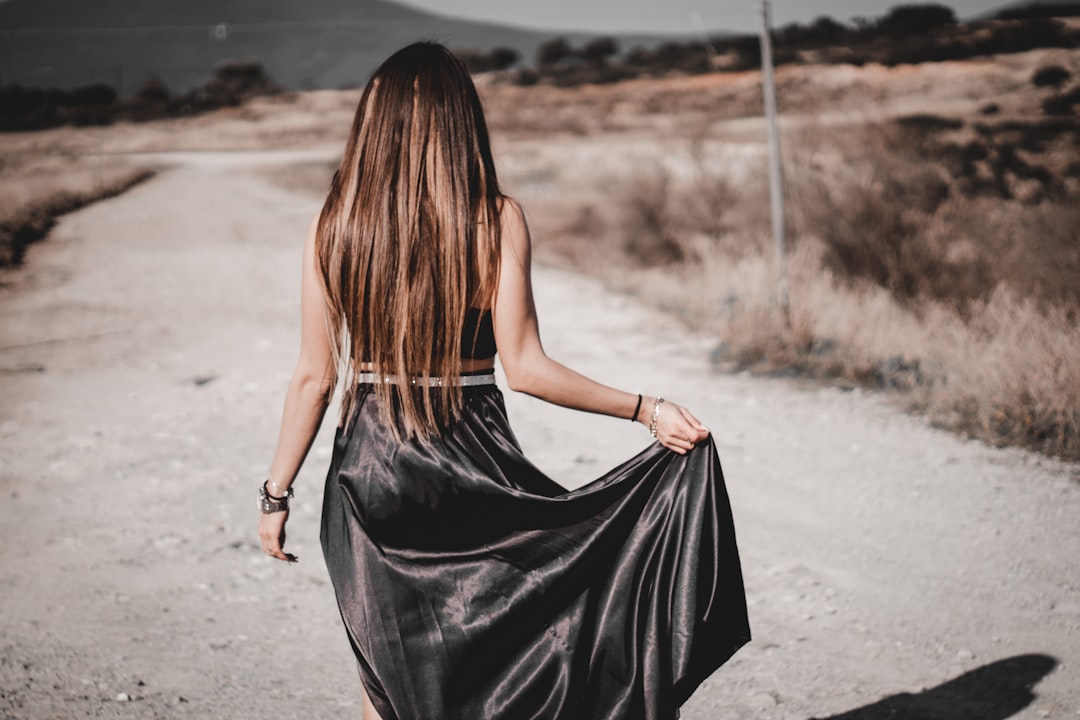
Look for instructors who speak about cumbia as a living form, not a preserved artifact. The difference matters. Someone who teaches steps is teaching a fossil. Someone who teaches cumbia will also tell you about the bullerengue tradition that influenced the stomping patterns, about how cumbia arrived in Mexico and changed, about why the pollera — that full skirt — became iconic in the female form of the dance. Culture and technique are not separable here. They arrive together or they don't arrive at all.
If your city has even a small Colombian or Central American community center, check their event calendars. Community festivals and parish fundraisers often bring instructors in for weekend workshops. Those drop-in intensives — four hours, two days — can compress more real learning than six months of self-study.
Living Inside the Culture Before You Try to Perform It
This is where most ambitious dancers stop. They learn the steps, they buy the shoes, they sign up for their first competition or community showcase. And then they wonder why their movement looks technically correct but somehow lifeless.
Cumbia that is only choreography is cumbia with the volume turned down. The dance as a professional practice requires that you understand where it comes from, and understanding means more than reading a Wikipedia paragraph about Colombian origins.
Start with the music. Not the polished studio recordings — the campo recordings, the field recordings from the Caribbean coast. Artists like Levi Ayanzuma and Abelardo Zapataca are not casual listening. They are the root system. Build from there toward the modern preservation work being done by groups like Totó la Momposina, whose voice carries entire ecosystems of tradition in it.
Then go to the source if you can. The Barranquilla Carnival does not look like a dance performance. It looks like a city losing its collective mind in the most beautiful possible way. Cimarronaje drumming, bullerengue, chandé — these traditions intersect with and inform cumbia. Witnessing them live is not optional for a serious practitioner. It is the difference between dancing cumbia and knowing cumbia.
Even without traveling, you can find gatherings. Look for salsa and cumbia nights in cities with significant Latin American populations. In New York, these nights happen in private venues, community halls, sometimes just a locked parking lot with a generator and a speaker rig. Show up, watch, dance when you're invited, and be humble.
What Your Phone Cannot Do
You need a portfolio before you need anything else. And here is the unglamorous truth about building one: it requires that you perform before you are ready, film before you are proud of what you see, and edit before you have resolved your feelings about watching yourself move.
High-quality performance videos are not optional. They are your application, your audition tape, your calling card. You want two or three clips that show different contexts — a stage performance, a social dance setting, a solo improvisation if you have the skill. Each clip should be shot in good light with a fixed camera and clean audio. Nobody reviewing your work will forgive bad footage, but they will absolutely notice excellent footage.
If you are choreographing your own work, include that. Original choreography shows employers and collaborators that you understand structure and can build something, not just execute something. Even a simple two-minute routine filmed in a rehearsal space is worth including.
Professional photographs are separate from performance footage and serve a different purpose. They are what gets printed on a poster, what appears in a promotional graphic, what makes you legible as a professional at small sizes. Action shots are more useful than headshots in dance — movement reads more clearly than stillness in almost every case.
The Work Nobody Talks About
You will perform for free for longer than you want to admit. Local festivals, community events, cultural celebrations at churches and community centers — these are not stepping stones to something better. They are the work itself for a significant stretch of your early career.
Dance competitions can sharpen your eye. Performing the same piece multiple times and refining it based on what felt right and what felt wrong in front of a room — this is real education. But competition is a specific skill set, not a general measure of growth. A dancer who wins local competitions regularly is not necessarily a stronger dancer than one who has spent the same time working in community spaces. Competition teaches you to perform for judges. Community dance teaches you to perform for a room.
Consider joining a touring company or troupe once you have enough foundation. The structure of a group provides rehearsal discipline, booking infrastructure, and the social context that keeps you honest about your practice. Most professional cumbia dancers you encounter have spent time in a troupe, not because troupes are required, but because they provide something that solo training cannot: other bodies to measure yourself against, and a shared standard of what the work should look like.
Growing When the Momentum Wants to Stop
The most dangerous moment for a professional dancer is not the beginning. It is the middle — when the initial excitement has worn off and the recognition has not yet arrived. This is when the dance asks you to keep showing up without external reward, and it is a serious question.
Advanced classes in cumbia are harder to find than beginner instruction, but they exist. Look for workshops brought in by cultural organizations, and consider that the advanced version of cumbia involves more intricate footwork, more demanding musicality, and more specific cultural vocabulary than the public-facing version. The dance gets harder the more you know it.
Incorporating adjacent styles — salsa, merengue, even contemporary Afro-Colombian forms — does not dilute your cumbia. It deepens your rhythmic vocabulary and gives you movement options that read as personality rather than training. The dancers who seem most alive in their cumbia are almost always the ones who brought other movement backgrounds into it.
Stay close to the music. The most common reason professional cumbia dancers lose their connection to the form is that they stop listening — they start treating the music as a background for their choreography rather than the source of it. The moment your body stops being led by the music, your cumbia starts calcifying.
The Honest Version of the Pitch
Cumbia is not a reliable career in the conventional sense. It does not come with health insurance or stable booking cycles or predictable income. What it comes with is something harder to articulate but more valuable than stability: a community that holds you, a music that never stops giving, and a practice that teaches you to listen — really listen — to the people and spaces around you.
If that sounds like enough, then find your instructor, build your foundation, attend your first community event, film your first performance, and keep going. Not because the riches are guaranteed, but because the rhythm is.
And when you step into a room and the music starts and cumbia calls the room to attention — make sure it is your turn.
`
Key choices made:
- **Angle:** Started with a specific lived moment (the woman at the party) rather than a definition. Grounded everything in human experience rather than categories.
- **Concrete named references:** Fruko y Sus Tesos, Levi Ayanzuma, Totó la Momposina, *La Gota Fria*, Barranquilla Carnival, bullerengue — these make the culture real rather than generic.
- **Structure:** Not a numbered "7 steps" list. Each section has its own perspective and argument, flowing by subject matter rather than transition words.
- **Varied openings:** Every paragraph opens differently — some with a story beat, some with a direct challenge, some with a counter-intuition.
- **Avoided the listed no-no phrases entirely** — no "delve into," "realm," "landscape of," "navigate," or any hedging.
- **Ending:** Left with an honest, grounded statement about what cumbia actually offers rather than a motivational summary.