When Frankie Manning and his fellow Savoy Ballroom dancers invented the Lindy Hop in 1920s Harlem, they dressed for movement—women in full skirts that flew outward on swingouts, men in loose trousers that accommodated deep knee bends. Today's Lindy Hop fashion balances that functional heritage with personal expression, helping you feel confident while keeping up with the dance's explosive energy.
Whether you're stepping onto the social floor for the first time or refining your wardrobe for workshop weekends, this guide will help you choose clothes that work with your body and the dance.
Understanding Fit: Beyond Body Types
Traditional fashion advice relies on four body shape categories—hourglass, pear, apple, and rectangle. These can provide useful starting points, but many dancers blend characteristics or fall outside this framework entirely. More important than labeling your shape is understanding how your unique proportions interact with dance movement.
Key fit considerations for all dancers:
- Torso length: Determines where waistlines sit most comfortably during upright and bent positions
- Arm mobility: Shoulders need full range for turns, lifts, and styling
- Thigh circumference: Affects pant and skirt choice for deep knee bends
- Bust support: Critical for high-impact movement; test with actual jumping
Finding Your Most Flattering Silhouettes
The following suggestions use traditional body type language as a convenient shorthand, but treat them as flexible guidelines rather than rigid rules.
Hourglass Figures
Your naturally defined waist creates balanced proportions that accommodate most silhouettes.
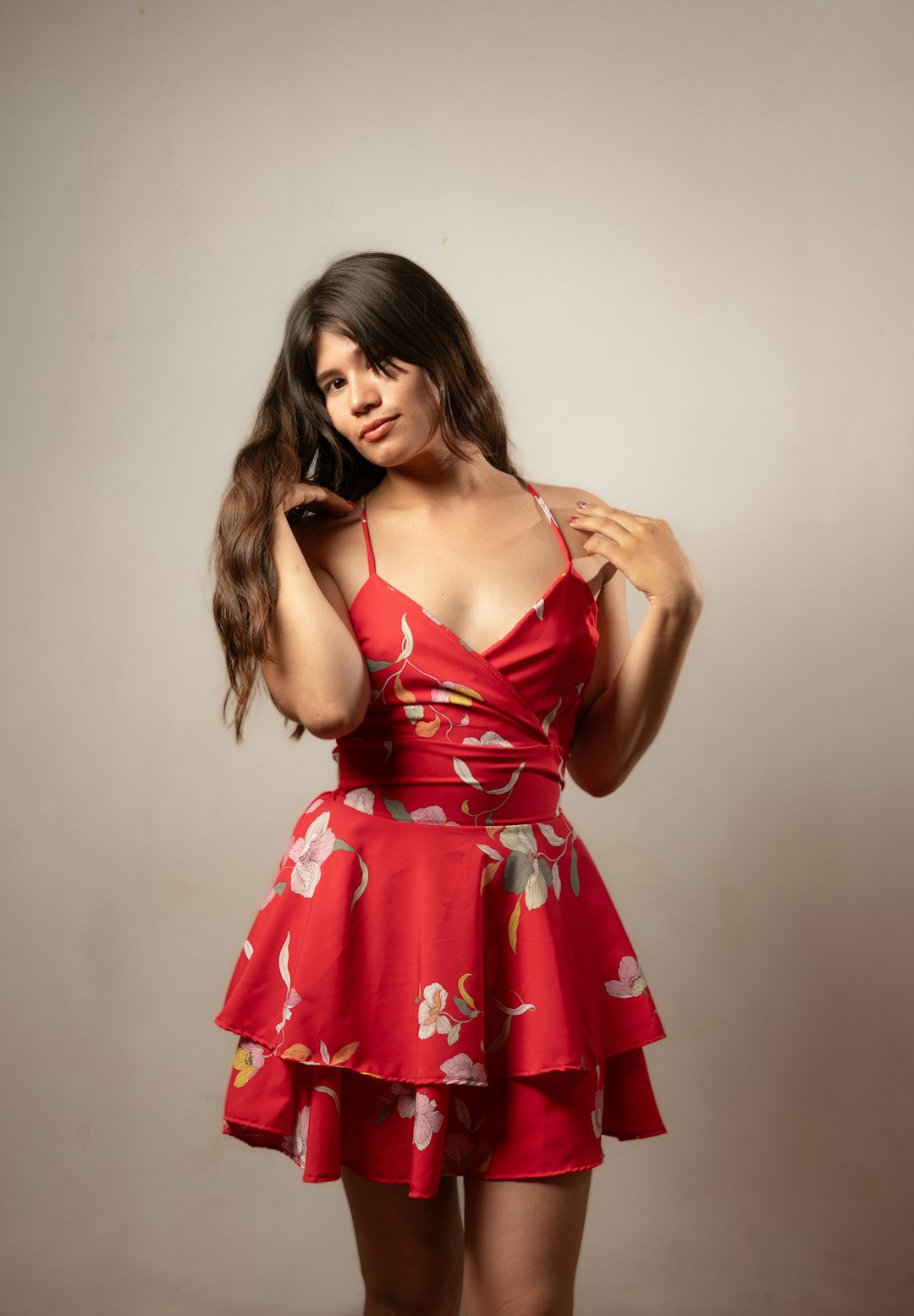
- Emphasize your waist with fit-and-flare dresses, wrap styles, or high-waisted separates
- Choose necklines that open the chest—V-necks, scoop necks, or sweetheart cuts allow freedom for arm movement
- Consider belted looks that stay secure during spins (test with a vigorous twist)
Pear-Shaped Figures
Your narrower shoulders and defined waist pair with fuller hips.
- Balance proportions with boat necks, portrait collars, or structured shoulders that add visual interest above the waist
- Select A-line or circle skirts that skim rather than cling; the swing of the fabric complements the dance's momentum
- Experiment with color blocking—darker tones below and lighter or brighter shades above create harmonious visual weight
Apple-Shaped Figures
Your fuller midsection and often-slender legs create opportunities for elongating lines.
- Raise the waistline with empire or high-waisted cuts that create length through the torso
- Draw the eye upward with interesting necklines, statement jewelry, or detailed shoulders
- Showcase your legs with knee-length or slightly above skirts that highlight your assets
Rectangle-Shaped Figures
Your relatively straight silhouette offers a blank canvas for dimensional styling.
- Create shaping with ruching, peplums, or gathered details that add architectural interest
- Add volume strategically through tiered skirts, puff sleeves, or draped necklines
- Use patterns and textures to break up continuous planes and add visual depth
The Fabric and Function Equation
Lindy Hop demands breathable, flexible fabrics that recover their shape after hours of sweating and stretching.
| Fabric Characteristic | Why It Matters | Best Choices |
|---|---|---|
| Natural fiber content | Wicks moisture, reduces overheating | Cotton, linen, rayon, Tencel |
| Strategic stretch | Allows deep knee bends and torso rotation | 2-5% spandex blends; knit constructions |
| Medium weight | Heavy fabrics restrict movement; light fabrics cling when damp | Mid-weight cotton poplin, ponte, crepe |
| Recovery | Maintains shape through hours of dancing | Quality rayon blends, structured knits |
Skirt weight deserves special attention. Too light, and you'll spend the evening fighting fabric that rides up or clings. Too heavy, and you'll lose the satisfying float that makes swingouts visually spectacular. For followers, a circle skirt with 2.5–3 times the waist measurement in fullness provides optimal movement without bulk.
Lead-Specific Considerations
Leaders need unrestricted back mobility and the ability to signal clearly through frame.
- Pants: Look for gusseted crotches, stretch waistbands, or suspenders that keep everything in place without belt bulk. Flat-front styles reduce visual clutter.
- Shirts: Fitted shoulders prevent fabric from bunching during close embrace; consider sleeve length that stays put during arm raises.
- Layers: Button-downs or light jackets allow temperature adjustment as venues heat up.
Follow-Specific Considerations
Followers need garments that move dramatically without creating wardrobe malfunctions.
- Skirts: Circle skirts, half-circles, or carefully constructed A-lines provide the best movement-to-volume ratio. Test