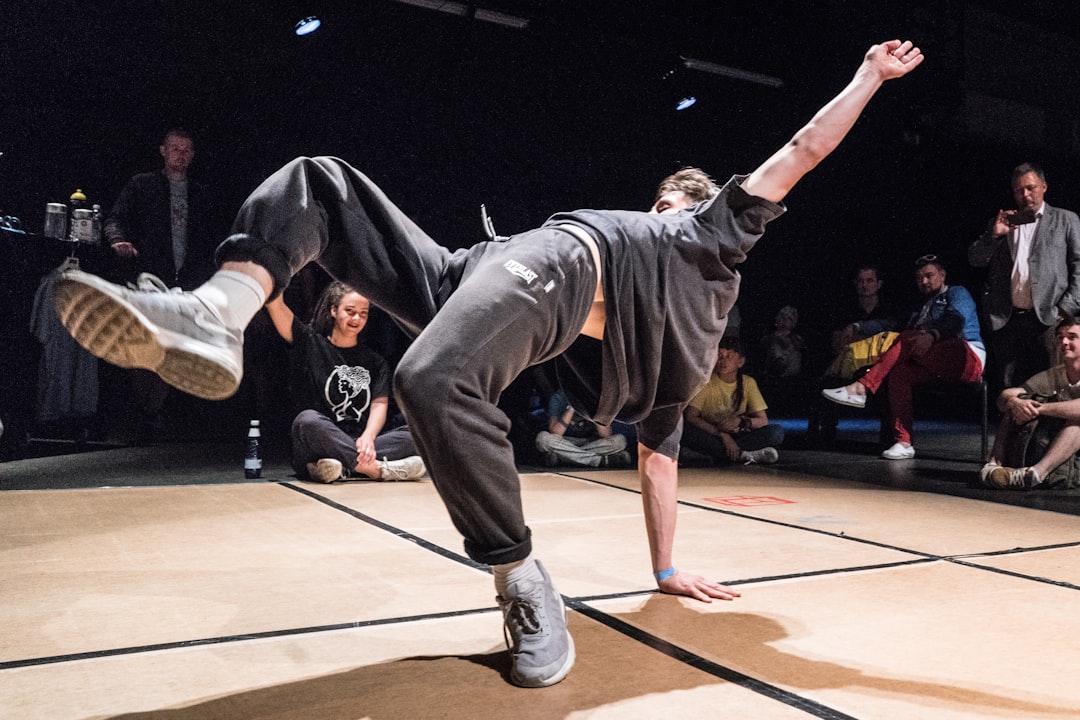
I still remember the silence after my choreographer cut my entire solo. Three weeks of rehearsal, discarded in a single afternoon. What replaced it emerged not from her vision alone, but from a heated argument with our lighting designer about rhythm—whether light could pulse rather than merely illuminate. The resulting sequence required my body to discover pathways neither artist could have predicted independently. That collision of obsessions taught me what collaboration actually demands, not the harmonious mythology we prefer to imagine.
The Necessary Friction
Contemporary dance collaboration is rarely comfortable. It involves surrendering authority over your most intuitive choices, translating physical knowledge into verbal negotiation, and discovering that your "clear" artistic intention reads as ambiguity to your partners. These aren't obstacles to overcome—they're the mechanism through which genuine innovation occurs.
The diversity we celebrate carries real weight. When a choreographer trained in release technique encounters a composer working with algorithmic structures, their initial conversations often fail. The vocabulary doesn't align. The temporal expectations clash. Yet this very misalignment forces each artist to externalize assumptions that solo practice would leave unexamined. A choreographer's spatial obsession meets rhythmic irregularity, and suddenly the body must negotiate unfamiliar territories—solutions impossible within any single discipline.
From Constraint to Transformation
Consider Wayne McGregor's Atomos (2013), developed with his company Random Dance in collaboration with composer A Winged Victory for the Sullen and designer Lucy Carter. McGregor's anatomically extreme vocabulary—hyperextensions, dislocations, impossible balances—might have dominated any conventional partnership. Instead, the lighting design operates as an additional choreographic voice: beams carve space into shifting territories that dancers must continuously renegotiate. The music's ambient density refuses the obvious punctuation of gesture. McGregor's dancers don't perform on top of these elements; they move through an environment that actively resists and redirects their intentions. The result transcends illustration—none of the components merely accompany the others.
This interdependence differs fundamentally from assembly-line production. When music, lighting, and movement are created separately and combined late in process, the result resembles architectural elements forced into proximity without structural integration. Genuine collaboration requires shared duration: artists present at each other's failures, witnessing the discarded versions that never reach audience eyes.
The Long Infrastructure
Collaboration's community aspect extends beyond personal camaraderie into professional survival. Shared audiences, cross-recommended opportunities, and collective advocacy shape careers more decisively than individual excellence. The trust built through difficult collaborative processes becomes transferable capital—artists who have navigated genuine creative conflict together develop reputations for reliability under pressure.
Yet this infrastructure has ethical dimensions often unacknowledged. Who receives credit? Whose labor becomes invisible? Contemporary dance history is populated with "choreographer's works" that emerged from company members' improvisational contributions, or "composer's scores" shaped by performers' physical feedback. Acknowledging these contributions isn't merely generous—it's accurate documentation of how art actually happens.
Practical Navigation
Distinguish defensive reflex from genuine creative disagreement. The body responds to perceived threat before cognition intervenes. When a collaborator challenges your material, notice your physiological response—tightened jaw, held breath, visual narrowing—before formulating response. This awareness separates productive friction from mere protection of ego.
Develop shared vocabulary early. Abstract terms generate false consensus. Does "faster" indicate tempo, intensity, or frequency of gesture? Does "more spatial" mean expanded reach, vertical elevation, or relationship to floor? Spend rehearsal time establishing concrete referents; this investment prevents mid-process collapse.
Document the invisible. Record not merely outcomes but process: the rejected versions, the arguments, the accidental discoveries. This archive serves multiple purposes—practical reference, historical accuracy, and personal reminder that difficulty preceded coherence.
Negotiate credit explicitly. Address attribution before success makes the conversation awkward. Written agreements may seem excessive for small projects, but they establish habits of transparency that scale appropriately.
The Real Measure
Collaboration's value isn't measured by comfort or even by immediate output quality. Its true test comes years later, when you recognize how specific partners altered your perceptual habits—how you now hear rhythm in visual terms, or see space as pressure rather than emptiness. These structural changes to artistic cognition outlast any single production.
The next time you enter a collaborative process, expect difficulty. Seek it deliberately. The moments of genuine creative friction—not the harmonious consensus—are where your practice will find its future shape.










