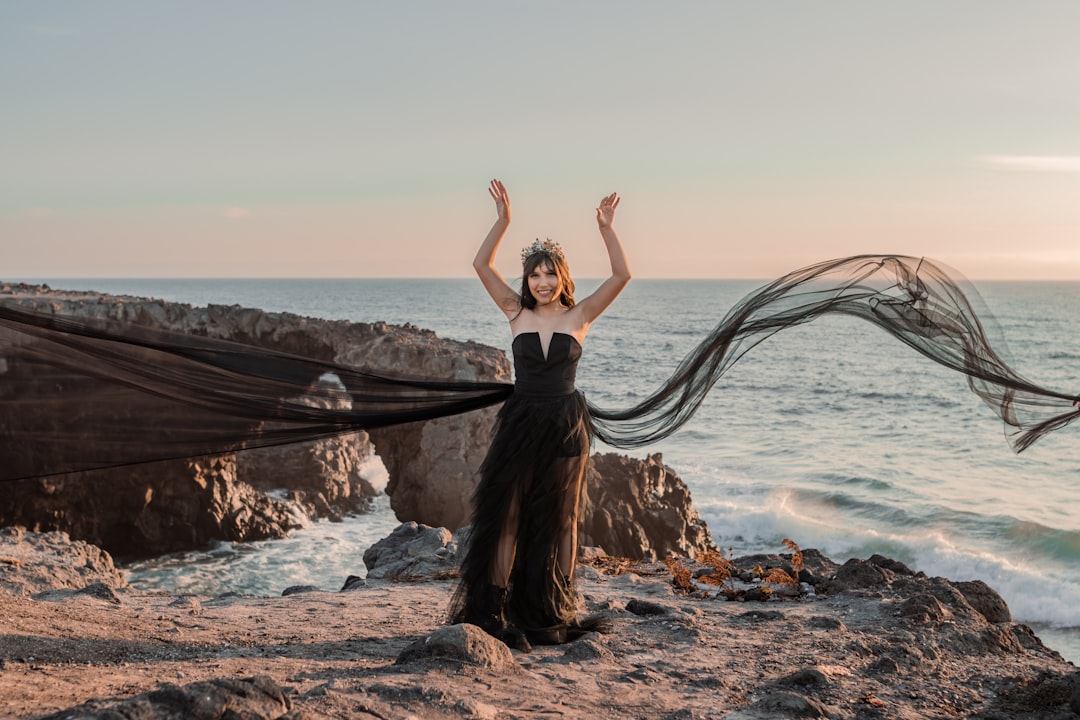
There's a moment near the end of Martha Graham's "Lamentation" where the audience goes completely silent—not from politeness, but because something in their chest has physically tightened. Graham sits on a bench, costumed in yards of purple fabric, and doesn't move across the stage. Her entire body becomes the dance: spine curving, shoulders folding inward, arms stretching impossibly against invisible weight. No choreography in the traditional sense. Just a woman refusing to let go of grief, and everyone in the theater feeling their own.
That's the whole point. That's what modern dance has always been chasing.
---
Modern dance didn't emerge from studios and syllabi. It came from people who were done pretending the body was just a vehicle for pretty movement. Isadora Duncan rejected classical ballet's rigid formalism in the early 1900s, dancing in loose Greek-inspired tunics, insisting that dance should express feelings—not illustrate music. Graham took that idea further, developing a technique built on contraction and release, the idea that every movement originates from emotional impulse. You don't decide to reach your arm upward. You feel something reach.
That lineage runs straight through to today's choreographers, who are asking the same questions with increasingly sophisticated tools.
Technology Isn't Killing the Soul—It's Just Changing the Stage
Here's what people get wrong about tech in dance: they think it's a distraction, a gimmick to impress audiences who've forgotten how to sit still. But done right, technology doesn't replace emotion—it multiplies it.
Anne Teresa De Keersmaeker's "Rain" installation at the Paris Opera combined live dancers with projected patterns of falling water. The audience stood in darkness, watching bodies move through a storm they could feel but not quite touch. The technology wasn't the point—but it created an atmosphere where the dancers' exhaustion, their slippery footsteps, their determination to keep moving through exhaustion, hit harder than any spotlight could.
Or consider the work of William Forsythe—for decades, he's been using motion-capture and real-time projection to show audiences what's invisible in performance: the micro-adjustments, the constant negotiation between balance and fall. When you see a dancer's skeleton overlaid on their live body, you understand that control isn't the absence of chaos. It's chaos managed. That's not a tech demo. That's an emotional argument about what it means to move.
The Collaborations That Actually Matter
Not all interdisciplinary dance is interesting. A dancer twirling while a painter throws paint on canvas behind them? That's noise. The collaborations worth watching are the ones where the different art forms actually need each other.
Wayne McGregor has been working with scientists for years—neurologists, geneticists, biologists—to understand how the body makes decisions. His choreographic process isn't "I want this movement, now make it happen." It's a conversation: what does the nervous system already know? What can choreography reveal about cognition? The dances that come out of that dialogue look alien, unsettling, like the body is remembering something ancient or predicting something that hasn't happened yet.
On the other side of the spectrum, Crystal Pite's work with composers like Owen Belman creates dances that feel like music made visible. Her piece "The Statement" uses repetitive, almost ritualistic movement to build unbearable tension—not because of the movement itself, but because of how the sound design amplifies every hesitation, every whispered refusal, every silent scream. The audience isn't watching two things. They're watching one thing that needed two art forms to exist.
Bodies That Refuse to Be Neutral
Here's where modern dance gets uncomfortable: it's political. It always has been.
In 2024, dancers are using their bodies to refuse invisibility. Whether it's Kyle Abraham's explorations of Black queer identity, or the collective work emerging from companies like ADSD (A Dance Series Designed) in Berlin, the choreographer's body is a site of resistance. Not as metaphor. As fact.
This isn't new—Pina Bausch was making dances about sexual violence, grief, and the impossibility of love in the 1970s and 80s. What has changed is the conversation happening in the room afterward. Audiences are arriving prepared to be implicated. They're expecting to feel implicated. The dance doesn't just happen and then end—it spreads into talkbacks, into arguments, into the uncomfortable subway ride home where you can't stop replaying a particular fall.
The Hardest Thing to Teach
In ballet, you learn to hide effort. The grand jeté should look effortless, like gravity is optional. Modern dance teaches the opposite: show the work. Show the breath. Show the moment when the muscle almost gives up and doesn't.
That's why contemporary classes often start with improvisation—because you can't fake an emotional state you've never inhabited. You can't perform grief if you've never actually felt it moving through your ribs. The technique serves the truth; it doesn't replace it.
And that's why modern dance will never fully merge with pure athleticism, no matter how many Olympic-level acrobats start choreographing. Because at the center of the work is a question that can't be answered with a triple flip: What are you trying to say with your body that you can't say with words?
---
When you watch a great modern dancer, you're watching someone who has stopped trying to convince you they're graceful. They're trying to convince you they're real. The sweat, the gasping breath, the moment the hand trembles before reaching out—those aren't flaws to hide. They're the point.
Modern dance survives because humans need a place to put feelings that don't fit anywhere else. The emotion and the motion aren't being fused together by clever choreographers. They're inseparable from the start. The choreographer's job is just to stop getting in their own way.