---
There's a moment every serious belly dancer hits — you've got your hip drops smooth, your figure-eights hypnotic, and suddenly that confidence curdles into restlessness. You're nailing the basics, but something feels missing. The moves are correct, but they're not yours yet.
That's the door to advanced territory. Not a destination — more like standing at the edge of a forest with no map, knowing the trails exist because you've watched dancers who move like they're having a secret conversation with the music. Everything they do looks effortless, but behind that effortlessness is a warehouse of invisible work.
So let's talk about the stuff that actually transforms your dancing from "nicely done" to "I can't look away."
The Isolation That Changes Everything
Here's what nobody tells you about isolations: the basics are a lie. You learned to move your hips in a circle, your ribs in the opposite direction. Fine. But advanced isolation isn't about moving body parts — it's about moving them independently while everything else stays perfectly still.
The ribcage is where most dancers stall. Try this right now: stand with your arms relaxed, shoulders down, and make just your right ribcage circle clockwise while your hips stay still. Not your shoulders drifting. Not your knees bending. Just the ribs.
Harder than it sounds.
That precision — the ability to say "this part moves, nothing else does" — is non-negotiable once you hit intermediate-plus. Practice it slow. Painfully slow. The faster you can do something cleanly at half speed, the more effortless it'll look at performance speed. Speed is the easy part. Control is the skill.
What's Really Happening When You Layer
Layering is where beginner dancers start to sound like intermediates, and where intermediate dancers start to sound like professionals. It's simultaneous motion — hips going one direction while your chest goes another, or a shoulder shimmy layered over a belly roll.
But here's the secret nobody teaches: layering isn't about adding more. It's about maintaining complete isolation while adding a second element. If your hip circles already wobble because your core isn't engaged, layering will amplify that wobble into chaos. The foundation has to be solid before you stack.
Start with one simple pair: chest lift with a hip circle. Feel how they interact. Then add a shoulder shimmy. Notice how your body fights itself? That's the feedback. That's the work. Every layer you add exposes a weakness in another part of your body — and that exposure is exactly what makes you stronger.
The dancers who look like they're defying physics? They've just spent months failing at exactly this, over and over, until their bodies figured it out.
Why More Dancers Should Embrace the Floor
Floor work gets skipped in most training because it's hard and it bruises your ego. Both literally and figuratively. But the dancers who commit to floor work develop a body awareness that standing-dancers never quite grasp.
When your knees hit the floor, everything gets harder. You're closer to the ground so there's less room for error. You can't hideweak foundations behind vertical posture. A shimmydone on the floor with full control is ten times more impressive than the same shimmy standing — and it builds strength you carry back up into your standing dancing.
Start low. Figure-eights near the ground. Undulations that travel. The key is maintaining the same clean isolation you practice standing — just two feet (or knees, or your back) closer to gravity.
It took me three months to stop looking like a fish out of water on the floor. Your knees will bruise. You'll feel absurd. Do it anyway.
The Rhythm Behind Every Great Drum Solo
Here's what separates dancers who crash during drum solos from those who own them: the ones who crash are following. The ones who own are listening.
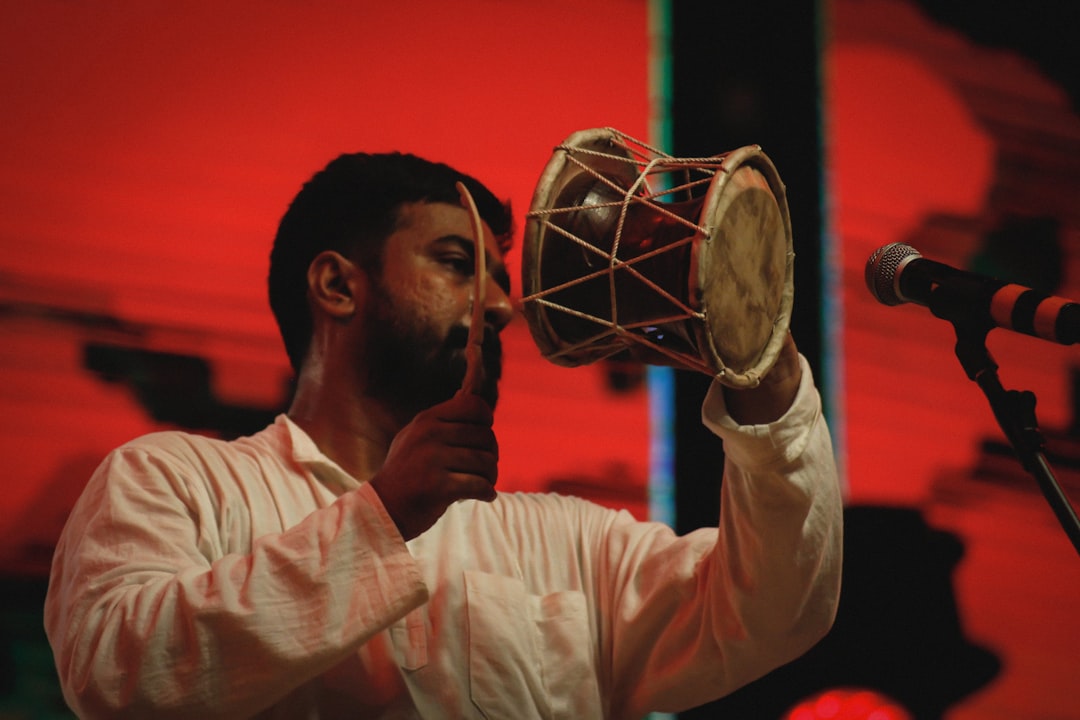
A drum solo isn't about executing choreography to percussion. It's about having a conversation. Your body responds to what the drummer plays — sharp hits get sharp movements, flowing tabla gets flowing waves. This means you need to understand Middle Eastern rhythms on a gut level, not just memorize patterns.
Pick three essential rhythms: baladi, masmoudi, and saidi. Listen to them on repeat until you can feel where the accents land. Then improvise. Not choreograph — just move. Let your body react. Mess up. Feel stupid. Do it again.
The best drum soloists I've watched perform make it look like spontaneous combustion. Behind the scenes, they've logged hundreds of hours of feeling stupid in a studio, learning to let go of their choreography and actually listen.
Veils Are a Different Instrument
We don't talk enough about how veil work is basically dancing with a third limb that doesn't obey you. Your body knows where your arms are. A veil adds eighteen inches of fabric that doesn't.
The advanced stuff — complex patterns, catches during turns, creating geometric shapes in the air — will frustrate you endlessly because the fabric does not cooperate with your timing. Practice controlling the veil's momentum. Feel the weight. Learn that the veil is a follower, not a leader, and your body has to create space for it to move through.
Different weights matter more than you think. A lighter veil will fly better for creating shapes; heavier silk creates better momentum for throws. Test them in a store if you have to. Find what your body wants to work with.
Partnering Changes Your Dancing Forever
Whether it's a live musician, another dancer, or a prop — partnering teaches you to stop dancing in a vacuum. When you're used to rehearsing alone in a mirror, having another person in the room changes everything. You have to communicate without speaking. You have to lead and follow. You have to trust.
The hardest part isn't the técnico — it's surrendering that hypercontrol you've built. Your meticulously rehearsed choreography might need to bend. Your partner might move differently than you expected. That's the point.
Practice both. Being a leader who can give clear cues, and a follower who can actually listen instead of waiting for your turn to dance.
What Storytelling Choreography Actually Means
You've heard "tell a story" a thousand times. But here's what that actually looks like: pick one specific feeling. Not "love" or "loss" — something granular. The ache of wanting someone to notice you. The specific bitterness of an argument you lost later. The way your body feels at 3 AM when you can't sleep.
Now build eight counts of movement that make an audience feel that exact thing without a single word.
That's what advanced choreography is. Technique at the service of emotion, not the other way around. You can layer and isolate and hit every beat — but if your audience isn't feeling something, you're just moving correctly. The goal is to move meaningfully.
The Performance You Can't Practice
You can rehearse every technique until they're无缝. But performance is its own animal, and here's what I've learned: the most technically perfect performance is often the least memorable.
The dancers who linger in your memory are the ones who took risks. Who connected. Who let something genuine slip through the polished exterior and reminded you they're human.
So — master the techniques. Practice until your body knows them better than your mind does. But on stage, let go. Let something go wrong. Let something surprise you. Let yourself be seen.
The art is in the searching, not the arrival. Keep moving.