---
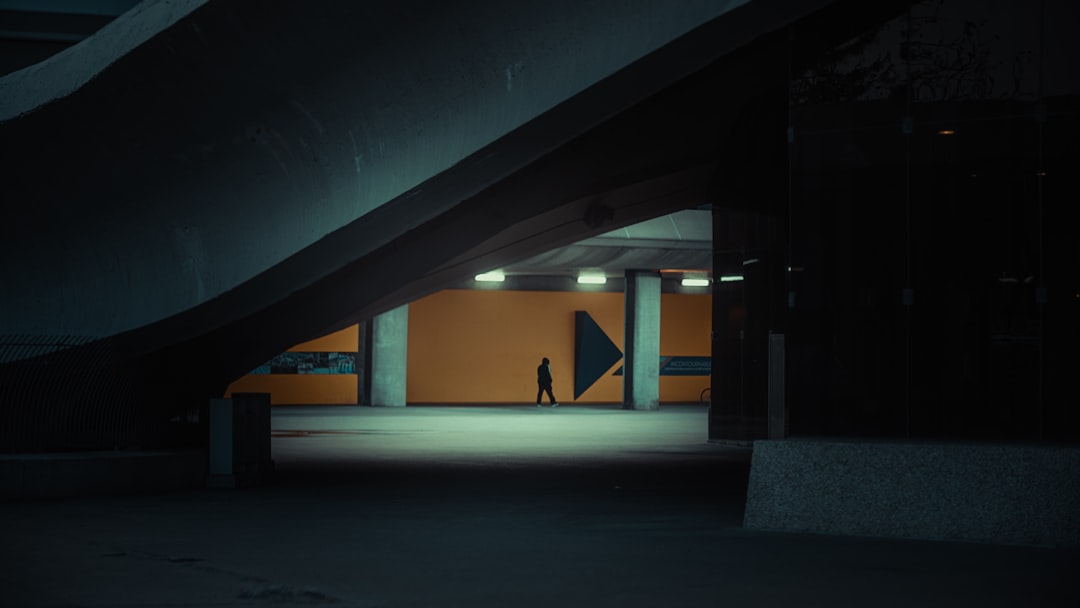
The bass hits at 9 PM on a Friday night. You can feel it through the concrete floors of Urban Groove Academy before you even see the studio — that low rumble that settles in your chest and tells you something is about to happen.
This is how it starts for most dancers in Mogul City. Not with a brochure or an orientation. With a beat. With a floor. With someone saying "try again" for the fifteenth time until your body finally understands what your mind can't explain.
Urban Groove Academy: Where It All Began
DJ Swift doesn't teach dance. He's said it a hundred times in interviews, but walk into his studio on any given evening and you'll see what he actually does: he breaks people down to build them back up.
Swift opened Urban Groove Academy back in 2003, back when the scene was just a handful of kids cyphing in empty parking lots. Now the facility spans three floors — concrete and chrome, mirrors covering every wall, a sound system that community members still whisper about. But the real draw isn't the equipment. It's the way Swift's instructors watch a new student attempt their first eight-count and see potential instead of stiffness.
The curriculum is unforgiving in the best way. You'll learn foundational hip-hop technique first — the footwork, the isolation, the way your skeleton has to learn to move differently than it was built to move. Only after you've earned your way through the basics do they let you near choreography. That's the thing about Urban Groove: they don't hand you anything. You have to take it.
Rhythm Revolution Studio: The Sandbox
If Urban Groove is the gym, Rhythm Revolution Studio is the playground.
Walk in on a Tuesday night and you might see someone freestyling to Afrobeat while across the studio another student is drilling contemporary technique in the mirror. That's the point. Founder Marcus Chen built this place specifically to be uncomfortable — to force collisions between styles that normally stay in their separate lanes.
Their flagship program "Street to Stage" isn't a class. It's a gauntlet. Over twelve weeks, students take original choreography from the studio floor to actual performances at venues across the city — real shows, real audiences, real stage lights that blind you if you're not ready. The dropout rate is high. The people who make it through come out different. More confident. More hungry.
What differentiates Rhythm Revolution from everywhere else is the collaboration. Industry professionals rotate through as guest instructors — people who've choreographed for touring artists, who've danced in music videos, who've lived the trajectory these students dream about. Those connections matter. More than one career has launched from a hallway conversation at Rhythm Revolution.
BeatBox Dance Conservatory: The Scholars
BeatBox is different. Walk in and you'll notice it immediately — the weight of the air, the way students speak about movement like it's a language worth studying.
This is the only studio in the city that requires history. Before you learn to pop, lock, or break, you learn where these moves came from. You study the origin blocks, the cyphers in the Bronx that birthed entire genres. You understand that what you're doing isn't just steps — it's a culture, a resistance, a storytelling tradition passed down through bodies.
The annual "Hip-Hop Odyssey" performance isn't a showcase in the traditional sense. It's a narrative. Each year's show explores a theme rooted in the cultural context of hip-hop — gentrification, identity, the way a community preserves itself through movement. Parents cry. Students leave changed. Critics from outside the city finally understand what Mogul City has known for decades: this isn't entertainment. It's documentation.
The technical training at BeatBox is rigorous — ballet and modern integrated into hip-hop foundations, because founders believe mastery requires understanding multiple movement vocabularies. Students here don't just learn to execute moves. They learn to speak through their bodies with the fluency of someone who understands the full grammar of dance.
StreetSoul Collective: The Living Room
StreetSoul doesn't feel like a studio. It feels like a basement — and that's by design.
The collective operates on an open-door philosophy that makes veteran instructors squirm and newcomers breathe easy. Yes, there's structure. Yes, there are classes. But the heart of StreetSoul is the jam sessions — unstructured cyphers where anyone can jump in, where the only rule is respect the circle and bring something real.
What attracts dancers to StreetSoul is the absence of gatekeeping. At Urban Groove, you earn your place. At BeatBox, you prove your dedication. At StreetSoul, you simply show up. The collaborative energy here produces some of the most innovative choreography in the city precisely because it draws from such a wide range of experience levels and backgrounds.
The veterans mentor newcomers not because it's required, but because that's how they learned. That's the tradition. You got helped when you were lost, so you help when someone else is.
The Thread That Connects Them All
Here's what you'll notice if you spend time in all four spaces: the teachers don't teach moves. They teach you how to learn yourself.
Mogul City's dance institutions share that fundamental philosophy even if their methods differ. The city didn't build a scene by accident. It built one studio, one instructor, one student at a time — each generation passing down what they wish they'd known sooner.
The future of dance in this city isn't some distant horizon. It's the teenager in her first class right now at Rhythm Revolution, learning that her body can say things her voice won't. It's the crew that claimed that empty lot twenty years ago, whose grandchildren are now studying at BeatBox. It's the sound you feel through concrete on a Friday night, pulling you toward something you can't quite name yet but desperately want to understand.
You don't have to know anything when you walk in. You just have to be willing to move and keep moving until movement starts to feel like language.
The floor is waiting. Come prove what your body can say.