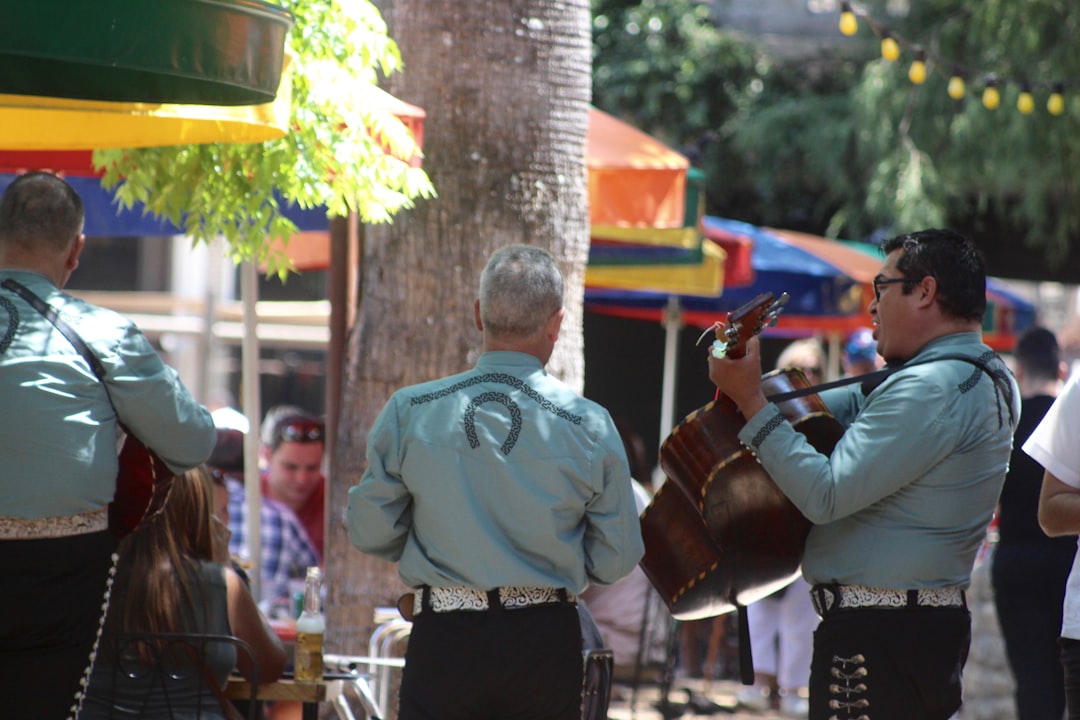
The first thing that hits you is the music—a single string pulled taut on a bow, struck by a small stone, producing a sound somewhere between a heartbeat and a call to arms. Then the voices join in, Portuguese lyrics layering over hand drums and tambourines. Finally, the movement: two bodies wheeling through kicks, escapes, and inverted flourishes inside a circle of clapping students.
This is Capoeira, the Afro-Brazilian art form that disguised martial technique as dance among enslaved Africans in colonial Brazil. Today, it thrives in Texas—not as a curiosity, but as a living tradition with deep roots in Austin, Houston, and the San Marcos corridor. Whether you are a Texas State student looking for a physical outlet that demands as much from your mind as your body, or a statewide traveler seeking authentic cultural training, these studios offer entry points into a deceptively demanding discipline.
Why Capoeira Took Hold in Texas
Capoeira's expansion in Texas accelerated in the 1990s and 2000s as Brazilian immigration increased and as visiting mestres established permanent academies in major cities. The state's size worked in the art's favor: Austin's progressive arts culture, Houston's international diversity, and San Marcos's university population each created distinct demand. Unlike more conventional martial arts, Capoeira requires live music, group singing, and Portuguese vocabulary from day one. That friction—fitness wrapped in language, history, and communal ritual—attracted students bored by gym routines and seeking genuine cultural immersion.
Three Studios Worth Your Time
The following recommendations are based on established lineages, active community programming, and accessible beginner instruction. All three welcome first-time visitors, though your experience will differ depending on which tradition and teaching style you encounter.
Axé Capoeira Texas — Austin
Lineage: Founded under Mestre Barrão, a Vancouver-based mestre whose academies operate internationally.
What distinguishes it: Axé Capoeira Texas maintains a rigorous connection to its group's Brazilian headquarters, with visiting instructors from Recife and Vancouver appearing regularly for workshops and batizados—formal ceremonies where students receive their first cords and Capoeira nicknames. The Austin academy emphasizes the regional style, known for fast, upright gameplay and explosive kicks.
For beginners: New student classes focus on foundational movements (ginga, au, meia lua de frente) and basic berimbau rhythm patterns. You will be expected to sing in Portuguese even in your first month.
Practical details: Located in central Austin. Drop-in rates and beginner schedules vary by season; contact the academy directly for current pricing.
Cordão de Ouro Austin — Austin
Lineage: Traces back to Mestre Suassuna and Mestre Brasília, who founded Cordão de Ouro in 1967 in Brazil.
What distinguishes it: This academy balances the group's contemporânea style—a fluid blend of regional and Angola lineages—with an unusually welcoming atmosphere for adult beginners. The Austin branch has cultivated a reputation for patience with students who arrive with no martial arts or dance background.
For beginners: Introductory classes spend significant time on body conditioning and safe acrobatic progressions before putting students into the roda (the circle where Capoeira is played). Expect call-and-response singing and percussion instruction integrated into every session.
Practical details: Situated in the heart of Austin. The academy typically offers multiple beginner-friendly time slots per week.
Capoeira Luanda Houston — Houston
Lineage: Founded by Mestre Jelon Vieira, a pioneering figure who brought Capoeira to the United States in the 1970s.
What distinguishes it: Houston's branch of Capoeira Luanda operates with a strong performance and outreach orientation. Students here frequently participate in demonstrations at schools, festivals, and cultural institutions, making it a strong choice if you want to perform as well as train.
For beginners: The studio places notable emphasis on community building. New students often describe the academy as socially tight-knit, with post-class gatherings and organized events that extend relationships beyond the training floor.
Practical details: Based in Houston with active class programming. Reach out directly for drop-in rates and beginner schedules.
What Actually Happens in Your First Class
If you have never stepped into a Capoeira academy, the format can feel unfamiliar. Here is what a typical beginner session looks like:
The first fifteen minutes: Students gather in a semicircle. An instructor tunes the berimbau and leads a simple call-and-response song. You will not be expected to know the words. Clap in time. Listen.
The warm-up: Expect movements that borrow from gymnastics, dance, and combat sports—lunging sequences, cartwheel variations, and low, swaying steps