Why This Matters More Than You Think
I bounced between three Capoeira schools before I found my home. That's not a humble brag — it's a cautionary tale. Each switch cost me months of progress, hundreds of dollars, and one friendship that got awkward when I left Professor Diaz's group for his rival's roda. Capoeira isn't like picking a gym. The mestre you train under shapes how you move, how you think, even how you hear music. Get it wrong and you'll quit within a year. Get it right and you'll still be playing at sixty.
Rowes Run City has five serious options. I've dropped into all of them, sweated on their floors, and talked to their students. Here's what I actually found.
Rowes Run Capoeira Academy — The Old Guard
Mestre Silva runs a tight operation on Martial Arts Lane, and when I say "tight," I mean the man notices if your ginga is lazy from across the room. He's been at this for three decades, and his teaching reflects it. There's no filler. No Instagram-friendly choreography. Just the fundamentals drilled until they live in your bones.
What surprised me was the kids' class. My daughter tagged along once and spent forty-five minutes learning the berimbau rhythm before she even touched the floor. I thought she'd be bored. She begged to go back.
The downside? Silva's standards are high. If you're the type who wants to learn a flashy au batido in week two, you'll be doing macaco drills for months first. Some people find that frustrating. I found it honest.
Cordão de Ouro Rowes Run — The Real Deal on Brazilian Way
Professor Santos trained directly under Mestre Barrão, and that lineage matters more in capoeira than people realize. The movements carry a specific flavor — a looseness in the shoulders, a deceptive slowness that explodes at the right moment. You can spot a Cordão de Ouro player in a roda from ten feet away.
Their public rodas on Saturday afternoons are where I first understood what capoeira actually is. Not the choreographed demo stuff. The real thing — two people in a circle, a berimbau controlling the game, and a conversation happening entirely through movement. Santos lets beginners sit in the roda and watch, which sounds passive until you realize you're absorbing the vocabulary of the game without trying.
Family classes run Wednesday evenings. I've seen parents and kids training side by side, which creates a weird and wonderful dynamic when your ten-year-old picks up a movement faster than you.
Axé Capoeira — Cultural Center Drive, Where Nobody Judges You
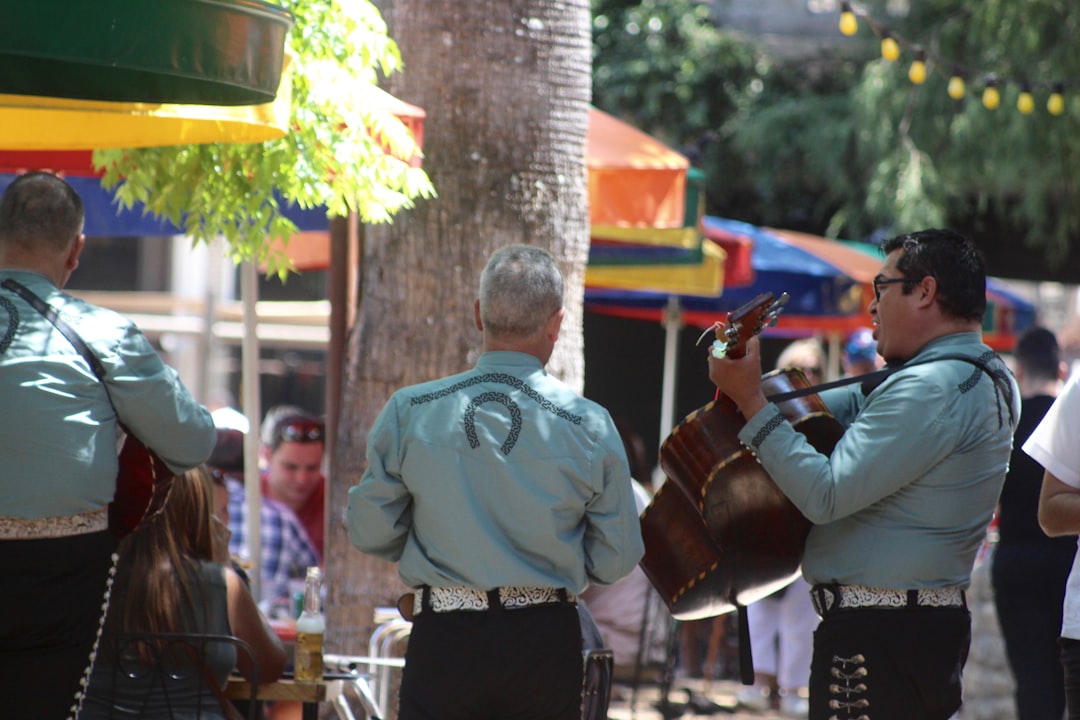
Maria's school is the antidote to the intimidation factor that keeps people from trying capoeira at all. I walked in expecting to feel like an outsider. Instead, a woman in her sixties handed me a pair of spare pandeiro drums and said, "You're learning this first."
The emphasis here is on culture — the songs, the instruments, the history of enslaved people in Brazil who disguised combat as dance. Maria doesn't treat this as background information. She weaves it into every class. You'll learn to sing Portuguese folk songs before you learn a decent esquiva, and somehow that makes the esquiva land better when you finally get there.
This is the school I recommend to anyone who says, "I'm not athletic enough for capoeira." You don't need to be athletic. You need to be curious.
Grupo Senzala — The One That Doesn't Mess Around
Contra-Mestre João runs the Rowes Run branch of one of the oldest capoeira groups on the planet, and the training reflects that weight of history. Classes are structured. Technique is precise. If you're looking for a social club, look elsewhere.
I lasted two weeks before I had to take a break — not because the training was cruel, but because João expected a level of focus I wasn't ready for. Every drill had a purpose. Every correction was specific. "Your arm is six inches too high" is the kind of feedback you either love or hate.
The students who stick around are genuinely impressive. I watched a woman in her forties execute a sequence that looked like controlled falling, except she never hit the ground. When I asked how long she'd been training, she said eight years. That's the caliber here.
Seminars happen quarterly and draw practitioners from across the state. Worth attending even if you train elsewhere — the energy in a room full of Senzala players is something else.
Capoeira Mandinga — Fitness Boulevard's Hidden Gem
Carlos brings an athlete's brain to capoeira, and it shows. His classes are physically demanding in a way the others aren't. You'll do burpees between drills. You'll practice takedowns until your forearms burn. If your primary goal is getting in ridiculous shape while learning a martial art that doubles as a dance, this is your spot.
The open rodas here have a different energy — faster, more playful, with a lot more laughter. Carlos encourages students to experiment, to take risks, to fall down and make it look intentional. His philosophy is that capoeira should feel like a game, not a test.
The student body skews younger and more diverse than the other schools. On any given Tuesday, you might train alongside a college wrestler, a retired ballet dancer, and a software developer who saw a YouTube video and thought, "I want to do that."
So Which One?
Depends on what you're after. Want tradition and discipline? Grupo Senzala. Want cultural immersion? Axé. Want to get strong fast? Mandinga. Want lineage and community? Cordão de Ouro. Want the fundamentals done right? Rowes Run Academy.
My real advice? Drop into two or three. Sit through a full class, not just the warmup. Talk to the students — they'll tell you more in five minutes than any website can. And bring water. You're going to need it.