When Your Outfit Fights Back
I'll never forget the night my burgundy ruffle skirt decided to tango with my partner's shoe buckle. Mid-dip, no less. The music swelled, the crowd cheered, and I heard the unmistakable sound of fabric tearing. Not exactly the dramatic finish I'd imagined.
That humiliating moment taught me something no dance instructor ever did: your clothes aren't just decoration. They're equipment. The wrong dancewear doesn't just look bad—it actively works against your body. After fifteen years of stepping, spinning, and occasionally stumbling across hardwood floors, I've learned that the best Latin dance outfits disappear. You stop thinking about them entirely because they move like a second skin.
Fabric That Forgives
Cheap polyester looks dazzling under stage lights until you're thirty minutes into a bachata social and swimming in your own sweat. I've been there. The chafing. The smell. The way the fabric clings like a wet handshake.
You want materials with actual memory. A quality spandex-cotton blend will stretch with your hip action and bounce back when you straighten. Nylon mesh panels in strategic spots—underarms, along the spine—keep you from overheating during marathon salsa sessions. My go-to practice top is 92% microfiber with just enough give that I can raise my arms fully without the hem riding up to my chin.
Natural fibers aren't always the enemy, either. A lightweight bamboo-rayon mix wicks moisture better than you'd expect and doesn't hold onto that post-milonga funk the way synthetics do. Test the fabric yourself: grab a handful and twist. If it wrinkles like a paper bag and refuses to relax, it'll do the same thing against your shoulder blades.
The Fit That Flatters (Without Flatlining Your Circulation)
There's a dangerous myth in dance culture that tighter equals better. Tell that to my former self, who squeezed into a bodysuit two sizes too small and spent an entire samba routine gasping like a landed fish. Your dancewear should trace your silhouette, not strangle it.
For Latin styles specifically, look for raglan sleeves or dropped shoulders that don't pinch when you lift your arms into frame. Waistbands should sit firm at your natural waist without digging—nothing kills the mood like stopping mid-merengue to haul your pants back up. Ladies, if you're wearing a dress with a skirt, do a full pirouette in the fitting room. If the hem doesn't settle back into place within two beats, it'll be a liability under spin lights.
Men often get shafted in the fit department. Baggy cargo pants don't frame your footwork; they hide it. Slim-cut trousers with a slight taper and a touch of elastane let judges (and partners) actually see your ankle action. Just ensure you can squat to floor level without hearing seams protest.
The Shoe Situation
Your feet are throwing a party. Everything else is just invitation design.
Latin dance shoes are a universe unto themselves, but here's the non-negotiable: suede soles or nothing. Rubber grips the floor like Velcro and will wreck your pivots. Leather's too slick until it's broken in, by which time you've already slid into someone's mojito. Suede hits that sweet spot of controlled glide.
Heel height isn't vanity—it's geometry. A 2.5-inch flared heel shifts your weight forward onto the balls of your feet, which is exactly where Latin technique lives. Go too high too fast and your balance becomes a gamble. Start lower, build the ankle strength, then climb. I've seen too many beginners in three-inch stilettos clinging to their partners like shipwreck survivors.
And please, try them on in the evening when your feet have swollen slightly. A shoe that fits at 10 AM will murder you by 10 PM.
Color, Confidence, and the Occasion
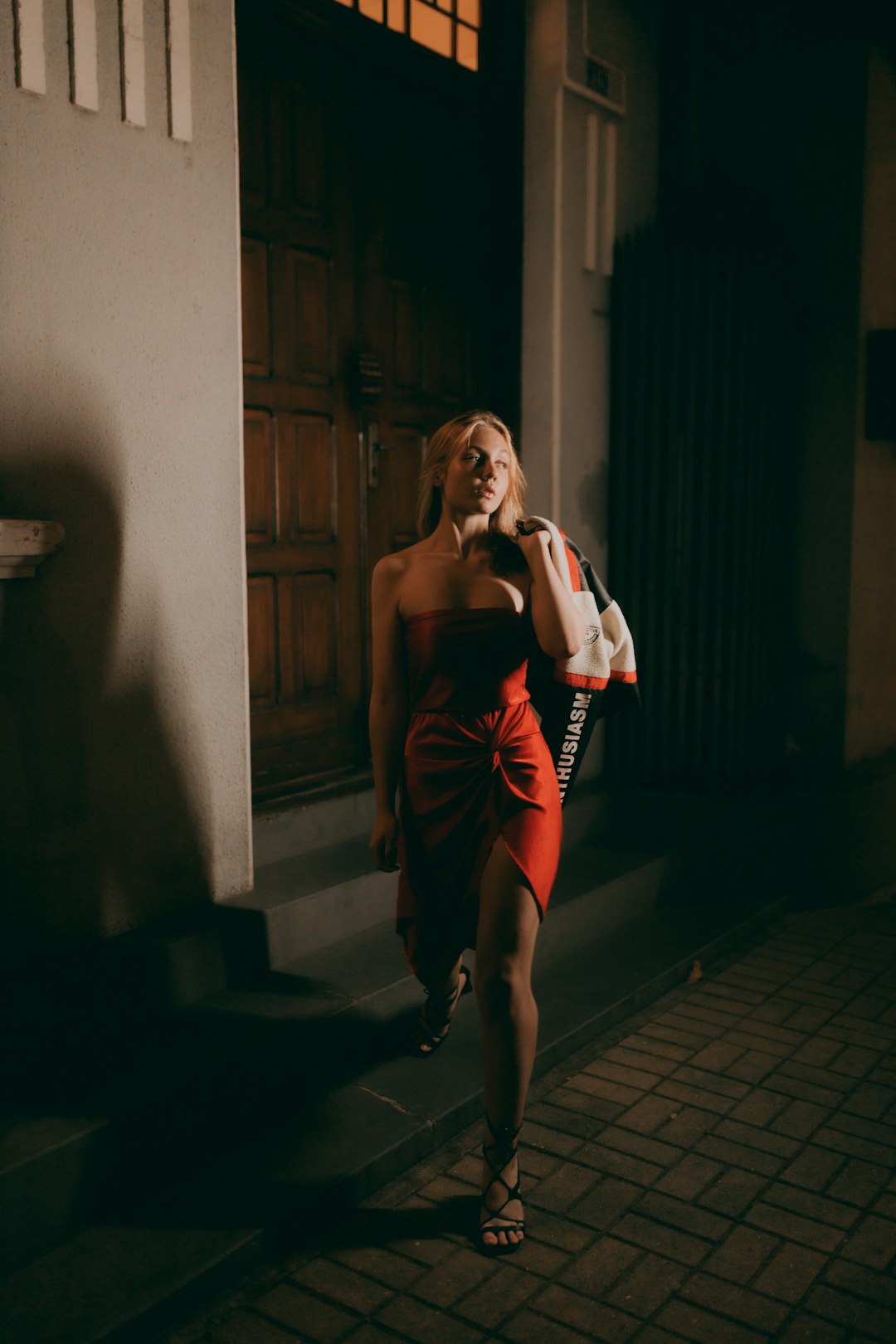
I own a fire-engine red fringed number that makes me feel like I could lead a revolution. I don't wear it to intimate kizomba nights. Context matters.
Bright, saturated colors and bold geometric patterns read beautifully under competition spotlights. They catch the eye and extend your line. For social dancing in dimly lit clubs, reflective trims or metallic accents do more work than neon ever will. Practice sessions? That's where your stained black leggings live. Nobody needs to impress the mirror at 9 AM.
Accessories should survive contact. Statement earrings look gorgeous until they whack your partner in the temple during a close-embrace tango. If it dangles, spins independently, or catches light in distracting flashes, save it for the audience, not the dance floor.
The Fitting Room Test
Here's my hard rule: if you can't do a full body roll, a rapid direction change, and a sudden stop without adjusting anything, don't buy it. I don't care how exquisite the stitching looks on the hanger.
Bend, twist, drop into a deep plié. If the sales associate looks concerned, you're doing it right. Bring the underwear you'll actually wear underneath. Dance stores aren't the place for modesty—they're laboratories for movement.
Check the care label before you fall in love. Hand-wash only might sound romantic until you're staring at a sink full of sequins at midnight before a performance. Machine-washable dancewear isn't surrendering; it's sanity.
Dance Like Nobody's Watching (Because You're Not Watching Yourself)
The best compliment I've ever received wasn't about my technique. It was a partner leaning in during the cortina and whispering, "You move like you're wearing nothing at all."
That's the goal. When your outfit becomes invisible, your story takes center stage. The right dancewear doesn't announce itself with scratchy tags, sliding waistbands, or fabric that squishes audibly when you compress. It simply holds space for you to become the music.
So toss the skirt that betrays you. Find the pants that stay put. Lace up shoes that make the floor feel like an invitation rather than an obstacle. Then get out there and dance like your clothes aren't even there—because they shouldn't be.