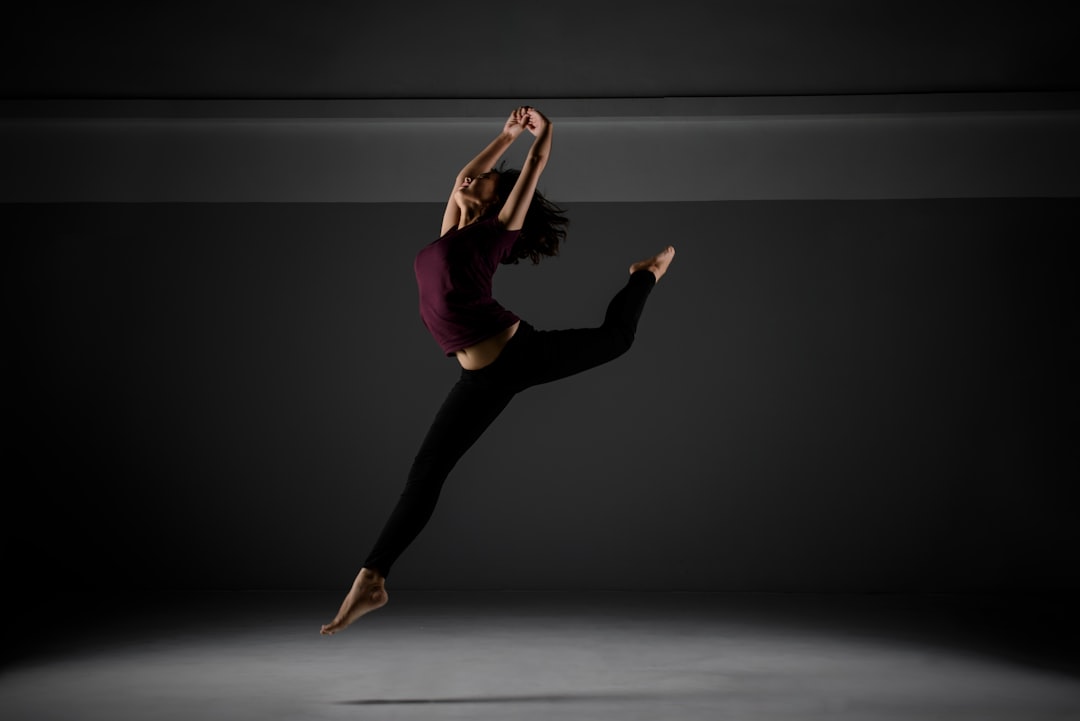
Introduction: Defining "Advanced" in Contemporary Dance
You're no longer learning combinations. You're interpreting them, questioning them, and eventually generating your own. The advanced contemporary dancer operates at the intersection of technical precision, improvisational intelligence, and choreographic thinking—capable of moving seamlessly between release technique's weighted surrender and the exacting spatial mathematics of a Forsythe improvisation.
This guide distills professional training methodologies, injury prevention protocols, and artistic development practices used by working contemporary dancers. The advice here assumes you already train 15+ hours weekly and are preparing for pre-professional or professional engagement.
Technical Foundations: Beyond Generic "Good Technique"
Contemporary dance borrows from multiple lineages, but advanced work requires understanding which technical framework serves which choreographic context.
Release Technique and Alignment Principles
Unlike ballet's vertical aspiration, contemporary dance often privileges the downward trajectory—what release technique pioneer Joan Skinner called "letting go." This isn't collapsing; it's organized efficiency.
Key practices:
- Head-tail relationship: Maintain awareness of your spine as a continuous line from crown to coccyx, even in extreme spirals or inversions
- Yield and push: Practice initiating movement from yielding into gravity (floorwork) before pushing away from it
- Breath-initiated phrasing: Let exhalation trigger release; inhalation supports extension
Floorwork as Distinct Vocabulary
Floorwork distinguishes contemporary dance from vertical forms. Advanced practitioners develop three specific capacities:
| Movement Category | Technical Focus | Professional Application |
|---|---|---|
| Downward transitions | Controlled descent through space, landing through multiple body surfaces | Hofesh Shechter repertoire, Batsheva-style Gaga |
| Floor sequences | Shoulder-driven locomotion, spiral rolls, supine articulations | Sasha Waltz, Pina Bausch restaging |
| Upward returns | Energy-efficient rises using momentum, not muscular strain | Crystal Pite's narrative choreography |
Practice method: Work with eyes closed for 30% of floorwork training. Proprioceptive awareness—knowing where your body is in space without visual confirmation—separates competent dancers from exceptional ones.
Integration of Ballet and Modern Lineages
Most professional contemporary companies require ballet training, but how you apply it matters. American contemporary (Alvin Ailey, Paul Taylor) maintains clearer ballet lineage; European contemporary (Sasha Waltz, Emio Greco) often subverts it. Train both the clarity and the subversion.
Physical Conditioning: Interdependent Strength and Mobility
Advanced dancers cannot afford the flexibility-strength trade-off. Hypermobility without stability causes injury; strength without range limits choreographic possibility.
Contemporary-Specific Conditioning
Replace generic stretching with targeted mobility work:
- Hip capsule mobilization: Contemporary choreography demands extreme external rotation and deep flexion. Use 90/90 switches and hip CARs (controlled articular rotations) rather than passive stretching.
- Thoracic spine segmentation: The ability to move each vertebra independently enables the articulate back essential to Graham technique and its descendants.
- Ankle and foot preparation: Barefoot dancing requires intrinsic foot strength. Practice short-foot exercises and single-leg relevés on unstable surfaces.
Cardiovascular and Plyometric Training
Rehearsing full-length works requires stamina that technique class alone won't build. Add:
- Interval training: 20-second high-intensity bursts (burpees, jump squats) with 10-second rest, repeated for 4 minutes—mimics the metabolic demands of performance
- Movement quality sprints: Travel across the floor at maximum velocity while maintaining precise dynamic control (not just "fast," but "fast and weighted" or "fast and suspended")
Recovery Protocols
Professional dancers work injured; advanced students shouldn't. Establish now:
- Sleep as training: 7-9 hours for tissue repair and motor learning consolidation
- Contrast therapy: Cold immersion (10-15°C) for acute inflammation; heat for chronic tension
- Load management: Track weekly hours. Increase training volume by maximum 10% per week to avoid overuse injuries
Artistic Development: From Execution to Interpretation
Improvisation as Core Technique
Contemporary dance is unique among Western concert forms in its reliance on improvised material. Advanced dancers must improvise well—not just move without set steps, but make compositional choices in real time.
Structured improvisation practices:
| Method | Origin | Application |
|---|---|---|
| Authentic Movement | Mary Whitehouse, Janet Adler | Accessing genuine impulse, developing witness consciousness |
| Forsythe Improvisation Technologies | William Forsythe | Spatial and temporal scoring, line-point theory |
| Gaga | Ohad Naharin | Sensation-based research, available versus unavailable body |
Weekly practice: Dedicate one session to










