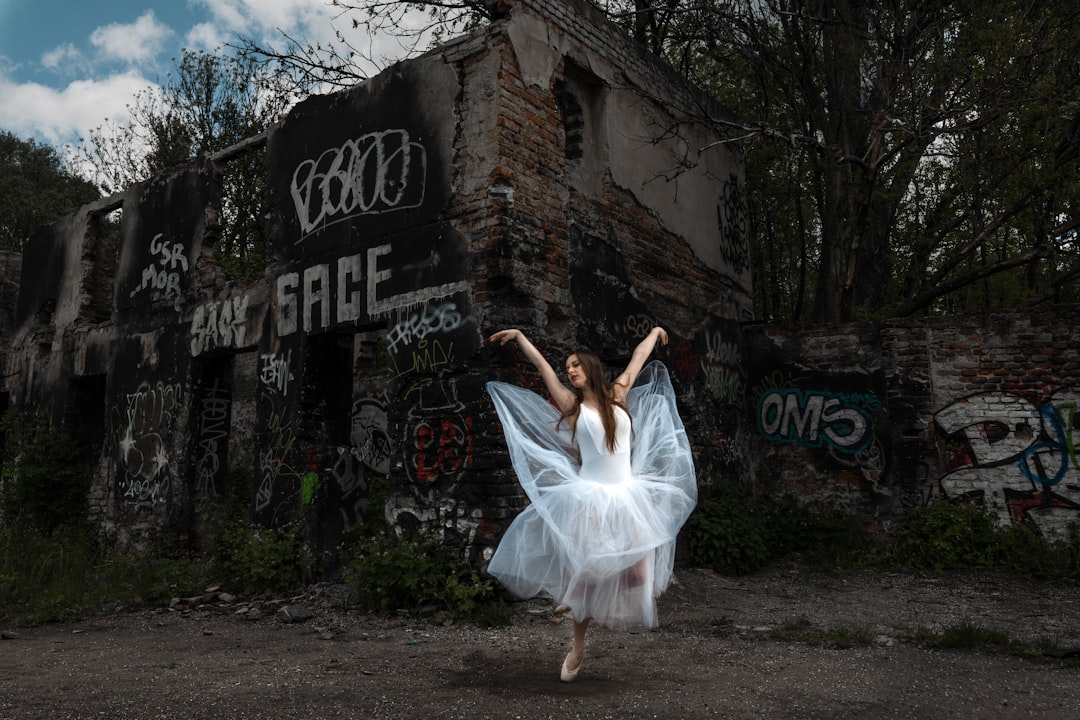
The transition from novice to professional contemporary dancer typically requires 8–15 years of dedicated, multi-faceted training. Unlike athletic disciplines where physical conditioning alone suffices, contemporary dance demands technical mastery across multiple methodologies, creative fluency in improvisation and composition, and the development of distinctive artistic voice. This roadmap outlines the essential milestones—physical, technical, creative, and professional—that structure this demanding journey.
Phase 1: Foundational Conditioning (Years 1–3)
Before approaching advanced technique, dancers must develop the specific physical capacities that contemporary dance requires: not just strength and flexibility, but articulate spinal mobility, dynamic balance, and refined proprioception.
Movement Preparation: Dynamic Warm-Up Protocol
Contemporary dance relies on dynamic rather than static preparation. Replace passive stretching with movement sequences that activate the neuromuscular system:
- Spinal articulation series: Begin with tailbone, sequentially mobilizing through lumbar, thoracic, and cervical spine; reverse direction. Progress to include lateral flexion and rotation.
- Prone fall preparation: Controlled descent from standing to quadruped, then to prone, rolling through the spine with breath coordination. Return to vertical without momentum.
- Leg swings with torso integration: Standing leg swings with counter-rotation through the ribcage and coordinated arm swing; progress to développé patterns initiated from deep core rather than hip flexor dominance.
Foundational Strength: Dance-Specific Progressions
| Basic Exercise | Contemporary Dance Progression | Advanced Application |
|---|---|---|
| Standard plank | Prone fall recovery with spinal wave | Suspended plank with leg extension and torso rotation |
| Glute bridge | Bridge with sequential spinal roll, single-leg variation | Bridge with leg crossing and spiraling arm pathways |
| Static squat | Triplet descent with weight shift | Single-leg plié with torso release and recovery |
Phase 2: Technical Methodologies (Years 2–6)
Contemporary dance encompasses distinct technical lineages. Serious dancers study multiple approaches to develop versatile, intelligent bodies.
Core Techniques to Master
Graham Technique: Contraction and Release
- The foundational principle of breath-driven torso movement
- Practice: Contraction with breath exhalation, deepening through abdominal engagement; release with inhalation, maintaining pelvic stability
- Progression: Contraction with spiral, high release, and fall recovery sequences
Horton Technique: Flat Back and Lateral Stretches
- Develops clarity of line and lateral mobility
- Practice: Standing flat back with parallel and turned-out positions; lateral stretch with opposition through fingertips
- Progression: Fortification studies combining strength and flexibility demands
Cunningham Technique: Torso and Leg Independence
- Codifies the separation of upper and lower body
- Practice: Torso twists and curves while maintaining stable leg positions; leg patterns with released, available torso
- Progression: Complex coordinations with direction changes and level shifts
Release Technique and Somatic Practices
- Develops efficiency, ease, and availability for improvisation
- Practice: Skinner Releasing, Alexander Technique, or Body-Mind Centering principles applied to standing and floor work
- Progression: Integration of release principles into technically demanding phrase work
Floor Work Mastery
Contemporary dance's distinctive relationship with the floor requires specific technical development:
- Descending techniques: Controlled lowering through foot, knee, hip, and spine articulations
- Floor locomotion: Crawling patterns with shoulder girdle initiation, rolling with momentum conservation, slides with friction management
- Rising techniques: Spiral recovery to standing, push-off patterns using core rather than arm dominance, momentum-assisted returns to vertical
Phase 3: Dynamic Range and Articulation (Years 4–8)
Advanced contemporary dance demands sophisticated manipulation of movement qualities and spatial relationships.
Momentum and Weight Transference
- Falling techniques: Trust falls, directed falls with specified landing surfaces, falling with immediate redirection
- Suspension and release: Finding the arc of momentum, identifying the moment of weightlessness, releasing into gravity with control
- Weight-sharing fundamentals: Counterbalance with partners, shared center exploration, trust-based falling and catching
Spatial Intelligence
- Multi-directional awareness: Maintaining clarity while facing any direction, dancing with eyes closed, responding to external spatial cues
- Level and plane complexity: Seamless transitions between vertical, middle, and floor levels; movement across frontal, sagittal, and transverse planes in single phrases
- Scale and range modulation: Expanding and condensing movement magnitude without losing technical integrity
Rhythmic Complexity
- Polyrhythmic execution: Maintaining distinct rhythms in different body parts
- Breath rhythm integration: Phrasing that aligns with, contrasts with, or subverts musical or breath rhythms
- Time manipulation: Acceleration and deceleration, stillness as active choice










