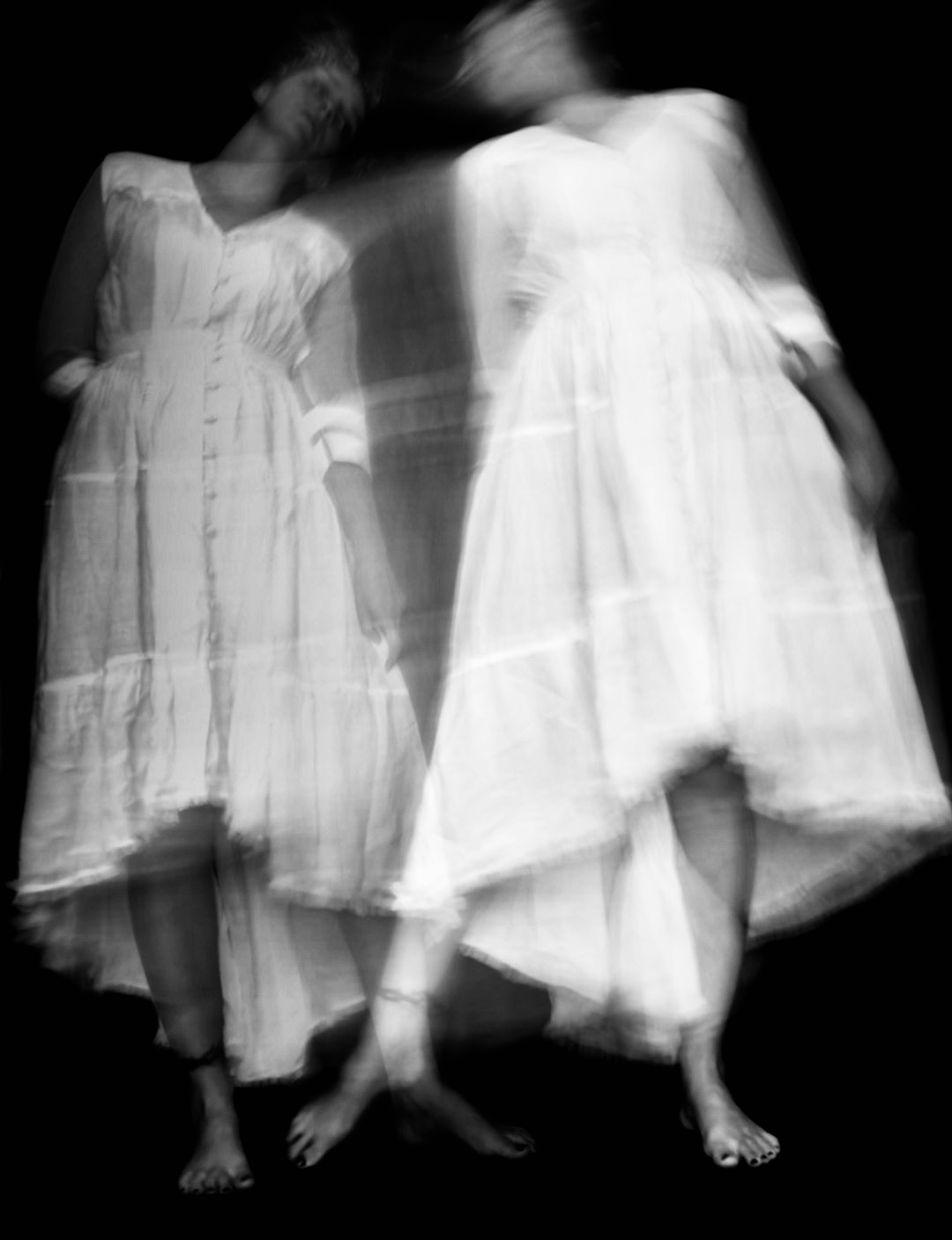
Contemporary dance demands what other genres often avoid: the ability to shift from explosive athleticism to vulnerable stillness in a single breath. If your dancing feels stuck in one gear—or if you're technically proficient but emotionally flat—these strategies will help you develop the dynamic range that defines compelling contemporary performance.
Refine Your Instrument
Master Technique for Your Style
Contemporary technique isn't monolithic. "Balletic contemporary" (Cunningham-influenced) requires vertical alignment and precise lines, while "grounded contemporary" (Graham or release-based) demands weighted drops and spiral initiations from the pelvis. Know which lineage you're training in—and why alignment matters differently for each.
For Cunningham technique, prioritize core stability for off-balance suspensions. For release work, develop proximal stability (deep core and hip rotators) to allow distal freedom in the limbs. Target your conditioning accordingly: planks with shoulder taps for dynamic stability, deep lunges with thoracic rotation for grounded transitions, and single-leg Romanian deadlifts for controlled lowering to the floor.
Build Functional Mobility, Not Just Flexibility
Contemporary dancers need usable range of motion under load. Prioritize hip openers for second position work, thoracic spine rotation for seamless floor transitions, and ankle dorsiflexion for deep pliés and slides. Pair every stretch with activation: after hip openers, immediately practice weighted shifts across parallel second to build strength in your end range.
Expand Your Vocabulary
Cross-Train with Intention
Don't dabble in other styles—study them for specific contemporary applications:
- Contact improvisation: Essential for weight-sharing, counterbalance, and responsive partnering
- Ballet: Develops line, foot articulation, and épaulement for polished extensions
- Hip-hop: Builds musicality, groundedness, and the ability to ride a beat rather than just count it
- Gaga methodology: Unlocks availability in the joints and paradoxical effort qualities (delicate/forceful, quick/sustained)
Take notes after each cross-training session: What sensation or quality can I transplant into my contemporary practice?
Improvise to Generate, Not Just Execute
Contemporary dancers must be creators, not just interpreters. Dedicate 20% of your practice to improvisation using specific constraints: dance only on your spine's four contact points, initiate every movement from your breath, or alternate between 30 seconds of explosive phrase-work and 30 seconds of near-immobility. Record yourself. The goal isn't polished product—it's discovering your movement instincts and building a personal choreographic vocabulary.
Sharpen Your Eye
Study Strategically, Not Passively
Watching professional work accelerates growth only when you watch deliberately:
| Artist/Company | What to Observe |
|---|---|
| Crystal Pite | Narrative architecture—how abstract movement accumulates meaning |
| Hofesh Shechter | Musical embodiment—how the body becomes percussion |
| Sidi Larbi Cherkaoui | Cultural fusion—how diverse movement languages coexist |
| Pina Bausch (archive) | Theatrical presence—how gaze and intention transform simple steps |
Watch each piece three times: first for overall effect, second for choreographic structure, third for technical execution of one dancer you admire.
Build Feedback Loops
Replace generic "what did you think?" with targeted questions. Ask your instructor: "Where did my weight shift feel predictable?" Ask a peer: "When did you stop believing my performance?" Video yourself weekly and compare against your goals, not against Instagram highlights. The discrepancy between how movement feels and how it reads is where progress lives.
Develop Your Voice
Practice Deliberately, Not Just Frequently
Quality of attention matters more than quantity of hours. Structure your sessions:
- Marking: Map pathways, breath, and timing without full exertion
- Partial run-throughs: Isolate transitions—the moments between phrases where dancers often drop intention
- Full-out with stakes: Perform for a camera or witness, not just a mirror
Video every full-out. Review for one technical element and one performance quality. Did your eyes arrive before your movement? Did you sustain the final note of the music or cut it short?
Take Calculated Risks
Advancement requires failure. Once weekly, attempt something technically at your edge—an inversion you're inconsistent with, a partnering sequence that scares you, or improvisation with your eyes closed. The goal isn't success; it's expanding your tolerance for the unknown. Contemporary thrives in the gap between control and surrender.
Recover as Hard as You Train
Injury is the fastest route to regression. Schedule rest with the same discipline as rehearsal. Address niggles before they become injuries: anterior hip tightness signals potential labral issues; persistent