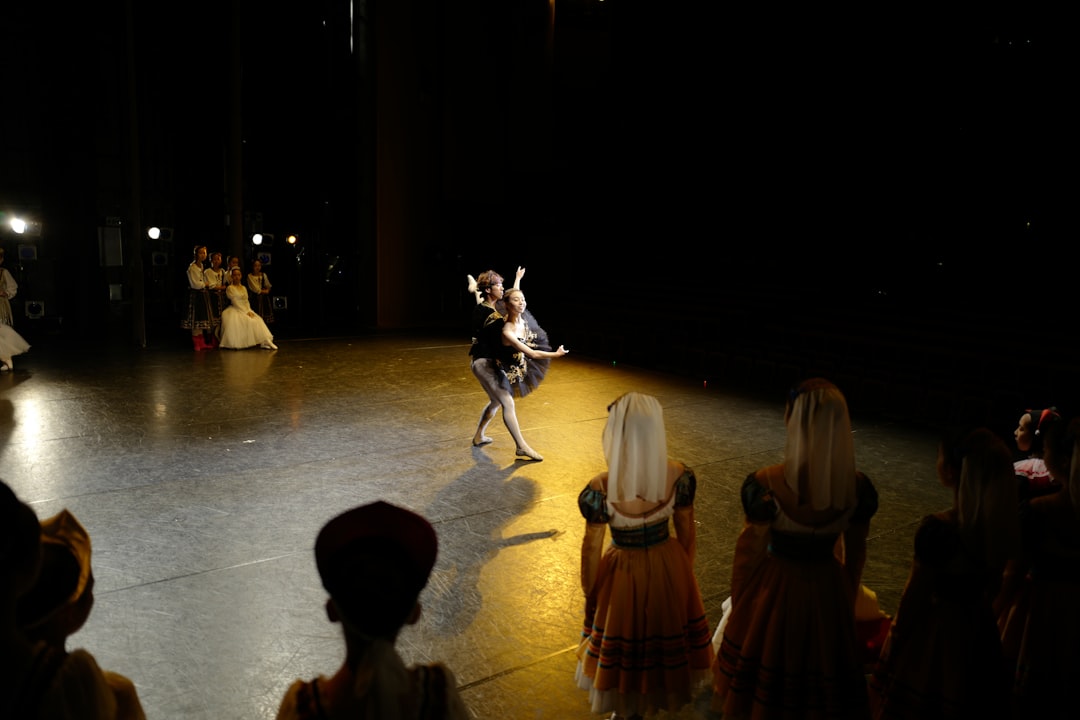
You're in the final round of a battle. The DJ drops a track with a deceptive half-time feel—kicks landing where snares should be, the groove seemingly suspended in mid-air. While other dancers flail to find the one, you lock into the hidden 16th-note pattern buried in the hi-hats, your body splitting into two rhythmic conversations at once. The crowd feels it before they understand it. That's advanced musicality—and it's not talent you're born with. It's technique you can train.
What "Advanced" Actually Means in Hip Hop Musicality
Most dancers plateau at the intermediate stage: they can hit the beat consistently, maybe catch a break or two. Advanced musicality operates on entirely different principles. It's the difference between speaking a language fluently and writing poetry in it.
Riding the pocket—dancing intentionally behind, ahead, or dead on the beat for stylistic effect—separates technicians from artists. Polyrhythmic layering assigns different body parts to different instruments simultaneously: your knees pulse the bassline while your chest pops the snare and your fingertips trace the melody. Temporal anticipation means hitting the drop two beats before it lands, creating tension that pays off when the production explodes.
Parris Goebel's choreography for Justin Bieber's "Love Yourself" exemplifies this. During the stripped-back guitar sections, she has dancers sustain movements across multiple bars—seemingly ignoring the beat—then snap into microscopic subdivisions when the percussion enters. The contrast creates emotional narrative through rhythm alone.
The Three-Layer Framework for Advanced Syncing
Layer 1: Rhythmic Mapping
Before moving, dissect the track. Advanced dancers don't just "listen carefully"—they architecturally deconstruct.
Start with primary pulse identification: locate the kick (usually downbeats) and snare (backbeats). Then excavate deeper: the open hi-hat on the "and" of four, the syncopated bass slide that arrives a 16th-note early, the vocal chop that functions as auxiliary percussion.
Practice drill: Take a complex track like J Dilla's "Stop." Map each element onto paper first—kick patterns, snare displacement, melodic fragments. Only then move. You'll discover the "groove" is actually five competing rhythms your body must negotiate.
Layer 2: Body Orchestration
Once mapped, assign. This is where physical musicality becomes compositional.
| Instrument | Body Assignment | Movement Quality |
|---|---|---|
| Kick drum | Pelvis/weight shifts | Heavy, grounded, sustained |
| Snare | Chest/shoulder isolations | Sharp, staccato, accented |
| Hi-hats | Fingertips/head nods | Light, rapid, continuous |
| Melodic phrases | Full-body pathways | Fluid, legato, expansive |
| Vocal samples | Facial expression/hand gestures | Character-driven, theatrical |
Les Twins demonstrate this masterfully in freestyle settings. Laurent might anchor his groove to the sub-bass while Larry converses with the rapper's flow—two interpretations of the same track occurring simultaneously, creating visual harmony through rhythmic independence.
Practice drill: Select a track with clear instrumental separation. Spend five minutes moving only to the bassline—no other element. Add the snare. Add hi-hats. Eventually maintain four simultaneous rhythmic conversations. The physical strain is real; the coordination transforms your dancing.
Layer 3: Temporal Play
The most sophisticated musicality manipulates time itself.
Behind the beat: Landing slightly late creates heaviness, swagger, emotional weight. Think of how a blues guitarist bends time. Your body can too.
Ahead of the beat: Slight anticipation generates urgency, anxiety, forward momentum. Battle rounds often demand this energy.
The break: Advanced dancers don't just hit drops—they prepare them. Two beats before the breakdown, your movement might compress: smaller, faster, more contained. The release when the beat returns becomes explosive through contrast.
Practice drill: Record yourself dancing to the same 16-bar section three times—once behind, once ahead, once dead center. The differences should be audible in your breath, visible in your footage, palpable in your muscle memory.
From Studio to Stage: Integration Strategies
Technical drilling means nothing without performance application. Advanced musicality requires real-time decision-making under pressure.
The 20-minute daily protocol:
- Minutes 0-5: Free movement to unfamiliar music. No choreography. Pure response. Record yourself.
- Minutes 5-12: Rhythmic mapping exercise with one complex track. Identify three hidden elements most dancers miss.
- Minutes 12-17: Body orchestration drill. Assign and execute polyrhythmic layering.
- Minutes 17-20: Review footage. Note moments of genuine musical connection versus mechanical beat-hitting.
**Self-assessment