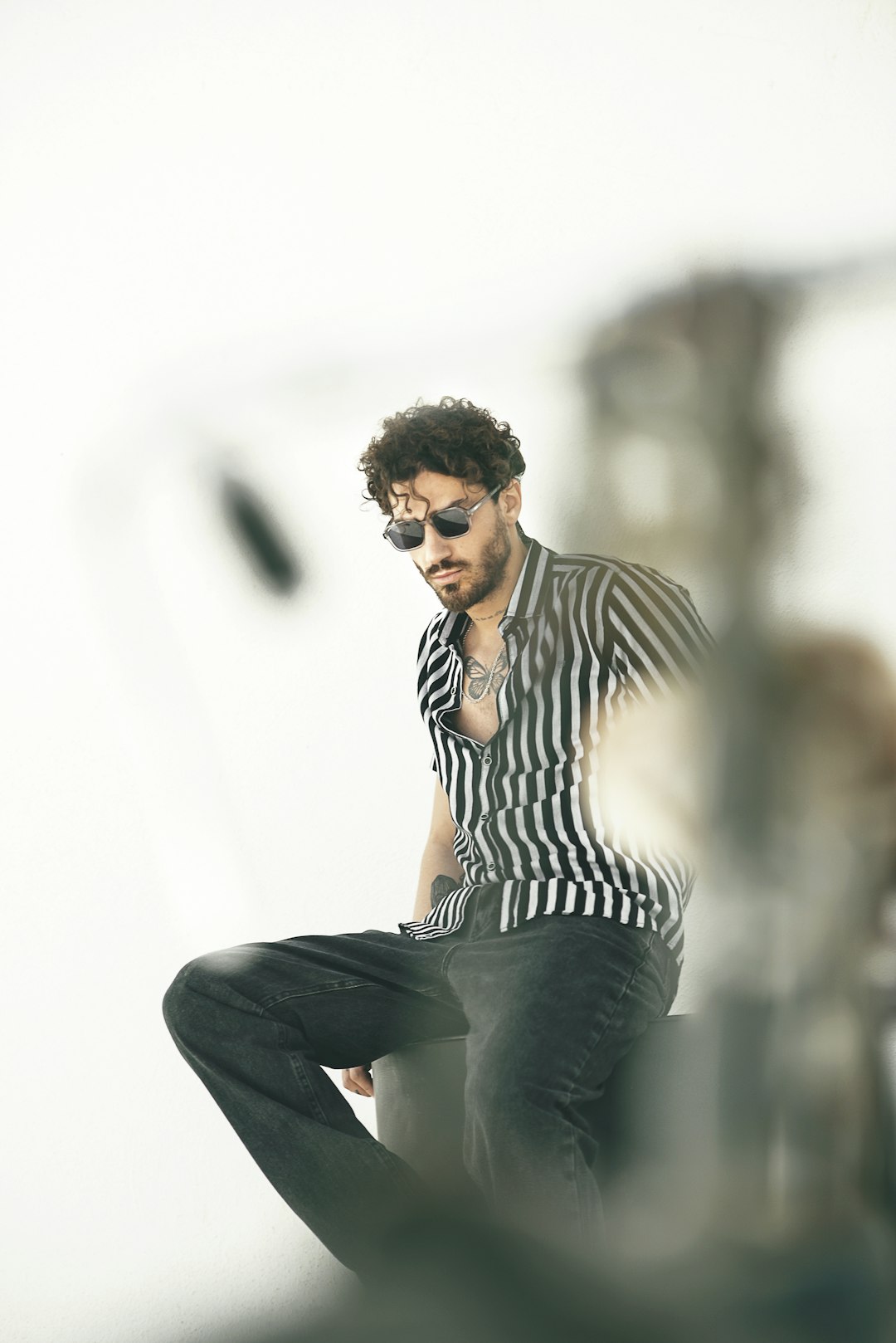
The cypher tightens. A dozen bodies form the circle, and the beat drops—a chopped soul sample over thundering 808s. You step in, muscle memory activating, but something shifts. Instead of your usual toprock into a six-step, your shoulders hit a delayed pop, the timing borrowed from a Poppin Pete workshop last month, filtered through three years of your own floor work. The crowd responds. In that moment, you're not executing choreography or biting someone else's viral clip. You're freestyling—really freestyling—and your style announces itself before you consciously choose it.
This is the territory advanced hip hop dancers inhabit: where creativity isn't about novelty for its own sake, but about cultivated voice emerging from deep technical and cultural foundations. Developing that voice requires more than generic advice to "be yourself." It demands systematic practice, analytical rigor, and immersion in hip hop's creative ecosystems.
Redefining "Style" in Hip Hop Context
In beginner conversations, "style" often means aesthetic surface—clothing choices, signature moves, a recognizable "look." For advanced dancers, style operates at the level of movement signature: the particular way force travels through your body, your default rhythmic relationships to music, how you negotiate space and social dynamics in real time.
Hip hop's creative philosophy complicates this further. The culture operates on tension between innovation and tradition, individual expression and collective identity. "Each one, teach one" means your style emerges through community, not isolation. The most respected innovators—Mr. Wiggles evolving popping through animation, Buddha Stretch codifying New Jack Swing, Lil Buck merging jookin with classical contexts—didn't abandon foundations. They mastered them so completely that transformation became possible.
Authentic style, then, isn't rebellion against technique. It's technique metabolized into second nature, freeing cognitive resources for spontaneous decision-making.
The Technical Foundation of Creative Freedom
Paradoxically, restriction enables freedom. Advanced dancers understand this: the more automatic your foundational vocabulary, the more bandwidth remains for creative risk.
Consider breaking's hierarchy. Toprock, go-downs, footwork, freezes, and power moves aren't arbitrary categories. They're technical modules that, when internalized, become combinatorial elements in real-time composition. A dancer whose six-step variations require conscious effort cannot simultaneously attend to musical nuance, spatial relationships, and character work.
Building your technical base for creative expansion:
-
Isolate and evolve: Select one foundational element weekly. Deconstruct it across dimensions: timing (straight, swung, delayed), amplitude (minimal to exaggerated), spatial plane (standing, squatting, floor), and energetic quality (sharp, smooth, vibrating). Document variations in video, noting which feel mechanically foreign—these indicate growth edges.
-
Condition for options: Physical limitations restrict creative choices. If your ankle mobility prevents certain footwork angles, or your core stability limits stop-and-go dynamics, your style develops around compensations rather than intentions. Advanced dancers maintain bodies capable of executing whatever the creative impulse demands.
-
Practice "wrong": Deliberately execute foundations with altered priorities—footwork with no arm movement, toprock with eyes closed, freezes held past comfort. These constraints reveal dependencies and generate unexpected solutions that become stylistically distinctive.
Cultivating Your Movement Intelligence
Advanced creativity requires research methodologies beyond casual observation. The dancer's equivalent of a scientist's lab notebook transforms vague inspiration into reproducible, evolving practice.
Video analysis frameworks:
Rather than watching clips for entertainment, analyze footage using movement decomposition:
- First viewing: Note overall impression—what emotional or aesthetic quality dominates?
- Second viewing (muted): Identify initiation points. Where does each movement originate? How does force travel through body segments?
- Third viewing: Map to music. Which rhythmic layers does the dancer prioritize? How do they handle transitions between musical phrases?
- Documentation: Timestamp specific moments in a "style journal." Attempt your own variation within 48 hours, before motor memory of the original fades.
The cypher as creative laboratory:
Cyphers function as real-time diagnostic tools. The pressure of witness, the unpredictability of shared space, and the absence of preparation time force authentic defaults to surface. Record your cypher participation regularly. Patterns will emerge: Do you consistently exit left? Default to floor work when musically challenged? Rely on speed when complexity feels unsafe?
These aren't failures. They're data. Advanced dancers recognize their "tells" and systematically expand their response repertoire.
Cross-training with intention:
Movement knowledge from other forms—capoeira's ginga, contemporary's release technique, house dance's footwork density—doesn't automatically enrich hip hop. The transfer requires translation: identifying the underlying principle (momentum management, weight sharing, rhythmic subdivision) and finding its expression within hip hop's aesthetic and cultural boundaries.


